Europe Nuclear Weapons; NATO and Greenland
· Without the U.S. nuclear weapon umbrella, Europe’s nuclear deterrent is too weak. Secondly, European countries are highly reliant on U.S. missile defense, command, intelligence and reconnaissance, which military experts estimate could take 10 years to replace. Major European countries recognize they need the U.S. staying committed to NATO purpose and providing deterrents, until they build up capabilities over the next decade. Some of the major European partners are likely to privately pressure Denmark to give further ground to keep Trump’s commitment to NATO. Two main options being discussed are a small part of Greenland given to the U.S. (like the UK military bases in Cyprus) or shared sovereignty (like Guantanamo Bay/Diego Garcia). Europe will also remind the U.S. that European funds have huge U.S. equity/Treasury and corporate bond holdings, which U.S. Treasury Secretary Bessant is nervous about. This is Europe’s leverage over Trump.
After the Greenland threats, Europe is now examining whether it needs more nuclear weapons as a deterrent and how it agrees a deal with U.S. president Trump over Greenland.
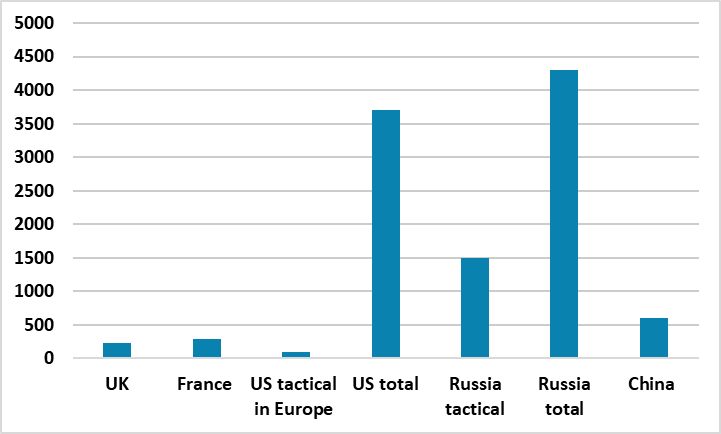
Figure 1: Estimates of Numbers of Nuclear Weapons
Source: Continuum Economics
European security is in a new state of flux, with Trump’s demands that Greenland should be handed over to the U.S. Though this has been defused for now, a number of key points are worth making:
· Europe’s dependence on U.S. Nuclear deterrent. France has 290 nuclear warheads (Figure 1), which is sea and airborne and independent of the U.S. Note: France's force de frappe (strike force) operates independently, with the final decision to use weapons resting solely with the French President. The UK's nuclear arsenal of approximately 220 warheads is submarine-based and dependent on U.S. technology and parts. In contrast, Russia is estimated to has 4,300 nuclear warheads including 1,500 tactical weapons. Without the U.S. nuclear weapon umbrella, Europe nuclear deterrent is too weak. President Macron is reported to be ready for a further push to strength Europe’s nuclear deterrent. However, anything concrete would likely be at a country level, with Germany, Poland and Sweden having expressed an initial interest in acquiring nuclear weapons. This would still face many hurdles (e.g. nuclear proliferation treaty/who controls the nuclear weapons etc.), but this is possible in a time of crisis. An EU nuclear umbrella is a non-starter given neutral countries; EU’s inability to take major decisions; funding and operation control of nuclear weapons. This nuclear deterrent weakness is one of the primary reasons that NATO Secretary General Rutte seeks to keep Trump on board with NATO’s purpose, though with more European capability in the coming years.
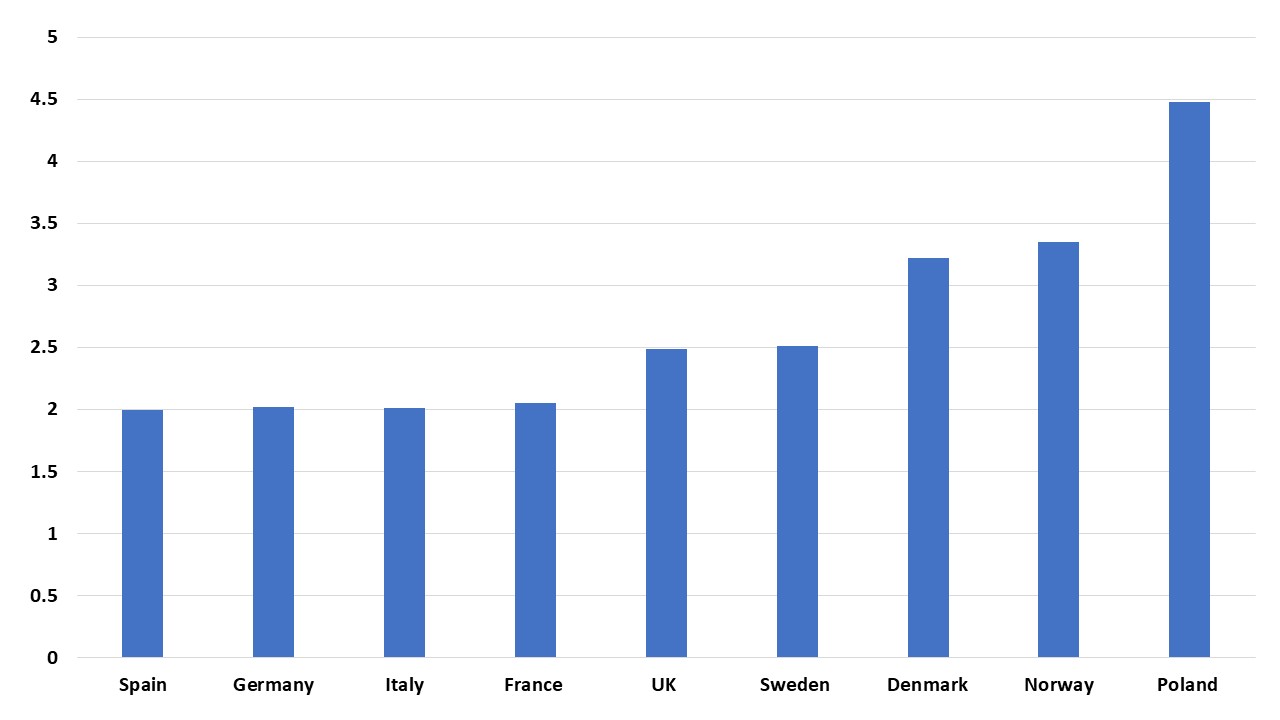
· Europe’s conventional capabilities. NATO countries excluding Spain have promised to increase spending to 5% (3.5% of GDP on core military defense, and a soft 1.5% on related security such as infrastructure) by 2035 from current levels (Figure 2). Germany is accelerating committed expenditure, while Eastern European and Nordic countries are strengthening further. However, Italy, France and UK are fiscally constrained and Spain is aiming for 2.1% of GDP. Even so, Trump is well known to have voiced serious doubts about going to war with Russia if a Baltic state is invaded by Russia. In the worst case scenario of say a Russia invasion of Lithuania, some European countries could fight to push Russian conventional forces back – though other European countries would be reluctant to directly commit their forces under Article 5 (e.g. Spain)! However, European countries are highly reliant on U.S. missile defense, command, intelligence and reconnaissance, which military experts estimate could take 10 years to replace. U.S. Secretary of State Rubio last week noted that the U.S. is the only one capable of a Ukraine reassurance force backstop with these intelligence and reconnaissance forces – Russia in the end will never agree to this idea. Europe countries are left with Trump until January 2029 and any future successor may also lack a full commitment to NATO’s collective defence. European countries cannot walk away from the U.S. military, while Russia Putin is alive and a potential threat to Europe.
Figure 2: Military Spending in 2025 (% of GDP)
Source: NATO/Continuum Economics
Greenland. All of these impacts the Greenland talks and framework for a future deal. Denmark and Greenland (backed by European partners) red line is handing over Greenland is some 19th century style move. Denmark has already offered more U.S. involvement for the U.S. military and mining companies, plus the Arctic sentry from European countries, but it appears this is not sufficient for Trump. We still see the probability of a temporary U.S. Greenland blockade as a show of strength at 10-30%. While some Europeans would likely be outraged, the middle powers in Europe know they need the U.S. nuclear umbrella and they will privately put pressure on Denmark to compromise further to the U.S. position. Canada’s call for middle powers to group together could lead to some coordination on soft power subjects (e.g. climate/AI regulation), but is unlikely to lead to NATO being replaced, given Europe’s huge dependence on the U.S. A compact of free association would be a de facto handing over Greenland and is highly unlikely. However, two main potential solutions are being discussed. Firstly, a small part of Greenland is handed over like the 3% of Cyprus that the UK has full sovereignty over (with two military bases). Secondly, shared sovereignty like Diego Garcia (with UK and now Mauritius) in the Indian ocean with a massive U.S. base or Guantanamo in Cuba. A 3rd option allowing the U.S. to move military assets into Greenland without consent or notification to Denmark and Greenland is possible, but less likely as Denmark is ceding control. Trump is too busy with Iran and Cuba (here), but will likely return later in the year to pressure Denmark to give ground, with some of the bigger European partners likely to pressure Denmark to give further ground to secure Trump’s commitment to NATO.