Greenland: U.S. Sphere of Influence or More?
· Trump will likely go for more pressure and then seek to negotiate with Denmark and Greenland. Denmark and Greenland already have mutual interests with the U.S. on security; minerals and Russia/China that are already covered by previous agreements and understandings. Trump would like to see an independent Greenland, that could then directly negoicate with the U.S. A new three-part agreement could be the final solution. We would only attach a 10-30% probability of a large U.S. navel show of strength. A 2nd option is cohesion via a naval blockade or quarantine (like with Venezuela in Q4 2025), but this is low probability. An invasion is low probability, as Trump hates the risk of U.S. military casualties. Trump appears to want to takeover Greenland, which means that probabilities are fluid and could rise. However, Trump still need to deal with the aftermath in Venezuela; risk of a regime change/collapse of government in Cuba; the forthcoming Supreme court ruling on tariffs and MAGA concerns about overseas military campaigns.
President Donald Trump has once again said the U.S. should take control of Greenland, but Denmark and European leaders are pushing back. What can happen in the coming years?
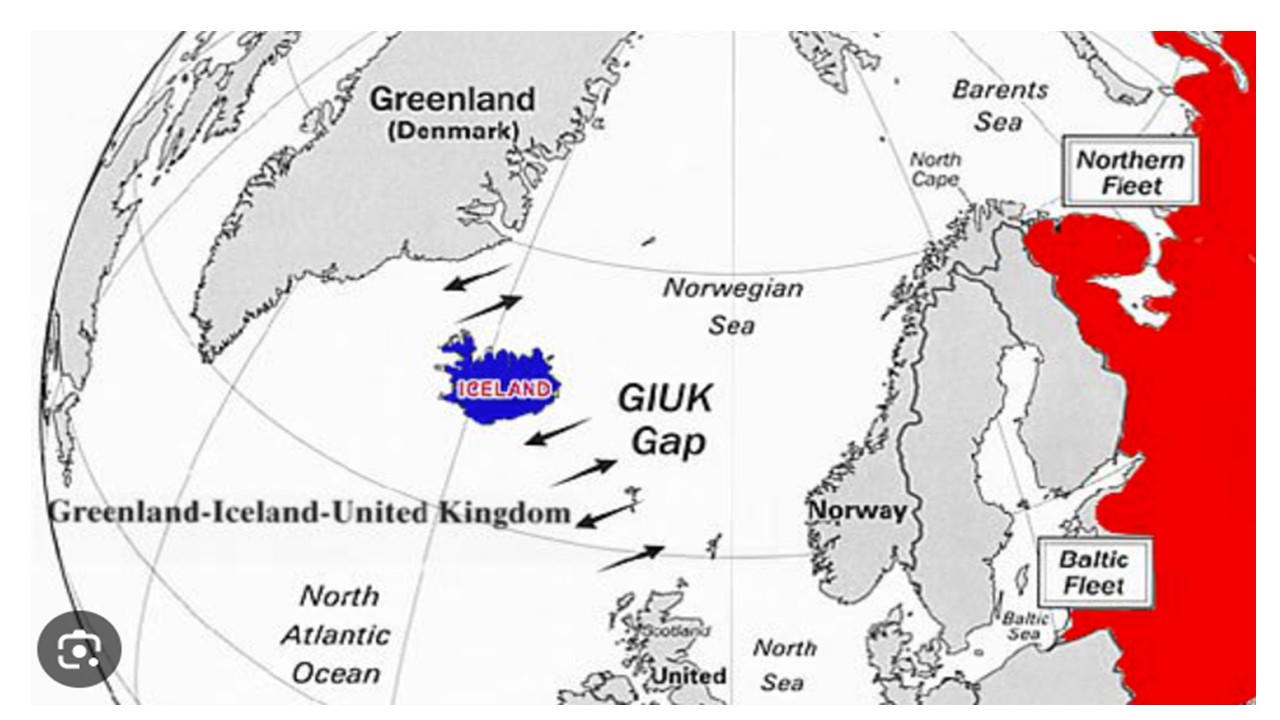
Figure 1: Greenland/Iceland/UK Gap
Trump is fixated with the U.S. taking control of Greenland, but what will happen in reality?
· U.S. Sphere of Influence or Aggression. The 1823 Monroe doctrine is being rebooted with the 2025 U.S. national security strategy (here), which put the Americas first above Europe and Asia. This could involve the U.S. having a greater sphere of influence in the Americas by diplomatic means and negotiations, but the military intervention in Venezuela has raised questions of whether this could see military aggression elsewhere. Could this lead to a military conflict over Greenland? Trump could possibly shift U.S. navy assets towards Greenland once the Venezuela situation is under control, as a show of strength and to bully Denmark/Greenland. The North Atlantic also seen posturing in the past between NATO countries e.g. UK/Iceland Cod clashes 1972-3, 1975-6 (here). Trump’s Greenland ambitions could be more important to him, than NATO cohesiveness. The Trump administration also knows that Europe ex France/UK is critically dependent on the U.S. nuclear deterrent and in a crisis Europe’s support for Denmark would likely fracture. This would however cause a crisis of confidence between Denmark/Europe and the U.S. and within NATO, which would be too high a cost for even the Trump administration. We would thus only attach a 10-30% probability of a large navel show of strength. A 2nd option is cohesion via a naval blockade or quarantine (like with Venezuela in Q4 2025), but this is low to modest risk probability. An invasion is low probability. Trump hates having U.S. troops on foreign soil for any length of time and the odds of a ground invasion are low. Trump’s foreign escapades are restrained by the November mid-term election, as too much foreign military intervention could put MAGA off turning up to vote and hand the House of Representatives to the Democrats. Trump will likely go for more pressure and then seek to negotiate with Denmark and Greenland. Denmark and Greenland already have mutual interests with the U.S. on security; minerals and Russia/China that are already covered by previous agreements and understandings. A new three part agreement could be the final solution. Trump would also like to see an independent Greenland, that could then directly negoicate with the U.S., which would require a referendum.
· Greenland/Iceland/UK Gap. One reason that Trump looks closely at Greenland is the arctic defense against Russia that has a large military presence in the Arctic already. Russian naval movements also go through the Greenland-Iceland/UK gap (Figure 1), which the U.S. wants to strategically control. Additionally, Trump is concerned that China also will get involved in the Arctic via Russian military bases, as it seeks an Arctic shipping route from China to Europe. One option to defuse the situation is a Danish offer to allow a 2nd U.S. military base in Greenland beyond the existing north Greenland Pituffik space base (this is allowed under the 1951 agreement). De-escalation may also require European navies (e.g. Denmark/UK/ Norway) to work more with the U.S. around Greenland under the NATO umbrella. However, Danish/Greenland politics is currently preoccupied with the outrage at Trump’s comments and rejecting potential U.S. claims, rather than trying to find common ground. It could take time before more level headed negotiations occur. The U.S. has also not taken up last year offer to increase troop numbers in Greenland, which has raised concerns that Trump is looking a more aggressive stance. The U.S. has 500 troops in Greenland versus an estimated 10000 during the cold war.
· Greenland minerals. Trump 2nd area of interest is in minerals. While Trump is always interested in oil, he is more interested in Greenland’s potential rare earth minerals too diversify the U.S. away from China. Denmark and Greenland could agree to work more with U.S. mining companies and continue to exclude Chinese companies, which would soothe the relationship with the Trump administration.
I,Mike Gallagher, the Director of Research declare that the views expressed herein are mine and are clear, fair and not misleading at the time of publication. They have not been influenced by any relationship, either a personal relationship of mine or a relationship of the firm, to any entity described or referred to herein nor to any client of Continuum Economics nor has any inducement been received in relation to those views. I further declare that in the preparation and publication of this report I have at all times followed all relevant Continuum Economics compliance protocols including those reasonably seeking to prevent the receipt or misuse of material non-public information.