Shock for Russia: Economy Contracted by 0.3% in Q1 2026
Bottom Line: Preliminary figures indicate that the Russian economy contracted by 0.3% in Q1 2026, marking its first decline since Q1 2023. This downturn was driven by a combination of high interest rates, persistent sanctions, supply-side constraints, and a strong RUB. The mining and manufacturing sectors were particularly impacted in Q1. Despite headwinds, we project 1.1% growth for the full year 2026, anticipating that the economy will benefit from surging oil prices following the conflict in Iran. While the Central Bank of Russia’s (CBR) easing cycle is expected to gradually reignite growth, the recovery is likely to be slow.
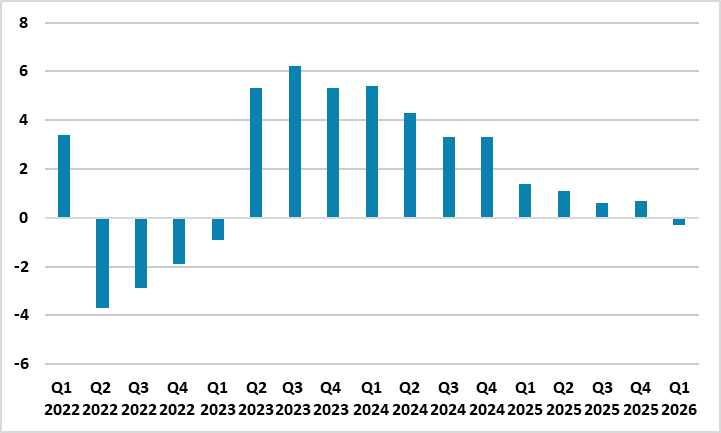
Figure 1: GDP Growth (%, Annual), Q1 2022– Q1 2026
Source: Ministry of Economic Development
According to preliminary figures announced by the Ministry of Economic Development, the Russian economy contracted by 0.3% in Q1 2026. This downturn suggests a pronounced slowdown despite the support of heavy military spending, rising wages, and ongoing fiscal stimulus. Marking the first contraction since Q1 2023, it appears the economy struggles under the weight of high interest rates, sanctions, strong RUB, supply-side constraints, and persistent price pressures.
Following its MPC meeting on April 24, the Central Bank of Russia (CBR) attributed the decline largely to transitory factors, including a value-added tax (VAT) hike at the start of the year and extreme snowfall that disrupted construction. According to Reuters, the business leaders and government officials point to more structural issues, citing severe labor shortages, the slow adoption of new technologies, and the restrictive strength of the rouble (RUB) as the primary drivers of the slump.
Restrictive factors—including sanctions, adverse global developments and high rates, —are expected to weigh on growth for the remainder of 2026. Capacity utilization has hit its limit, and the acute labor shortage is unlikely to improve in the short term. These bottlenecks, exacerbated by the ongoing war in Ukraine, will continue to create economic friction and hinder a faster recovery.
Despite ongoing challenges, we think the CBR’s easing cycle could gradually reignite growth, though the recovery will be slow. Over the coming years, the trajectory of the Russian economy will depend on a potential resolution in Ukraine and the timeline for sanction relief. Additionally, the regional impact of the conflict in Iran will be a critical factor.
We forecast growth to reach 1.1% in 2026, driven partly by surging oil prices in the aftermath of the Iran war and the ongoing easing cycle. While the Ministry of Economic Development initially projected a 1.3% GDP growth rate for 2026 in its September forecast, Minister Maxim Reshetnikov has indicated that this figure will be likely revised downward in May. This adjustment aligns more closely with the CBR’s current expectations, which remains between 0.5% and 1.5% for 2026.