Indonesia CPI Review: Sticky Food Prices Lift CPI
Indonesia’s October CPI inflation print of 2.86%—the highest since April—reinforces that price pressures, while still within target, are gradually building. The uptick limits Bank Indonesia’s room to ease policy further in the near term and suggests a more cautious monetary stance ahead.
Indonesia’s headline inflation continued its upward trend in October 2025, with the Consumer Price Index (CPI) rising by 2.86% yr/yr, according to official data. This marks an acceleration from September’s 2.65% pace and is the highest annual reading since April. This recent uptick in inflation keeps the figure within Bank Indonesia’s stated target range of 1.5% to 3.5% for both 2025 and 2026, but the growing momentum is notable. Food prices, seasonal factors, and supply interruptions have been key drivers behind the persistent price increases in recent months.
Figure 1: Indonesia CPI, Food Inflation and Main Policy Rate (%)
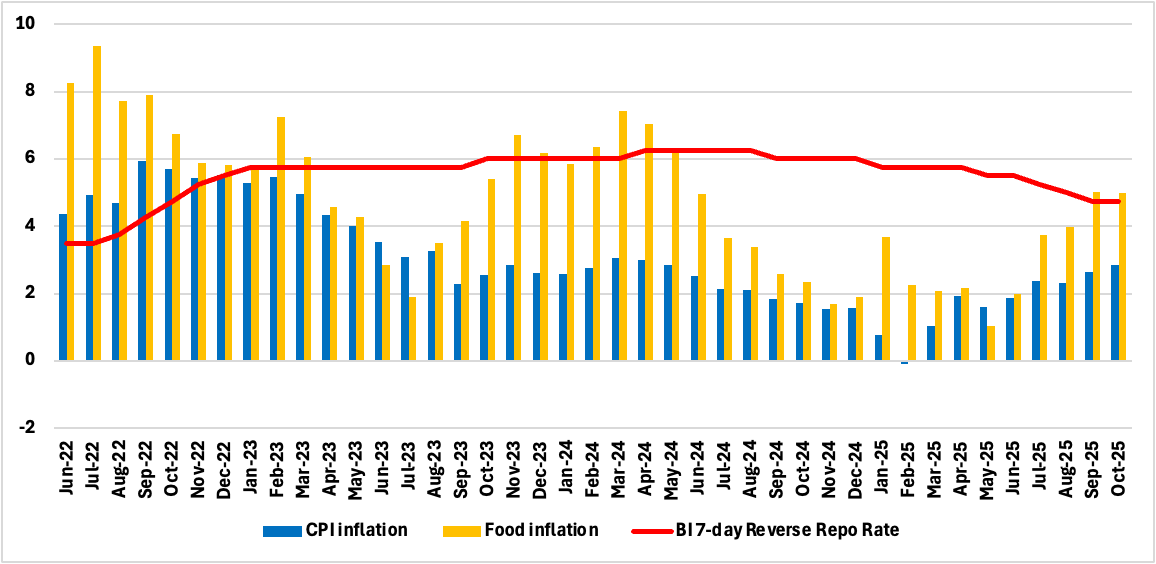
The higher inflation reading comes at a time when Bank Indonesia is seeking to balance supporting economic growth with maintaining price stability. The latest print could influence the central bank’s monetary policy decisions at upcoming meetings, especially after earlier hints of possible additional policy easing.
While core inflation—excluding volatile categories—is due to be published shortly, the headline figure suggests pressures are not yet spilling over broadly, but are beginning to outpace earlier expectations.
Looking ahead, it is worth tracking whether October’s CPI increase is a temporary blip or signals a more entrenched upward trend. Any further acceleration could reduce the central bank’s scope for additional rate cuts, while a stable inflation environment may provide more policy flexibility as Indonesia navigates global economic uncertainties.