Bank of Canada Minutes from April 29 - Tightening a real risk if oil fails to fall as assumed
The Bank of Canada has released minutes from the April 29 meeting, which are likely to maintain market fears that should oil prices remain elevated, the BoC will tighten later in the year. However, on a central scenario more in line with that of the BoC, we continue to see the BoC remaining on hold through 2026, while recognizing the risks from alternative scenarios.
The BoC baseline assumption was that consistent with the futures curve in April, was that oil prices would decline in the coming quarters, though they noted that there was considerable uncertainty around this. The Governing Council agreed that their outlook was highly dependent on US tariffs remaining unchanged and on lower oil prices, but that under this scenario something close to the current 2.25% policy rate would likely be appropriate.
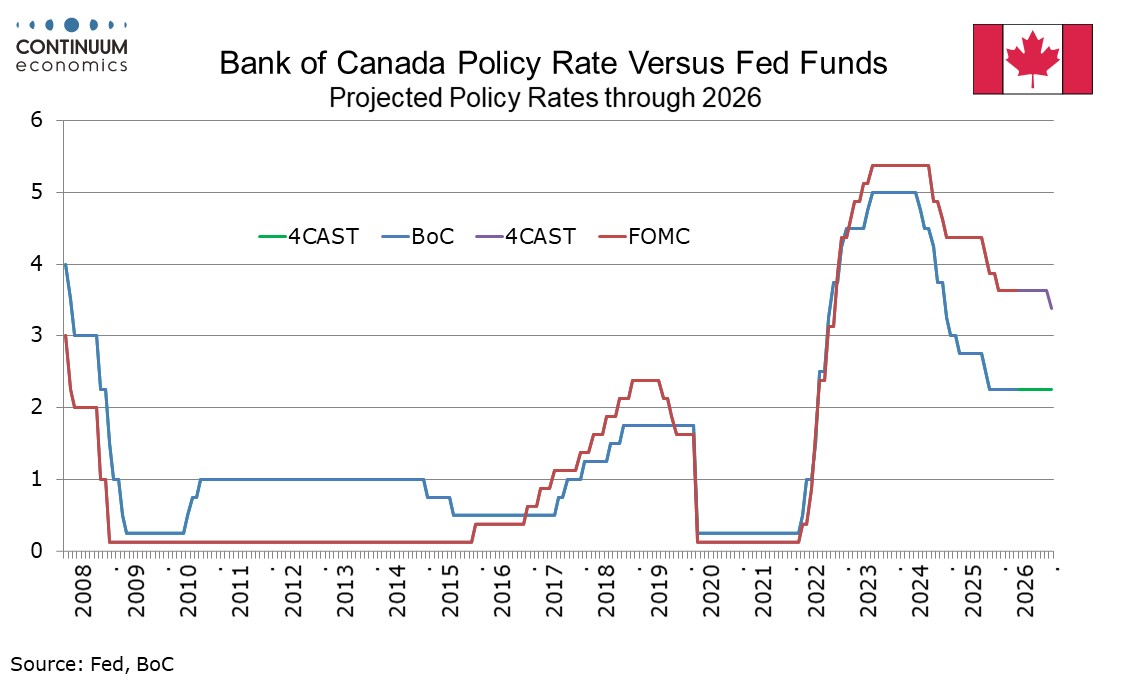
They discussed risks on both sides, stating that policy may need to be cut further if the US imposed additional tariffs on Canada, with members agreeing they should not lose sight of the risks from US trade policy. However there was more discussion of the risks from a more persistent energy shock. Members agreed that they had scope to be patent for now, but if oil prices were to remain elevated for a prolonged period the risk of broader and more persistent inflation would increase, which could require consecutive increases in the policy rate.
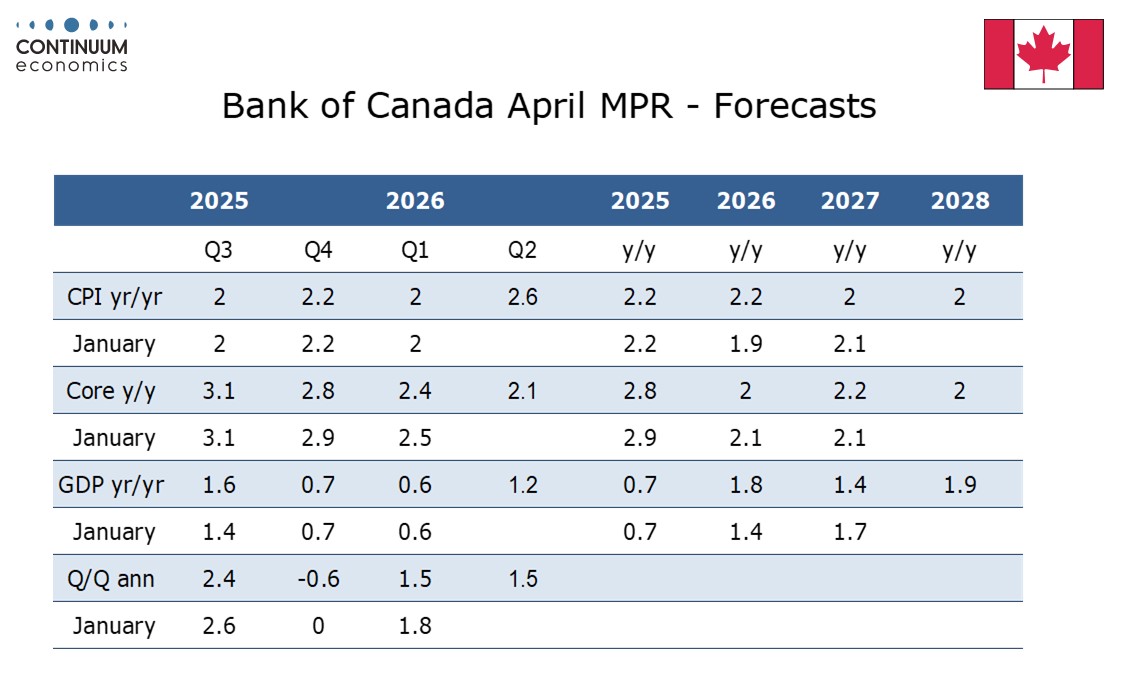
Our own baseline (70% probability) (here) has has the oil price peaking in Q2 and then moving lower, with a partial reopening of the Strait of Hormuz in June or July. This appears in line with the BoC’s central scenario, and backs a view of unchanged policy through 2026. However an alternative scenario (30% probability) has the Strait effectively closed until the end of September, with the oil price peaking in Q3 and remaining above $100 through 2027. Under this scenario the BoC would be likely to tighten, though the BoC recognizes it could face a mix of shocks on both trade policy and the Middle East, and agreed they would have to be nimble in their response to events.