Bank of Canada Minutes from March 18 - Too early to judge impact of war, tone far from hawkish
The Bank of Canada has released minutes from its March 18 meeting, which left rates unchanged at 2.25% as expected though we felt that the tone of the statement was somewhat dovish. The minutes show that the BoC felt that it was too early to assess the impact of the conflict in the Middle East, though the range of possible outcomes had widened further. The discussion on inflation recognizes upside risks, but the tone is not hawkish. We continue to expect the BoC to hold rates through 2026.
The BoC agreed that they should not lose sight of other risks, notably shifting USD trade policy, the upcoming review of the Canada-US-Mexico agreement and ongoing structural changes. Despite the US Supreme Court ruling against Trump’s reciprocal tariffs, trade-related risks to Canada were seen as unchanged from January. They also agreed that it was important to communicate that they would look through the first round effects on inflation of the oil shock, but they would respond if it spread to other goods and services to become persistent. Inflation close to target was seen as providing some flexibility allowing the BoC to take some time to see how the war evolved.
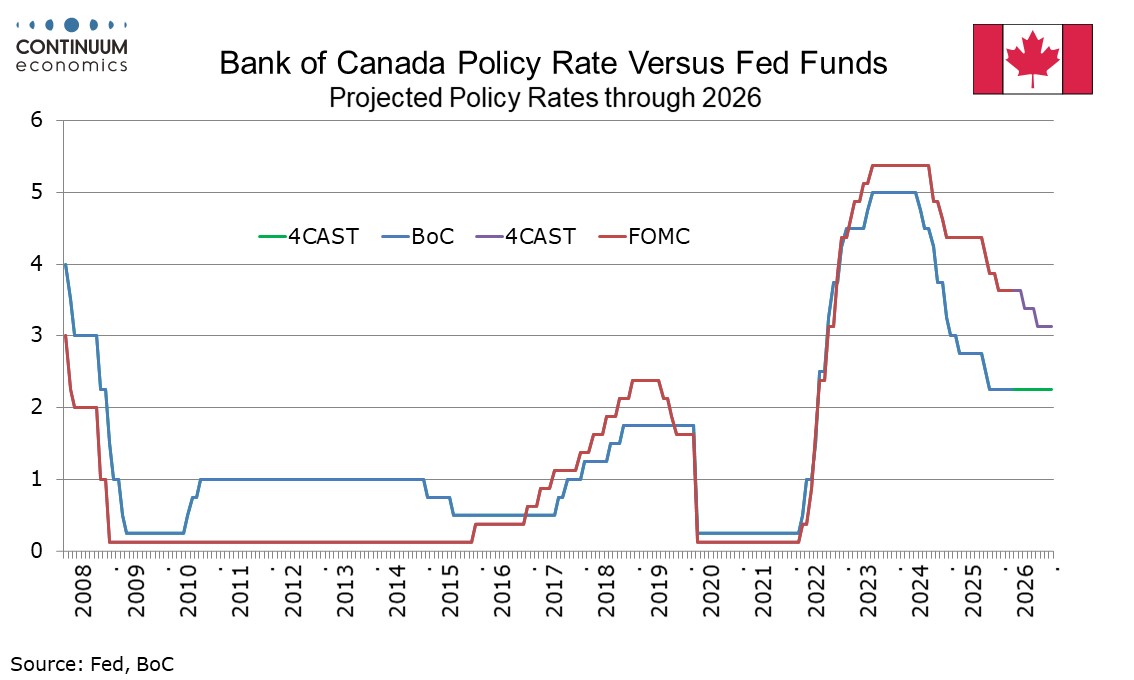
Different risks were discussed, with one perspective seeing risk that higher energy prices could become embedded into expectations, with the high inflation of 2022-23 still fresh in people’s minds. However they also noted that the impact could be limited beyond the short run with the economy in excess supply and inflation around target. It was agreed they would need to rely on judgment more than is usual and be ready to respond as needed as the outlook evolved. The minutes also detail the reasoning behind the view that the economy appeared to be underperforming January expectations. Weakness in housing and January exports was noted, as well as employment declines in January and February, though members acknowledged that they had been expecting ongoing softness in the labor market.