U.S. January Consumer Confidence weakest since 2014, politics likely adding to employment concerns
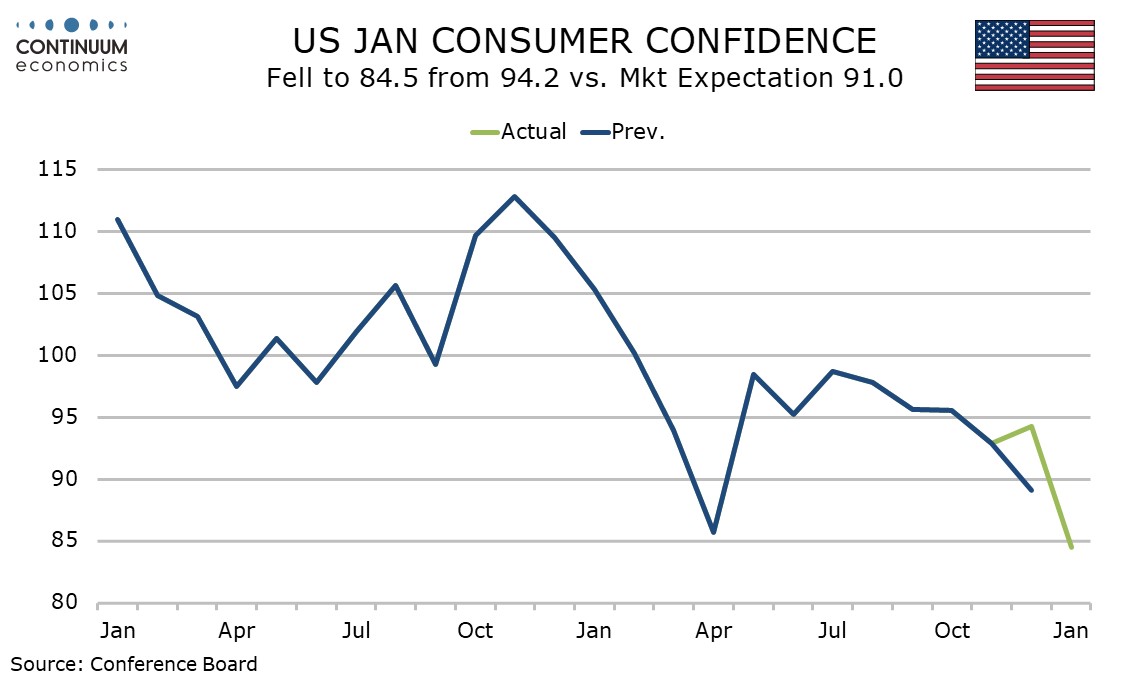
The Conference Board’s Consumer Confidence Index at 84.5 in January is down from an upwardly revised December index of 94.2 (from 89.1) and the weakest since May 2014. The decline contrasts a modest increase in the January Michigan CSI which reached its highest level since August.
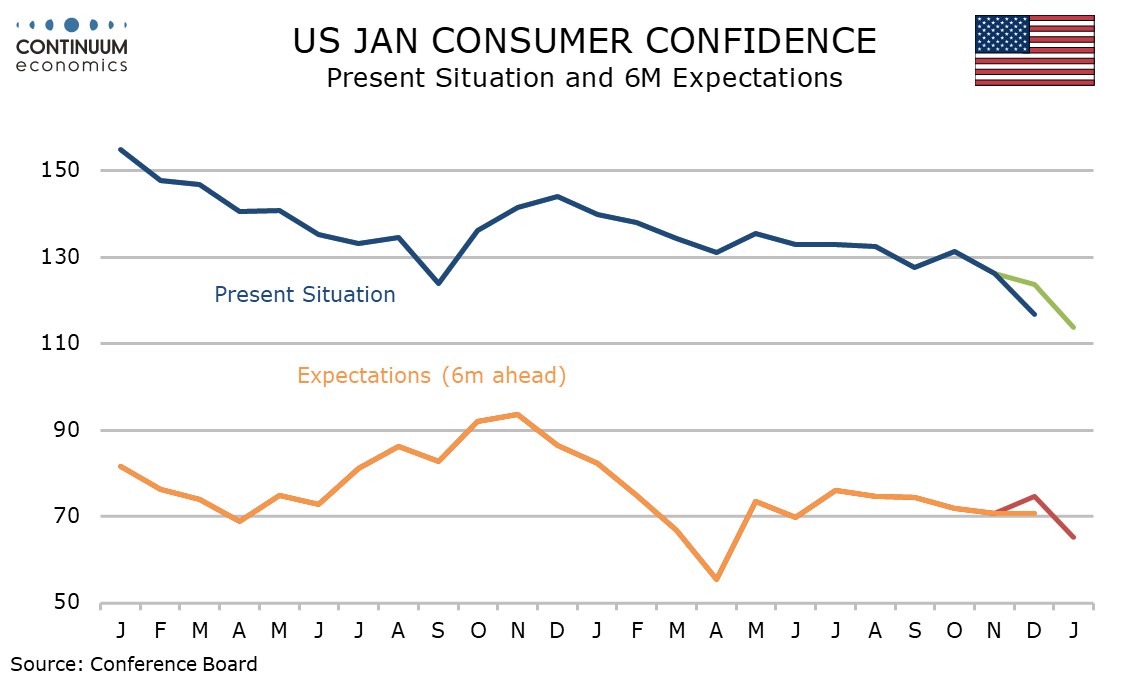
The declines in the present situation, by 9.9 points to 113.7, and expectations, by 9.5 points to 65.1, were similar. The present situation is the lowest since February 2021 during the pandemic but expectations were weaker as recently as April 2025 when equities were hit by tariff worries.
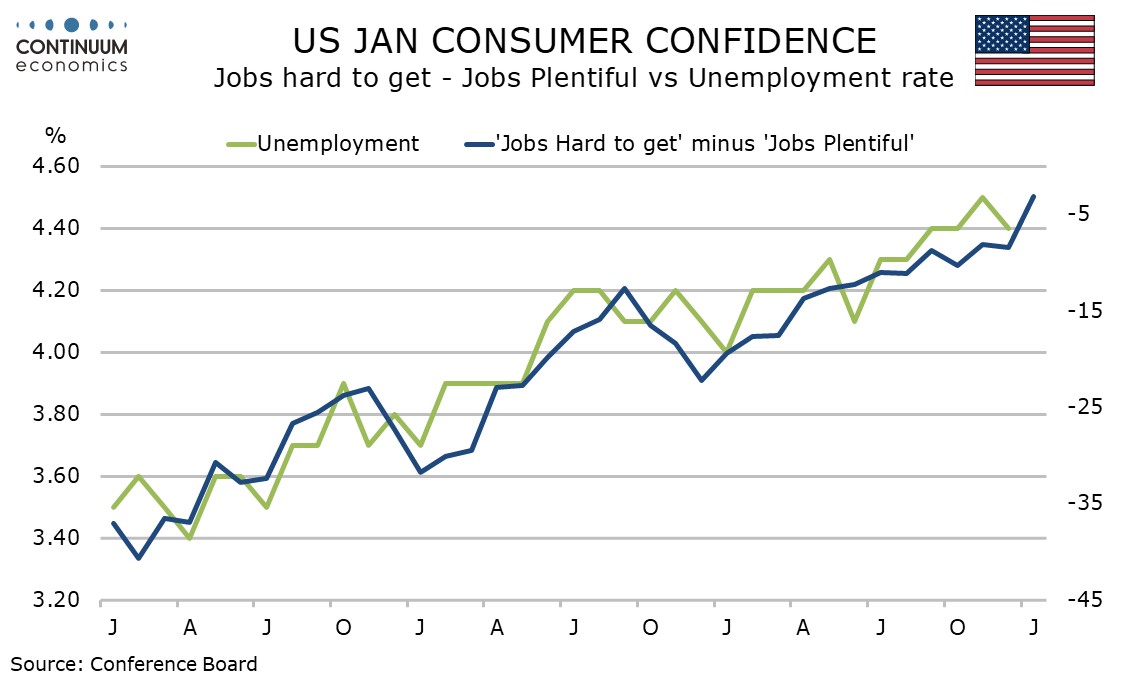
The Conference Board index is more sensitive to the labor market than the Michigan CSI and perceptions here deteriorated significantly, with the proportion seeing jobs as plentiful exceeding those seeing them as hard to get by only 3.1%, down from 8.4% in December and the weakest since February 2021. This series is closely correlated with the unemployment rate.
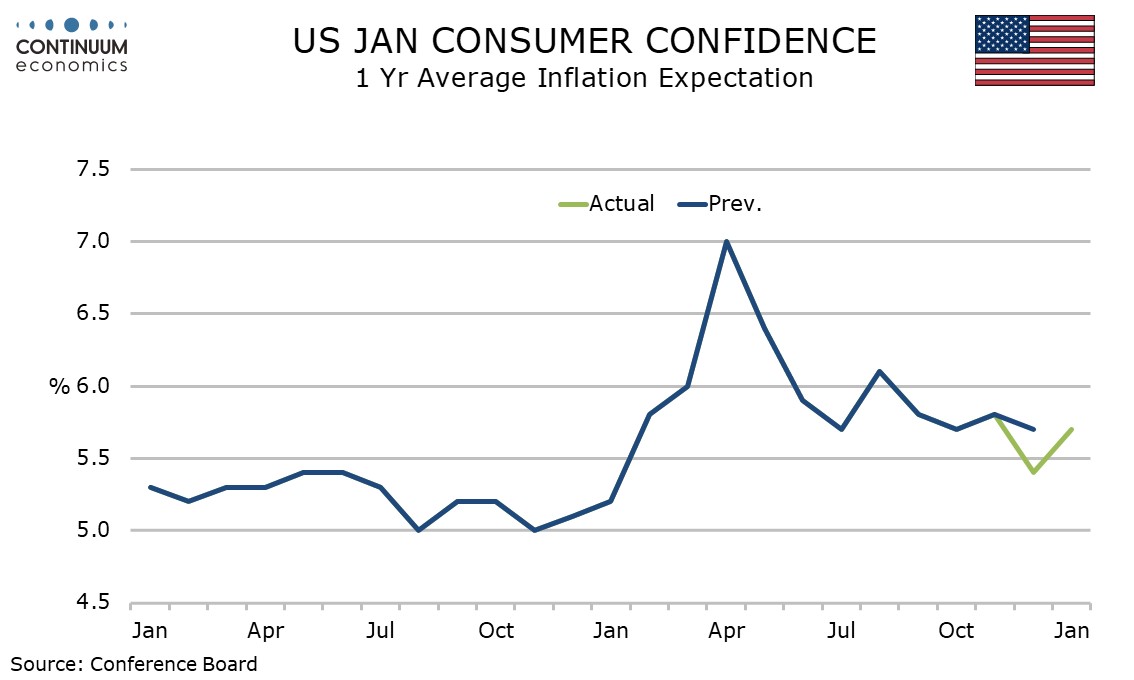
Views on inflation were mixed, with the average view up to 5.7% from 5.4% if still below November’s 5.8% but the median down to 4.4% from 4.5% in December and 4.8% in November. This suggests that those who were already more pessimistic than most got even more so.
The deterioration in labor market expectations contrasts continued low initial claims and is probably the main reason behind the deterioration in current conditions. The deterioration in expectations may be related to political risks, with the public probably more concerned about domestic issues, particularly the shootings in Minneapolis, than international issues such as Greenland. Worries over the former may have escalated since the survey was conducted.