DM Central Banks Watching Stablecoins
· Overall, DM central banks have a watching brief for stablecoins and the scale of growth in the next 5 years. This is largely a USD centric issue, with stablecoins dominated by USD issuance. Central banks are watchful on whether it impacts access to low cost deposit for banks; guarding against stablecoins paying interest to compete with banks and whether stablecoins could amplify instability in a banking crisis. Some of these concerns have cooled DM interest in central bank digital currencies (CDBC’s), with Fed Warsh opposed to a digital USD.
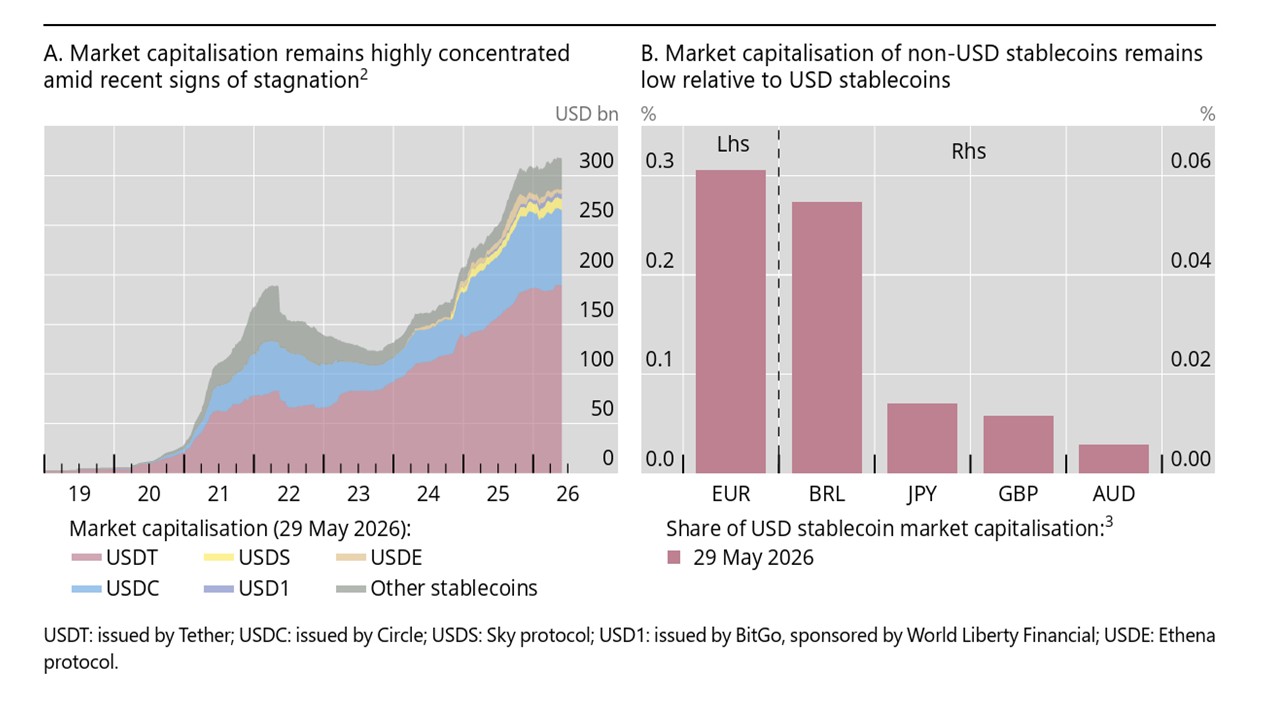
Figure 1: Stablecoin market growth concentrated in two US dollar-pegged coins
Source: BIS Annual Report June 2026
Central banks financial stability reports are watchful of developments in stablecoins from a number of angles.
· Change to financial systems. One point of focus is the evolution of the financial system that could see digital tokenisation of assets increase security and reduce transaction costs. Stablecoins enable near-instant, 24hr/7 day settlement without relying on banking networks. For cross-border payments, this can be far cheaper and faster than existing systems e.g. SWIFT. At the moment it is a proof of concept stage with stablecoins totalling USD300bln (Figure 1) and mainly used in the crypto universe. Citibank have estimated that stablecoins could grow to USD1.9trn by 2030 (here).
· Less cheap deposits for banks. A 2nd area of concern is that increased stablecoin demand could led to a reduction in cheap deposits for banks, as households and corporates switch from deposits to stablecoins (invested mainly in safe U.S. Treasuries – which may help financing for the U.S. Treasury). This is mainly a USD issue, both as stablecoins are mainly USD issued (Figure 1) and progress on major central bank digital currencies and official stablecoins has stalled except for the ECB (though this is possible in 2029 (here), we suspect that the ECB will limit a digital Euro issuance). China authorities have started to go slow on the digital Yuan.
· Financial instability in times of crisis. A 2nd tier banking crisis (like the 2023 silicon valley bank in the U.S.) could see some safe haven flows to stablecoins, as well as large safer banks. This could amplify a financial crisis. This is one of the main reasons for the cooling towards central bank digital currencies (CDBC’s), with Fed Warsh’s being opposed to a digital USD in his confirmation hearings (Congress is also nervous of the idea). A large USD CDBC’s could see large scale capital flight from bank deposits to CDBC’s in a banking crisis just for safety purposes and where deposit holdings exceed government deposit guarantee limits.
· Interest on stablecoins versus none on cash. If stablecoins recycle the returns made from investing in U.S. Treasuries, then an interest style reward can be delivered. However, U.S. politicians are against the idea of stablecoins being able to provide an interest rate return, as it could shift holdings from cash and low yielding deposits and hurt the banking system. The ECB leans against in its CDBC discussions, while China’s authorities will not pay interest on the digital Yuan (here).
Overall, DM central banks have a watching brief for stablecoins and the scale of growth in the next 5 years. This is largely a USD centric issue, with stablecoins dominated by USD issuance. Central banks are watchful on whether it impacts access to low cost deposit for banks; guarding against stablecoins paying interest to compete with banks and whether stablecoins could amplify instability in a banking crisis. Some of these concerns have cooled DM interest in central bank digital currencies (CDBC’s), with Fed Warsh opposed to a digital USD.