ECB Hikes by 25bp to 2.5%, leaves the door open – but no great urgency
Today’s decision to increase the deposit rate by 25bp to 2.5% came as no surprise given the uptick in headline euro area inflation, the energy market backdrop and recent comments from ECB members. President Lagarde in the press confidence said that today’s increase was a “no brainer” and a “unanimous decision” by the Governing Council. The ECB continues to be data dependent but does not seem rushed to validate the current market expectation of 2 hikes in December 2026 and March 2027 -- the 3rd 25bps hike in Oct 27 money market futures appears a spillover from the rise in government bond yields.
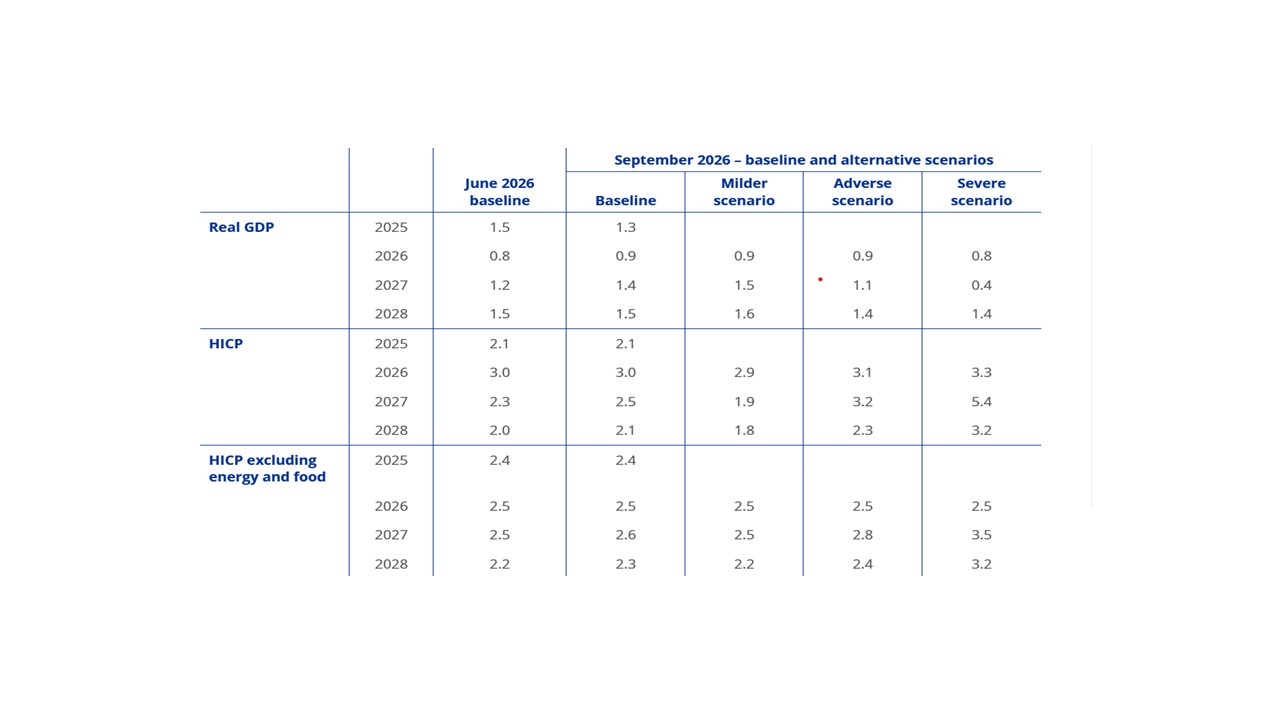
Today's increase in policy rates was accompanied by an update to the macro projections with upward revisions to both growth and inflation rates. On growth there is a modest increase this year given the better outturn in the first half of 2026 with momentum continuing in Q3 given strong performance in manufacturing, increased government spending on defence and infrastructure, and a rebound in consumer confidence.
On inflation there is no change in the projections for this year but an upward revision to 2027 and 2028 while core is now also higher in 2028, seen at 2.3% (in the baseline scenario) rather than 2.2% forecast in June. See Figure 1.
For both the growth and inflation projections bear in mind though, that these forecasts do not include the recent surge in bond yields and oil prices.
Figure 1: ECB New Projections
In the press conference, President Lagarde was asked whether she backed the market pricing of 3 more hikes but declined to commit saying that “markets do what they have to do…they do their job. We do our job”. The Bank remains data dependent and she said the committee had not debated the future rates path.
While president Lagarde was non-committal on further policy rate moves, we think today’s hike completes the ECB’s repositioning phase (two 25bp “insurance” hikes since June) leaving future decisions dependent on whether the energy shock persist and the current rise feeds into broader domestic price pressures. Going beyond 2.5% would mean that the ECB sees restrictive monetary policy as necessary. Additionally, our baseline for the Straits of Hormuz remains for a 2nd ceasefire driven by economic pressures and then lower energy prices in 2027 (here).
For now, evidence of second-round effects remains limited, with underlying inflation metrics, wage indicators and survey evidence still looking benign. The PMI services output price gauge has been stable since moderating in June, and household inflation expectations have eased. Wage growth indicators are essentially target-consistent. There are also a range of headwinds which could pose a challenge to the resilient growth narrative, such as the low level of the river Rhine, the rise in bond yields and political uncertainty in France.
Although the ECB did not provide solid guidance, our view remains that the ECB has now completed its tightening cycle, although the geopolitical backdrop leaves risks tilted towards the upside for rates. Ultimately the data flow does not currently justify pushing rates into restrictive territory. At present, we do not see particular urgency to tighten further though the ECB will continue to stress vigilance while remaining non-committal about the future policy rate path.