AI Equities: Correction/Consolidation?
• Overall, we feel that recent movements have been a correction/consolidation in the AI equity story. AI specific revenue growth still remains healthy and will support multi-year plans over cloud computing growth and in turn semiconductor demand. Even so, slowing free cash flows and overstretched parts of the AI complex can cause further intermittent corrections, which will spill over to impact the S&P500. We maintain the 7500 forecast for the S&P500 for end 2026, as we feel that the non AI U.S. equity market is too optimistic on corporate earnings momentum amid signs that low to middle income households are struggling (here) and the elevated level of nominal and real U.S. Treasury yields.
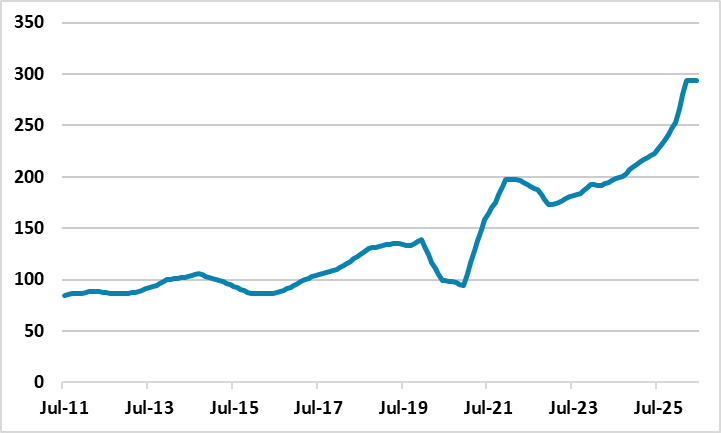
Figure 1: S&P 500 Earnings Per Share (USD)
Source: Datastream
The AI equity market boom has run into turbulence in the past month, with a major correction in semiconductor stocks and mixed performance from the hyperscalers. Is this a correction or the start of something deeper? A couple of points are worth making
• Semiconductor correction. The correction in semiconductor equities needs to be seen in the context of the sharp rally in the first 5 months of the year. Industry reports still suggest chip shortage and extra pricing power for the semiconductor complex into 2027. However, 2028 onwards see new factories coming on line, which should ease the demand/supply imbalance but reducing pricing power of the semiconductor manufactures. This is the driving force of the correction, rather than fears that datacentre buildouts will slow and hurt chip demand growth.
• Hyperscalers cashflow versus revenue. Alphabet down, Microsoft up after quarterly results last week reflects the tug of war between shrinking cashflows of hyperscalers and AI specific revenue surges. Some fund managers argue with the hyperscalers reduced free cash flows and greater capital intensity means that their forward P/E ratio will likely be lower and more volatile. However, what is still important is that AI specific revenue continues to grow strongly, which helps the current wave of optimism re cloud computing requirements and semiconductor chip demand. We have argued that this tug of war will mean more volatility and correction in AI centric equities, which we feel will continue through H2 2026. We have also warned that the AI structural revenue growth could be overlayed with a cyclical surge in corporate earnings (Figure 1) that may not last and produce low earnings momentum and a deep correction in the overstretched U.S. equity market (here).
Figure 2: Anthropic Run Rate (USD Blns) 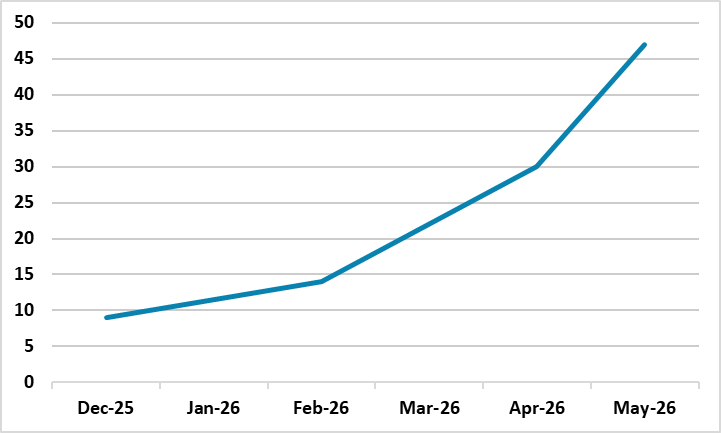 Source: Ticker Trends
• AI Labs revenue and moats. AI labs revenue remains the most critical element of the whole AI chain. A stalling of revenue growth will slow datacentre construction and semiconductor chip orders and would trigger a deep correction in the AI equity story. The missing piece of the jigsaw is Anthropic and Open AI revenue growth. Anthropic run rate was USD47bln in the May series H documents versus USD9bln in Dec 25 (Figure 2). Open AI figures are similarly unclear, though reports have suggested that the Open AI CFO has guided that July revenue topped the whole of Q2 (here). While some U.S. corporates have started to control token spending, adoption of enterprise AI tools are broadening in the business community. Where uncertainty exists is revenue growth from consumer related AI products and whether revenue growth will be as solid as businesses – once business embed AI solutions they are less likely to quickly change provider, given processes and procedures. The other issue is whether AI labs moats are permanent for revenue and potential future profits or whether this is first leader advantage is eroded by competition. One dimension is around AI labs is open source models from China, which are more cost effective for businesses and the gap has been narrowing versus U.S. labs frontier models. Certainly a place will exist in the global marketplace for China driven open source models, but U.S. models should rewiden the gap with new Nvidia Rubin chips that are not available to China AI companies. The other dimension is the U.S. frontier models that have lagged Anthropic and Open AI, such as Meta and xAI (Space X). Their lagging can see these equities underperform, but we see this as more a story of losers with winners elsewhere. One key test for AI labs will be whether the Anthropic and Open AI IPOs occur in autumn 2026 or are delayed until 2027. Any significant delay could cause a correction in AI stocks and the S&P500. The circular financing that has occurred (especially driven by Nvadia) could amplify any selloff to be large.
Overall, we feel that recent movements have been a correction/consolidation in the AI equity story. AI specific revenue growth still remains healthy and will support multi-year plans over cloud computing growth and in turn semiconductor demand. Even so, slowing free cash flows and overstretched parts of the AI complex can cause further intermittent corrections, which will spill over to impact the S&P500. We maintain the 7500 forecast for the S&P500 for end 2026, as we feel that the non AI U.S. equity market is too optimistic on corporate earnings momentum amid signs that low to middle income households are struggling (here) and the elevated level of nominal and real U.S. Treasury yields.