EZ CPI Preview - Another Piece of the Puzzle Before December's Hike
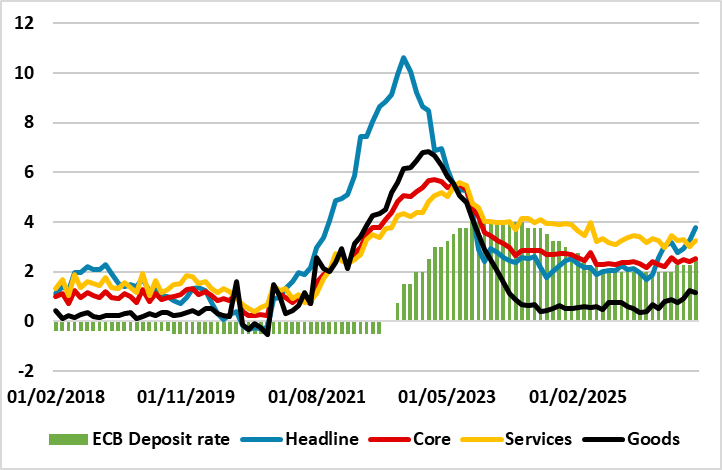
We expect headline annual inflation to hit 4% in October as the impact of the energy shock continues to filter through. That increase would represent a further uptick from the 3.8% recorded in September and from the 1.9% rate seen just before the start of the Middle East conflict. Preliminary national inflation figures released last week suggest the direction of travel for Eurozone inflation is upwards even if second round effects remain absent so far. Consensus currently expects an increase in the headline rate to 3.9%.
Energy costs featured heavily in all of last week’s national releases. Italy’s preliminary headline inflation, for instance, jumped to 5.4% in October from 4.2% in September driven by a surge in energy costs as well as transport costs, compounding the misery for Italians who saw zero GDP growth during Q3. Regulated energy prices (tariffs not freely set by the market) surged 59.5% y/y in October, more than double the previous month's rate.
Energy was also behind France’s headline rate increase with the breakdown showing the service sector had picked up to 2.7% (compared to 2.4% in September) and largely driven by faster price growth in accommodation and transport services. By contrast, Germany reported a slow-down in the annual headline rate given the introduction of temporary fuel tax cuts by the German government on 1st October, with the measures set to expire at the end of the year.
If, as we expect, Eurozone headline inflation does increase to 4%y/y in October that could mean the average for Q4 might well be above the ECB’s current expectation of 3.6%. Our view, and that of the ECB, is that headline inflation will continue to be affected by the war in the Middle East and oil prices. In addition, the start of winter (along with low gas storage levels) is also likely to push up gas prices in coming weeks, resulting in higher retail prices at the start of next year. Headline annual inflation is then likely to fall in early 2027 as the main impact of the conflict on energy prices drops out of the year-on-year comparison (the large month on month increases recorded early last year drop out of the annual inflation measure). Headline inflation should fall sharply in the second quarter of 2027 to around 2.5%.
As President Lagarde noted in the press conference, this week’s inflation print will be one of the six indicators the ECB will be watching to inform their December decision: last week’s Q3 GDP, two inflation prints (including October’s), the ECB Staff forecasts in December, another negotiated wages report, industrial production data and the PMIs. We expect the ECB to hike by 25bp to 2.75% in December.
Figure 1: Eurozone CPI and Main Components (Y/Y%)
Source: Datastream/CE