EZ PMIs Show Ongoing Growth Momentum in Q3
The S&P flash Eurozone PMI signalled a quickening in the pace of activity during September with the composite index rising to 53.1 from 52 before and boosted by rapid gains in the service sector and ongoing growth in the manufacturing sector. With September’s number now in hand the PMIs point to Eurozone GDP quarterly growth of around 0.4% in Q3 with the manufacturing sector continuing to be supported in Germany by rising AI and defence spending. The manufacturing sector seems immune to the oil price shock, supply chain disruptions or the low water levels on the Rhine river.
According to the S&P, who produces the survey, solid growth was registered across both the manufacturing and services categories, with rates of increase quickening to 55- and 10-month highs, respectively. Activity also increased in France for the first time in 10 months, with the rest of the Euroarea also recording solid but softer rise in output.
Inflationary pressures are also evident in the subcomponents of the index with input and output prices rising at the sharpest rate in 4 months. Toda’s numbers show that the euro zone's industrial sector continues to shake off both the oil price shock and supply-related disruptions caused by the Iran-US conflict. Stronger order book growth, in part owing to a recovery in export demand, is helping the sector.
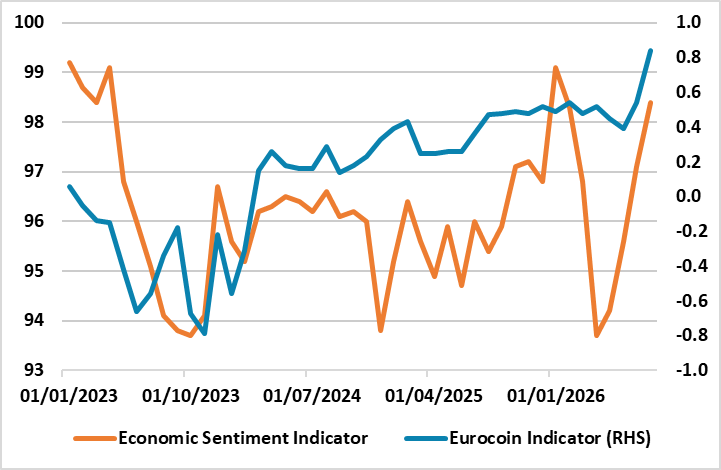
Other forward-looking indices are also consistent with a better Q3 growth outturn. The monthly Euro-coin indicator jumped in September with the European Commission’s Economic Sentiment Indicator also supporting that trend. Our estimate for Q3 GDP is also in the region of 0.3% q/q and in line with ECB Lane's comments this week that the economy should continue to grow at a "steady but moderate pace".....“provided the current energy shock does not intensify”.
Lane also noted that energy price increases should lead to higher and more persistent inflation, before it recedes towards our target starting in mid-2027 with no second-round effects with pressure on services remaining relatively contained. However, the second wave of energy price increases “that we're seeing today is likely to put upward pressure on food prices, energy prices more broadly, including electricity, and goods prices in general”.
The market currently expects the ECB to implements 3 hikes by June of next year while our view sees just one more increase to 2.75% in Q4 2026 and then on hold thereafter.
Figure 1: Eurozone Forward Looking Indicators (Index and Q/Q%)
Source: Datastream/Banca D'Italia/CE