AI and The U.S. Economy
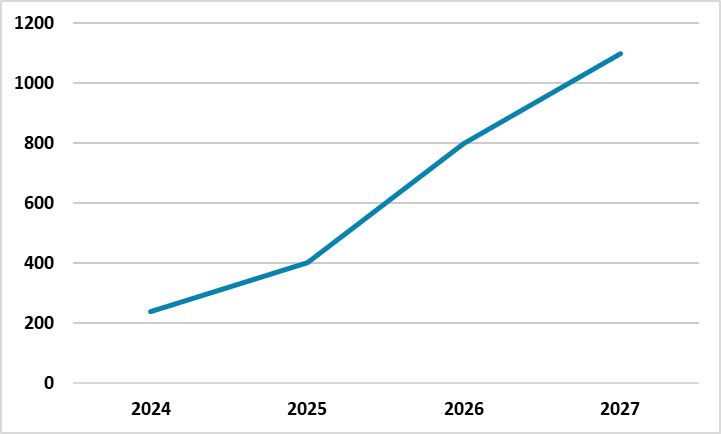
· The AI boom is boosting the U.S. economy through three channels (semiconductor and other product enablers for AI; the data center construction boom and wealth effects boosting consumption for rich households). If AI labs revenue growth remains fast then the boom can continue through 2027, with an expected acceleration in U.S. hyperscalers Capex to USD1.1trn worldwide. Meanwhile, though some sub sectors in the U.S. are seeing job losses, we do not look for a job apocalypse in 2027-29.
Figure 1: U.S. Hyperscalers Estimate CAPEX (USD Blns)
Source: Industry Estimates
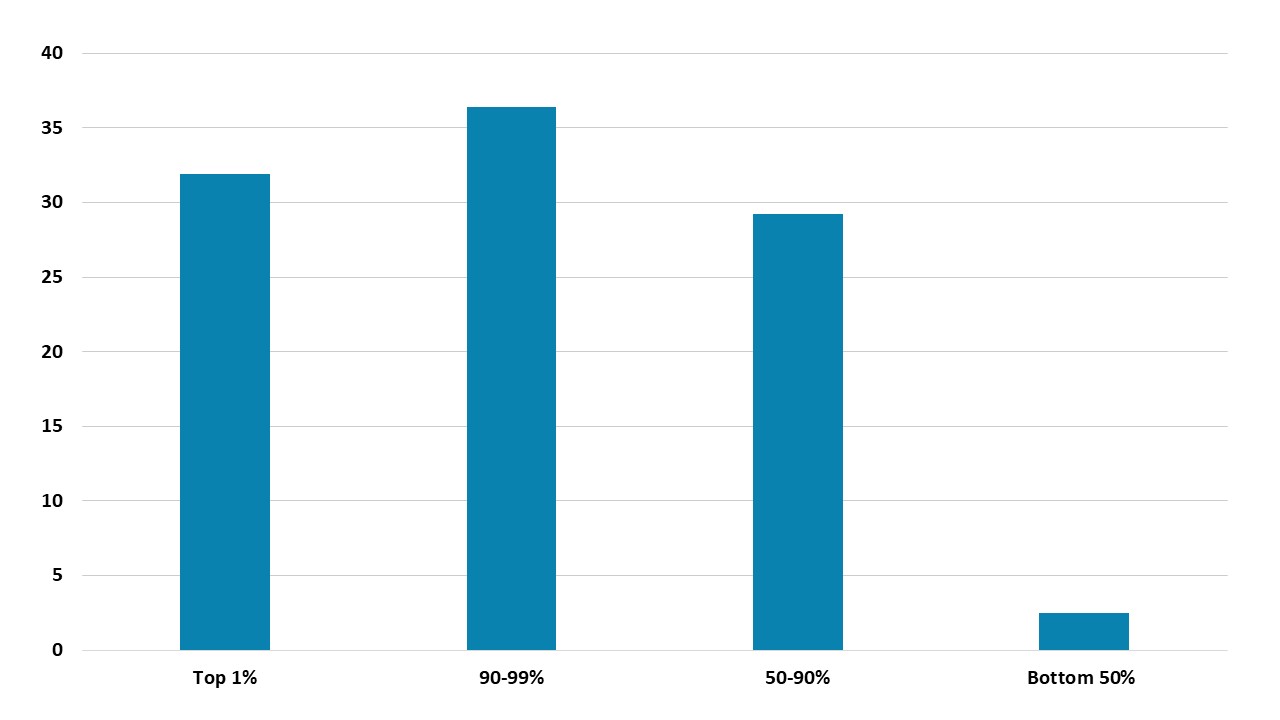
The U.S. economy is being boosted by the AI boom through three main channels. Firstly, surging AI semiconductor chip production and other AI products and services that are crucial to the hyperscalers and AI labs. Secondly, the data center construction boom, with an estimated 120 data centers currently under construction in the U.S. Thirdly, wealth effects from the boom in the U.S. equity market and tech stocks. The wealthiest households (Figure 2) are then sustaining close to 60% of consumption growth. Not all of the estimated USD800trn of Big Tech Capex expenses in Figure 1 (AI Capex is a subset) boosts the U.S. economy, both as the capex includes overseas spending and also imports of semiconductors etc. However, the boost is enough to produce reasonable headline growth momentum for the U.S. economy.
Figure 2: U.S. Wealth Distribution By Percentile (%)
Source: Federal Reserve (here)
The prospect remains that this AI ecosystem boom will continue into 2027, with healthy corporate earnings expected from big tech from the start of the reporting season next week Crucially, AI lab revenue continues to rise sharply, with Open AI revenues reported to have accelerated since mid-year and Anthropic having had amazing growth since the end of 2025. Provided that AI lab revenue growth continues to be fast, the AI ecosystem will remain buoyant and 2027 Capex spending from the hyperscalers will likely exceed the 2026 huge investment wave (Figure 1).
Even so, 2027 may not be as smooth for AI labs and in turn their huge investment in semiconductors and data centers into 2028/29. Firstly, the numerous unauthorized hackings by frontier AI models are one of the reasons behind the delay in Open AI IPO into 2027. So far this looks like a speed bump for the AI labs, which has partially been addressed by the Trump administration calls for light touch industry self-regulation. However, AI specialists and academics are concerned that the frontier AI models are not aligned to human objectives and these risks larger or fatal cyber-attacks in 2027-28 – the existential threat is a separate debate into the 2030’s. What would happen to AI labs revenue prospect if a major cyberattacks caused a banking panic or prolonged infrastructure failure? Secondly, open sourced systems (mainly China) have been taking a greater share of AI usage, as companies seek quick wins from targeted implementation of AI in tasks. So far this has not stopped the frontier AI labs in the U.S., as the overall pie has been growing so rapidly. However, any slowing of overall token usage could bring into sharp contrast the huge capex of frontier AI Labs (USD518bln in the coming years from Anthropic’s leaked S1) and confidence in semiconductor purchases and data center construction.
For now this is a modest risk in 2027, which means that the AI ecosystem and U.S. equity market is unlikely to see a lasting and prolonged hit though could see intermittent equity corrections given that the AI race is becoming more volatile.
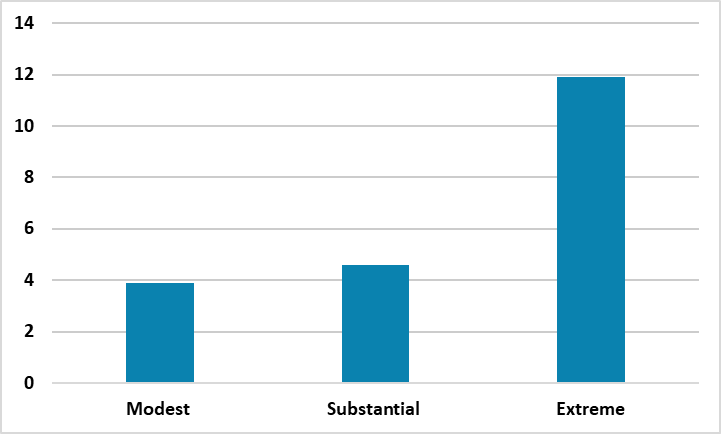
The other issue for the U.S. economy is whether 2027 will see a more rapid decline in employment. AI labs paint a picture of modest or large surges in unemployment in the coming years (Figure 3). The current evidence suggests an AI effect but not massive. The establishment data survey shows Finance and Information have seen job losses in the last couple of months and the trend has been weakening since 2025. Other sectors are not being impacted in terms of net job losses.
Figure 3: 2030 U.S. Unemployment Rate Under Various AI Adoption Scenarios (%)
Source: Anthropic (here)
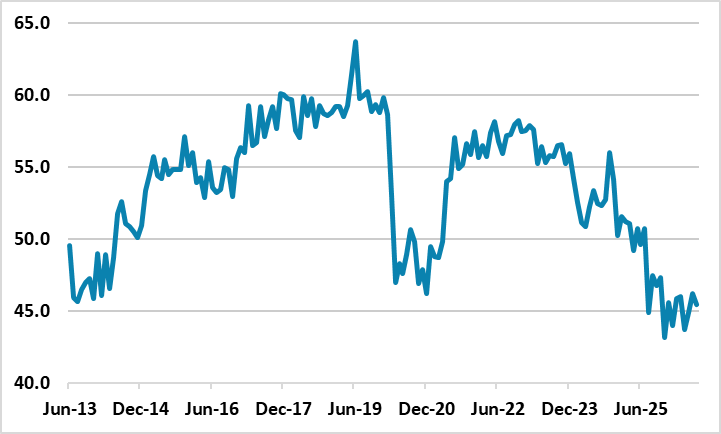
Meanwhile, the NY Fed microeconomic data shows that the probability of finding a job remains soft (Figure 4), but is not plunging. This softness is most likely reflective of the K shaped economy. We also wrote in detail earlier in the year about the impact of AI on productivity and job losses (here). We still remain inclined that AI impact will be moderately greater in impact on the U.S. economy than the ICT boom. Anecdotal evidence suggest that U.S. company adoption is surging at a faster pace than internet adoption (here), which could mean earlier benefit and larger adoption rates. This could start to feed through more noticeably in 2027/28, but we do not see evidence of a job apocalypse in the next few years.
Figure 4: Mean probability of finding a job in the next three months if one loses a job today (%)
Source: NY Fed (here)
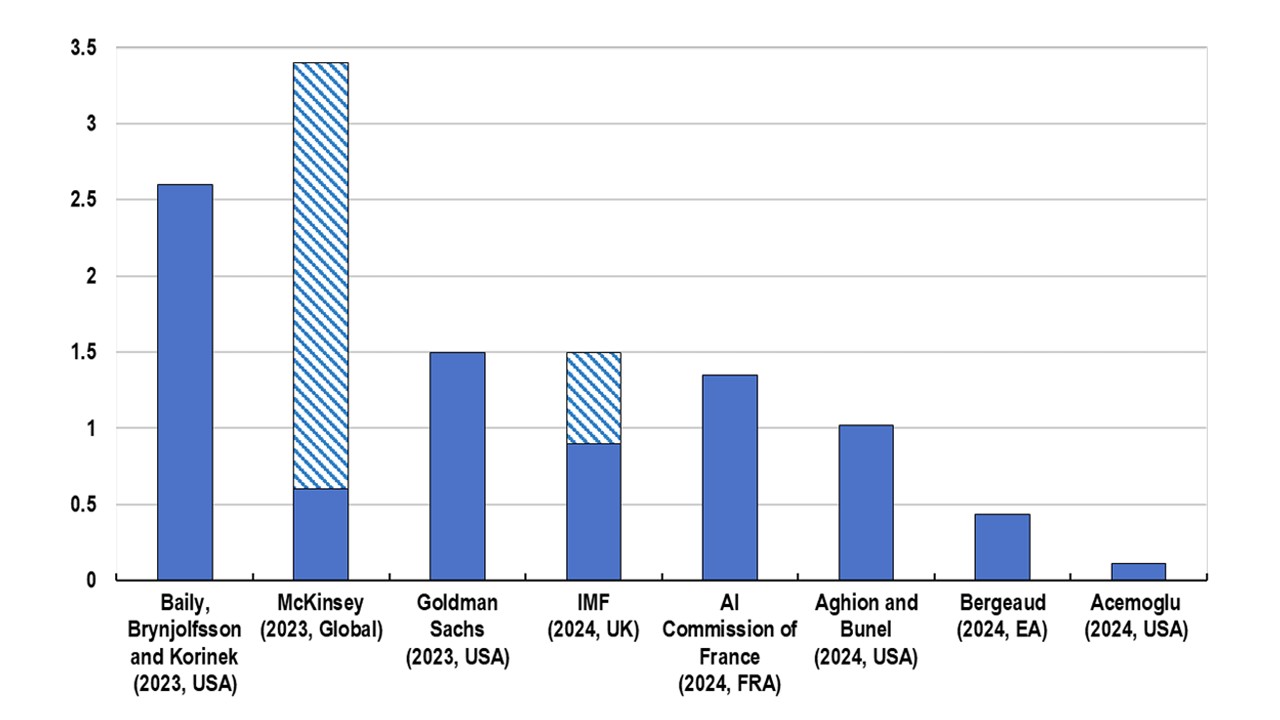
One reason is different forecasts on the proportion of the economy that is exposed to AI, with optimists arguing around 50% of the U.S. economy and OECD/others at 35%. Manual labor needs not only AI, but also major advances in robotics to ensure wider exposure to AI in the economy. The major issues for robotics are short daily battery life, high cost and insufficient dexterity of humanoid robots for manual mining/construction/manufacturing and service jobs (fixed placed industrial robots are different). Prospects for AI in computer programming/finance/professional business services can thus not be extrapolated across the economy. Most experts do not see widespread adoption of humanoid robots until the mid-2035’s (Mc Kinsey (here), which promises a 2nd wave of productivity boost in the 2035-45 period but not 2026-30. Concept humanoid robots are exciting, but the deployment phase will likely be long. Productivity and GDP gains will likely take many years to feed through (Figure 5).
Figure 5: Predicted Increase in Annual Labour Productivity Growth over a 10-year Horizon Due to AI (%)
Source: OECD 2024 (here)