EZ HICP Review: Higher Inflation Ahead. How Will the ECB Respond?
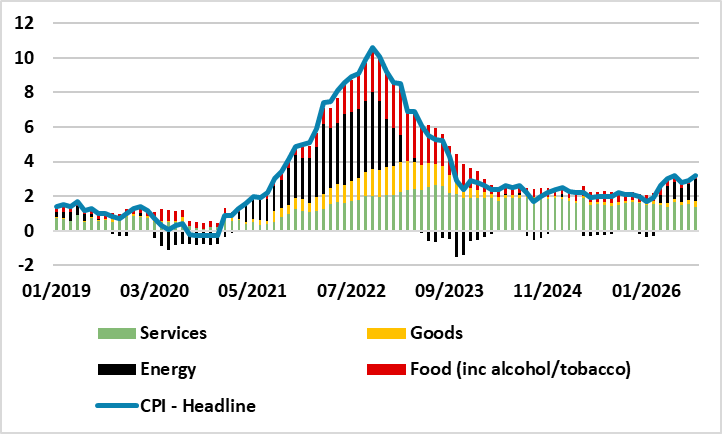
Headline annual inflation is likely to increase again in September given the push from higher oil and gas prices. CPI numbers from member countries such as Spain already point to a likely strong jump in the EZ September while the increase in the European Commission Selling Prices indicator also backs that trend. To date, the increase in headline EZ inflation has been driven largely by the energy component of CPI along with a smaller contribution from Goods; there is little evidence of inflationary pressures in the Services component of CPI. Of the 1.3 percentage points (pps) increase in the headline rate since the outbreak of the war (from 1.9% in February to 3.2% in August), the goods sector has contributed 0.1 percentage while services have contributed -0.1 pps to the headline rate. The annual rate of inflation in Services has been steady around the 3% mark this year with core also unaffected.
The energy component of CPI has contributed the bulk of the increase in headline inflation with a 1.6pp gain since February. Food CPI has contributed negatively with -0.3pps in the same period though this is likely to increase given that fuel is a key input in agricultural production. The impact of higher energy and fertiliser prices, alongside adverse weather events, will likely push up food’s contribution to CPI. Core inflation has also been steady for the past year and there is little evidence that second round effects are beginning to appear.
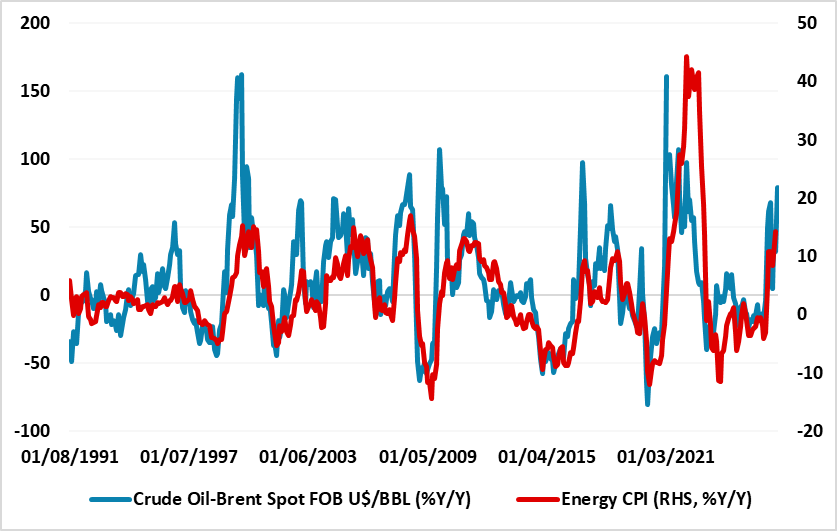
Figure 1: Energy CPI and Oil (%Y/Y)
Source: Datastream/CE
What we have seen so far in the pick-up in inflation are the “direct” first round effects from the oil shock. These effects tend to be immediate and mechanical in relation to transport fuels, though the pass-through to electricity and home heating prices can take some time. “Indirect” first round effects, come through more slowly as higher transport and fuel costs make their way through the supply chain to goods and services. The potential delayed impact on food prices would be a case in point. Taken together, however, these first-round effects would mainly shift the price level up and only have a temporary effect on inflation, it would not be recurring. The oil shock, if it is short lived, will basically come out in the wash.
What concerns the ECB are second round effects; that an initial oil shock feeds into the wage setting process, the pricing and margin decisions of firms and the inflation expectations of households and firms, with the risk of turning inflation not just more broad-based but also persistent.
The transmission from higher inflation to higher wages is not automatic and will depend on the state of the labour market and broader supply and demand conditions in the economy. Wages make up a larger part of services given that labour is the single largest cost for businesses in the service sector.
Any second-round impact on wages will likely be slow to come through given softening labour markets.
How the ECB reacts depends on what weight it places on the two potential risks: demand destruction in the economy or propagation to the rest of the economy from the initial oil price shock.
A surge in the price of oil has the potential to affect demand via its impact on households’ real incomes, and in delaying investment decisions as a result of increased geopolitical and economic uncertainty. It also runs the risk that rising uncertainty leads to an increase in households’ precautionary savings. At the same time, the Bank’s concern over the risk of propagation of the initial shock are lower today than they were in 2022 given that the current economic backdrop differs significantly from that of four years ago when the ECB hiked more forcefully.
Back then inflation was already high and climbing even before the start of the war in Ukraine while the unemployment rate was low and supply chains faced significant bottlenecks. Back in 2022, the economic backdrop made the pass-through along the pricing and wage-setting chain more likely than it does today.
Figure 2: Contribution to Headline Inflation From Key Components (%Y/Y and percentage points)
Source: Datastrem/CE
The ECB, just like us, will be watching for evidence of second round effects and any potential de-anchoring of medium-term inflation expectations. We understand why the ECB is lifting policy rates since failure to react to a significant deviation of inflation from its target would present a communication problem. In the ECB’s words “markets, firms and households may find it difficult to understand the Bank’s reaction function if there is no reaction” and that increased uncertainty “about the reaction function could increase volatility in expectations about inflation and the policy rate path”. We continue to believe that second round effects will not materialise beyond first round effects and that the ECB will only need to hike one more time in this cycle, to 2.75%. Our view still hinges on the assumption that geopolitical tensions will start to ease after the US mid-term elections.