EZ Nov PMIs Point to Ongoing Steady Growth in Q4 as France and Germany Diverge
The Eurozone composite index was unchanged at 51.7 in November representing ongoing modest activity in the bloc. Based on the unchanged activity suggested by the composite index, growth in Q4 is likely to be in the region of 0.3%-0.4% q/q following the 0.4% outturn in Q3. By country, the flash PMI estimates show contrasting fortunes in Germany and France with the former seeing strong activity while the latter is in the midst of a contraction and likely to enter a technical recession in Q4.
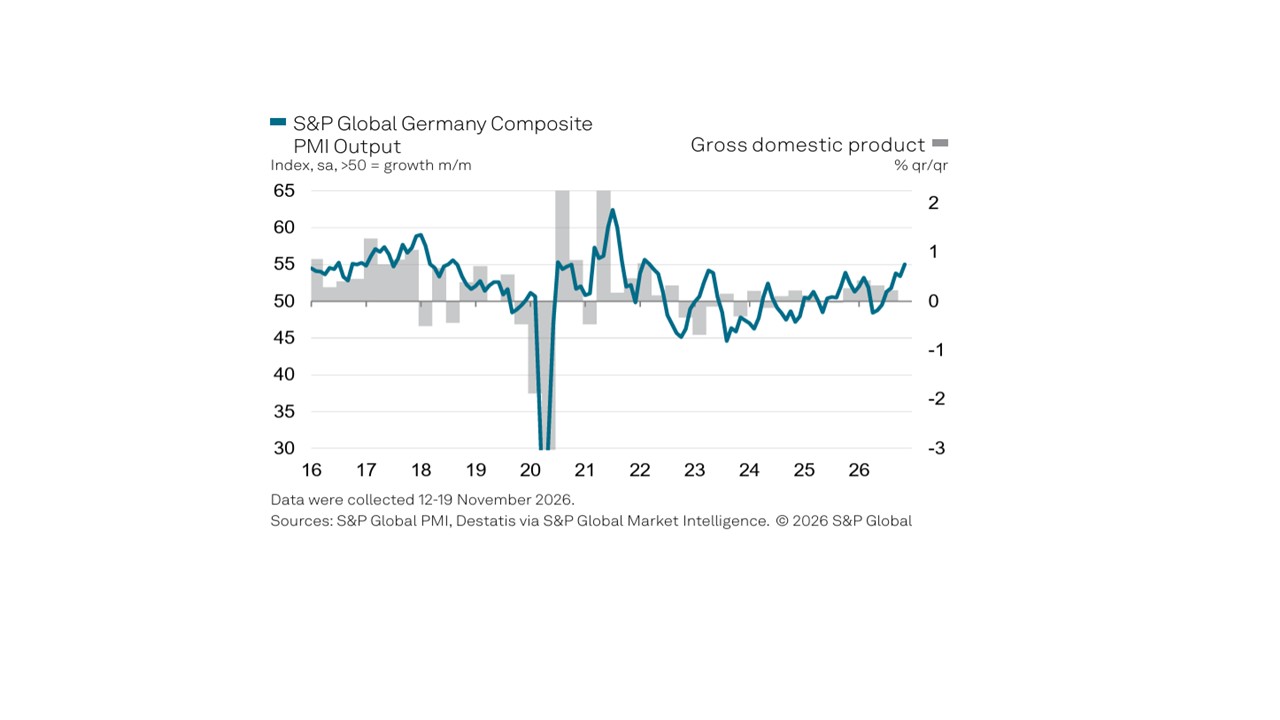
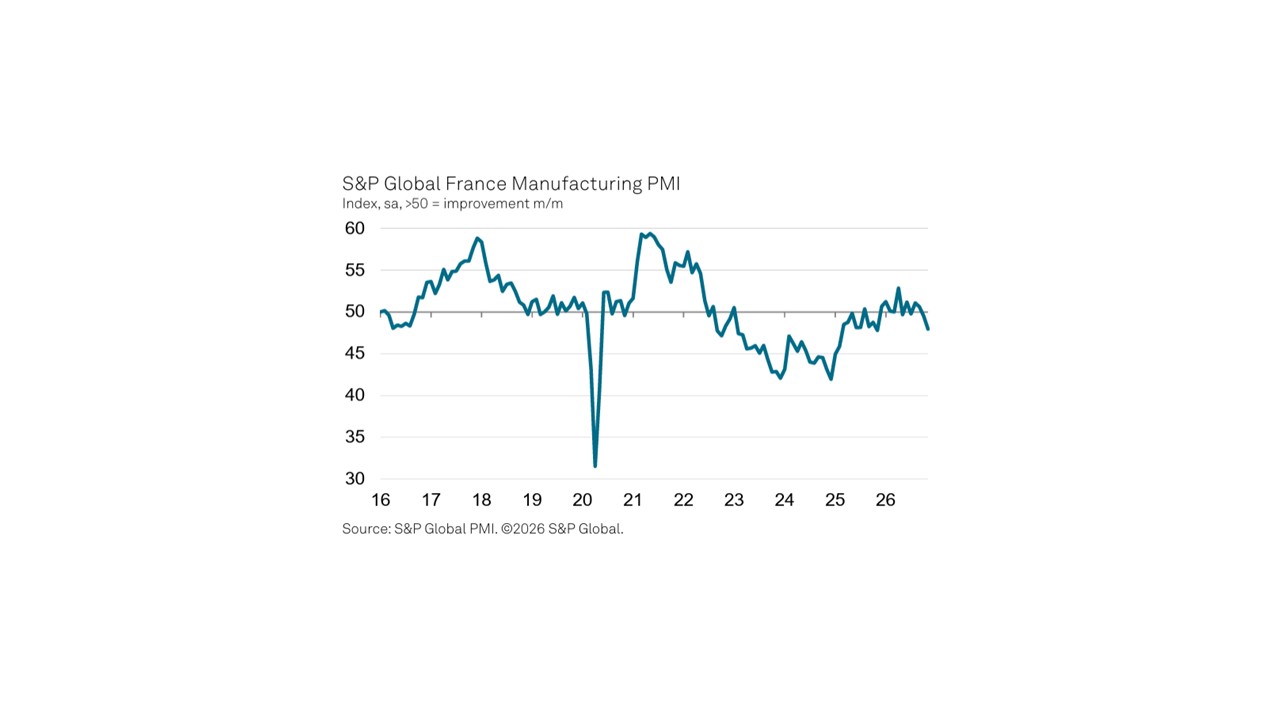
The Eurozone composite index was unchanged at 51.7 in November representing ongoing modest activity in the bloc. But this overall picture of resilience masks diverging fortunes among the largest two countries in the Eurozone with Germany powering ahead while France is in the depths of a downturn. The composite index accelerated to 55 in Germany from 53.4 while France saw the same index slowed further to 46.2 from 46.6 before. Along with an upturn in German manufacturing, which continues to be support by rising export orders, the services sector also saw the strongest improvement in more than a year, hinting at a broadening economic recovery. In France, total new order intakes declined markedly with factory production falling at the quickest pace since February 2025.
Given France’s deteriorating trend it is possible that the economy may enter a technical recession in Q4 having contracted -0.1% q/q in Q3. The country is already facing a large fiscal deficit along with a messy political situation and now faces the prospect of a deepening economic downturn which in turn will continue to raise budget concerns. In Germany, the flash estimate also showed a renewed rise in new work across the services economy.
Based on the unchanged activity suggested by the Eurozone composite index growth in Q4 is likely to be in the region of 0.3%-0.4% following the 0.4% outturn in Q3. The ECB is still expected to hike by 25bp in December.
Separately, it seems that Spain’s Hernández de Cos, who currently heads the Bank for International Settlements, will likely succeed President Lagarde at the ECB. He is widely regarded as a moderate dove, though despite that label, he backed the ECB's interest rate hikes in 2022 to combat surging inflation. He also emphasizes debt sustainability, targeted support, and fiscal-monetary coordination, warning that mounting public debt poses risks to macroeconomic and financial stability
Figure 1: Germany's PMI Showed Strong Activity in November
Source: S&P Global PMI/CE
Figure 2: While in France Activity Weakened Further
Source: S&P Global PMIs/CE