U.S. August Employment - Bounce due to corrections in two sectors but could matter in a close Fed call
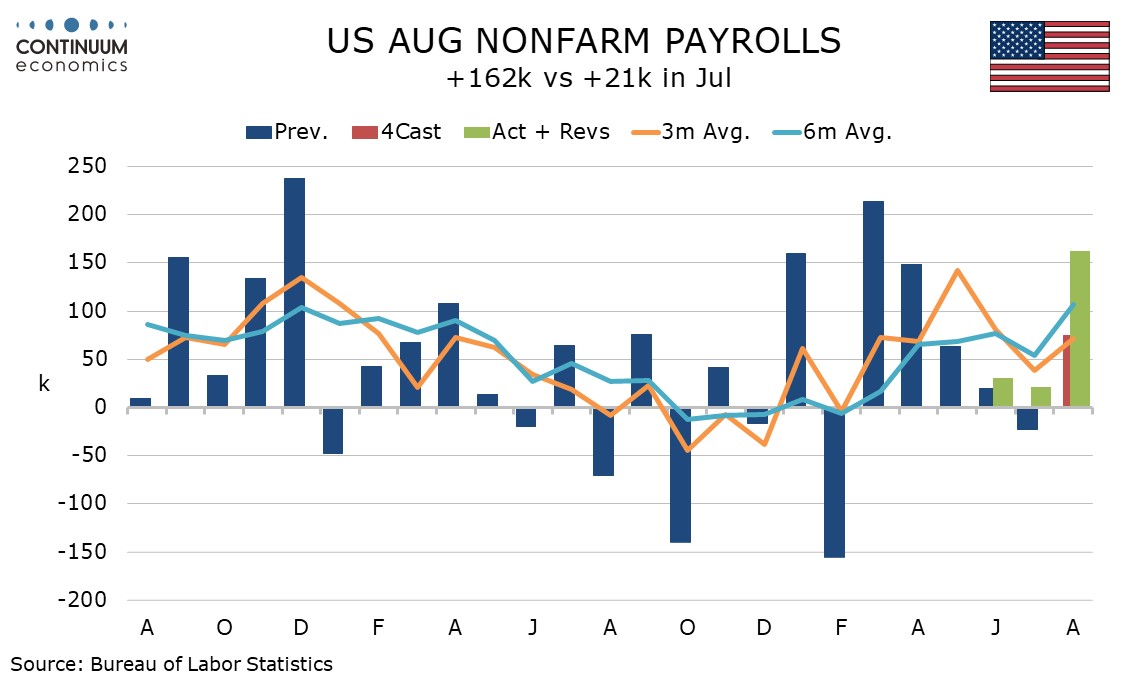
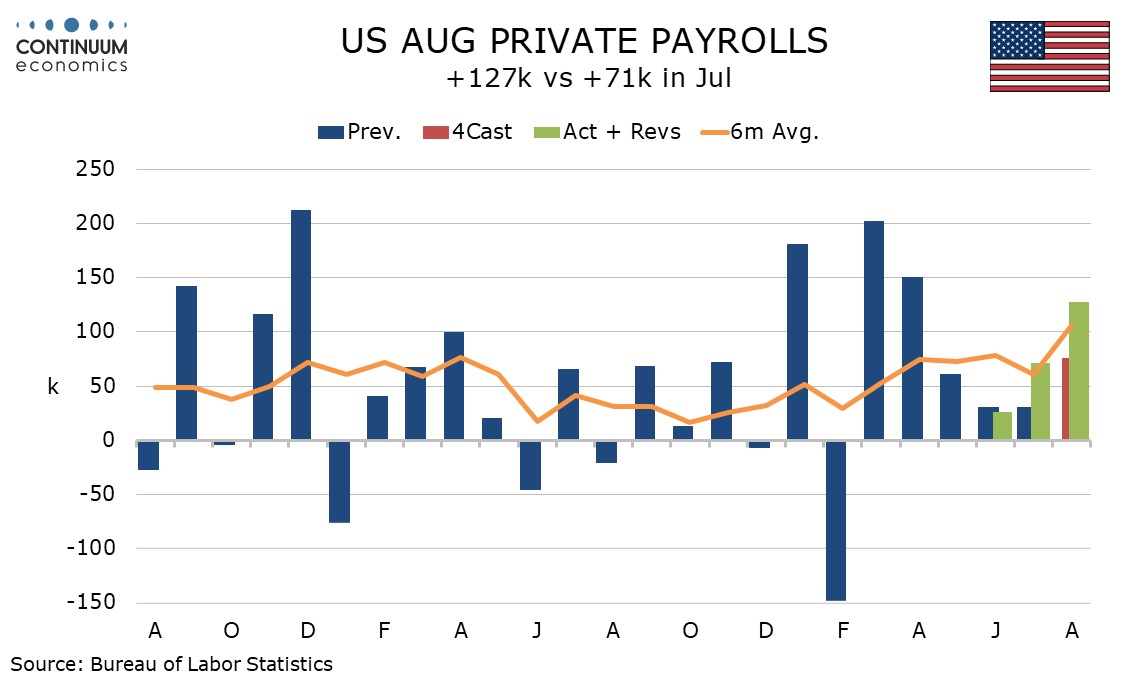
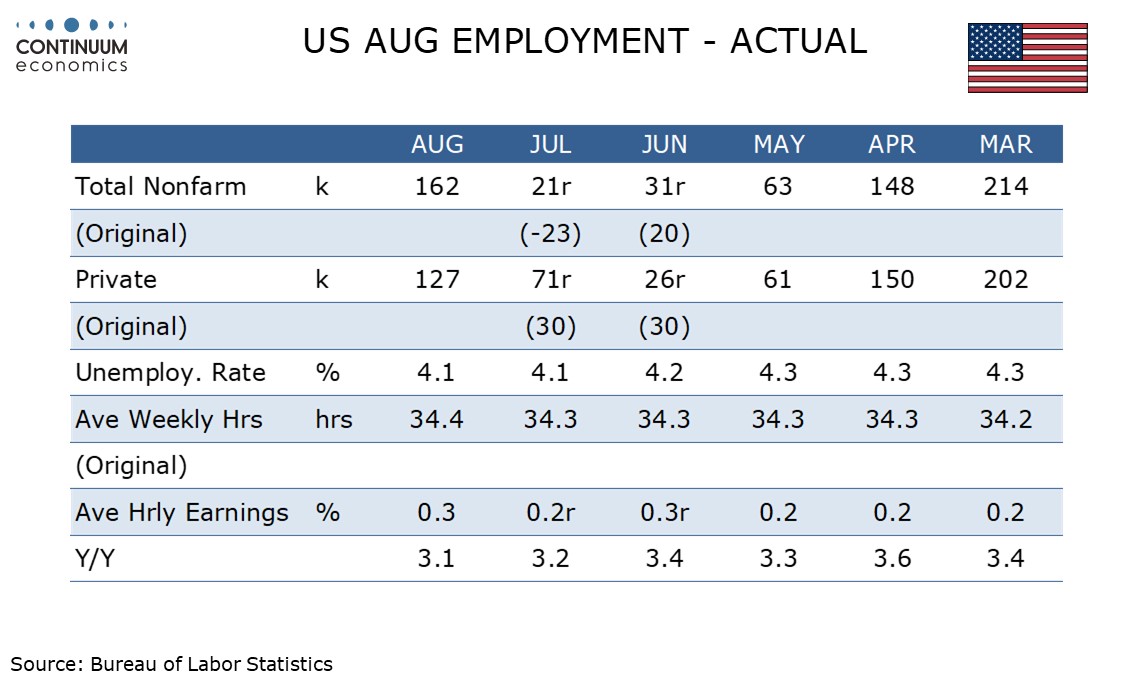
August non-farm payrolls are stronger than expected, 162k overall, 127k private, with upward back month revisions. Unemployment is steady at 4.1% and as expected as are average hourly earnings with a 0.3% rise, but the workweek at 34.4 hours is surprisingly strong. The payroll surprise looks corrective and the Fed has made it clear that inflation is the key to its September 16 decision. However, if the inflation data is not conclusive either way this report may help tip the balance to a tightening.
Net upward payroll revisions are 55k overall and 37k in the private sector. We had downplayed somewhat the weakness of July’s payroll, which is now up by 21k rather than down by 23k, noting most of the weakness came from local government education work and leisure and hospitality.
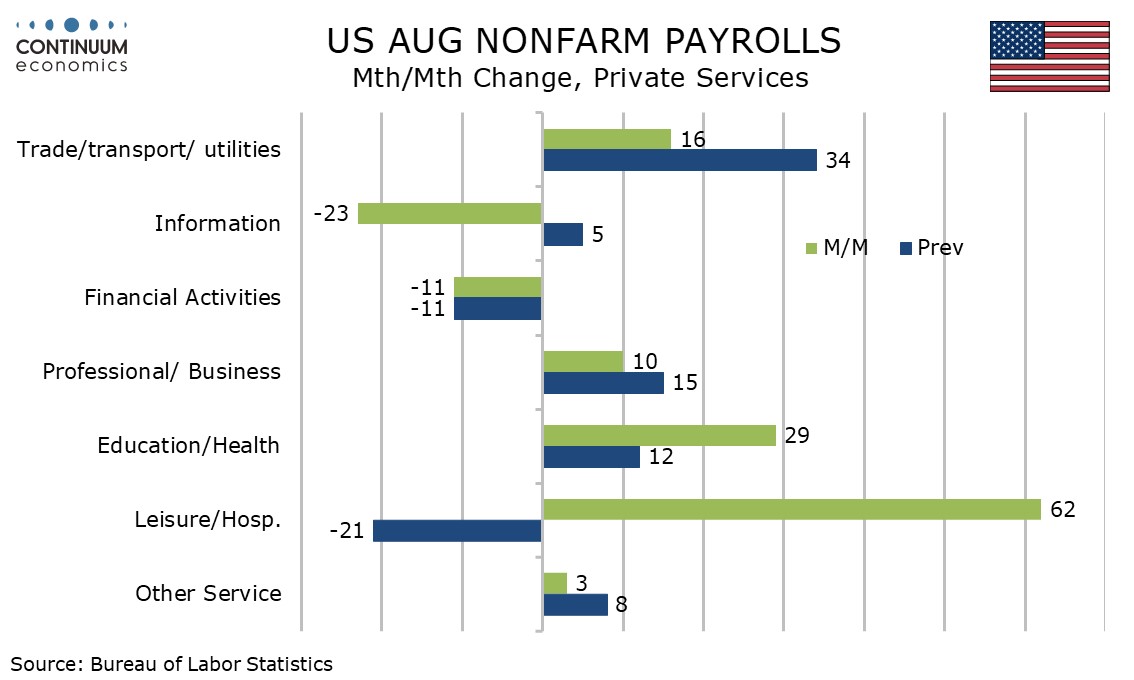
Leisure and hospitality saw a strong bounce of 62k in August which does not fully erase 75k of declines in the two preceding months. The World Cup months, contrast to many expectations, saw the sector well below trend but that proved to be temporary.
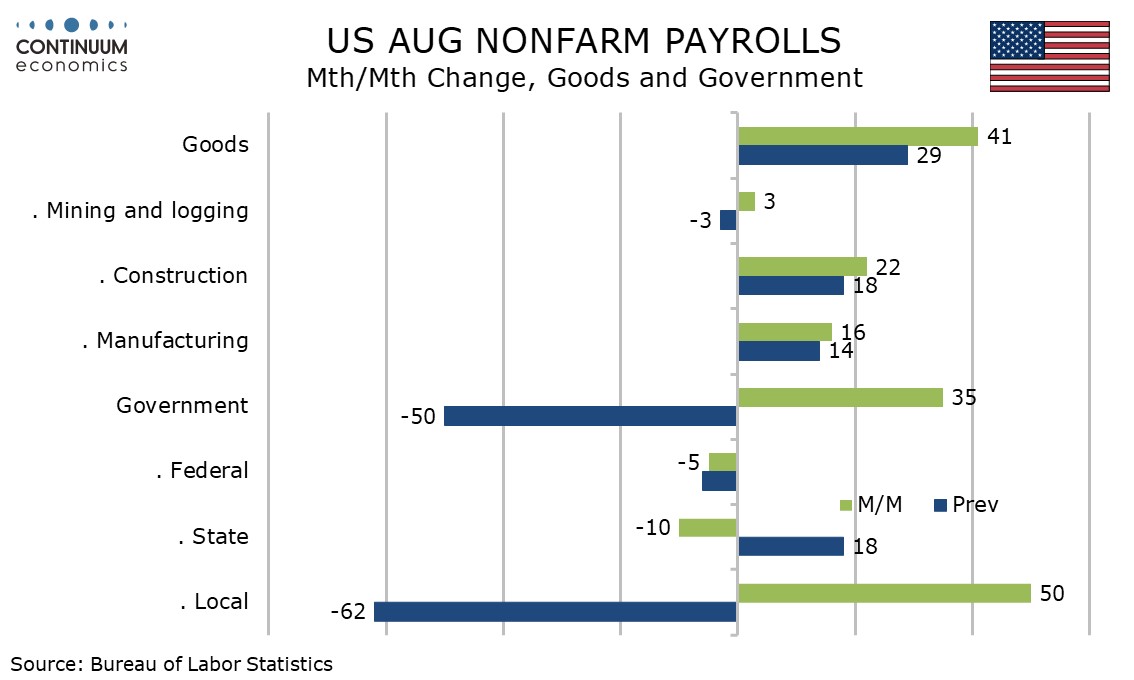
Government increased by 35k in August after a 50k July decline, with local government education work rebounding by 42k. We had expected the July dip to be reversed in September when schools reopened, but the bounce came earlier than we had expected.
Private payrolls excluding leisure and hospitality increased by 65k in August, versus a revised 92k in July and 80k in August. Given the two volatile sectors noted above, there is not much underlying change, even a slight slowdown.
Education and health, the leader of most recent payroll gains, has lost momentum in recent months, and its 29k August rise is quite subdued, with 28k of that coming from health. Information at -23k and financial at -11k are trending lower, probably because of AI, but construction at 22k and manufacturing at 16k were quite firm, with both probably led by data centers. The net impact of surging AI investment on employment may be fairly neutral.
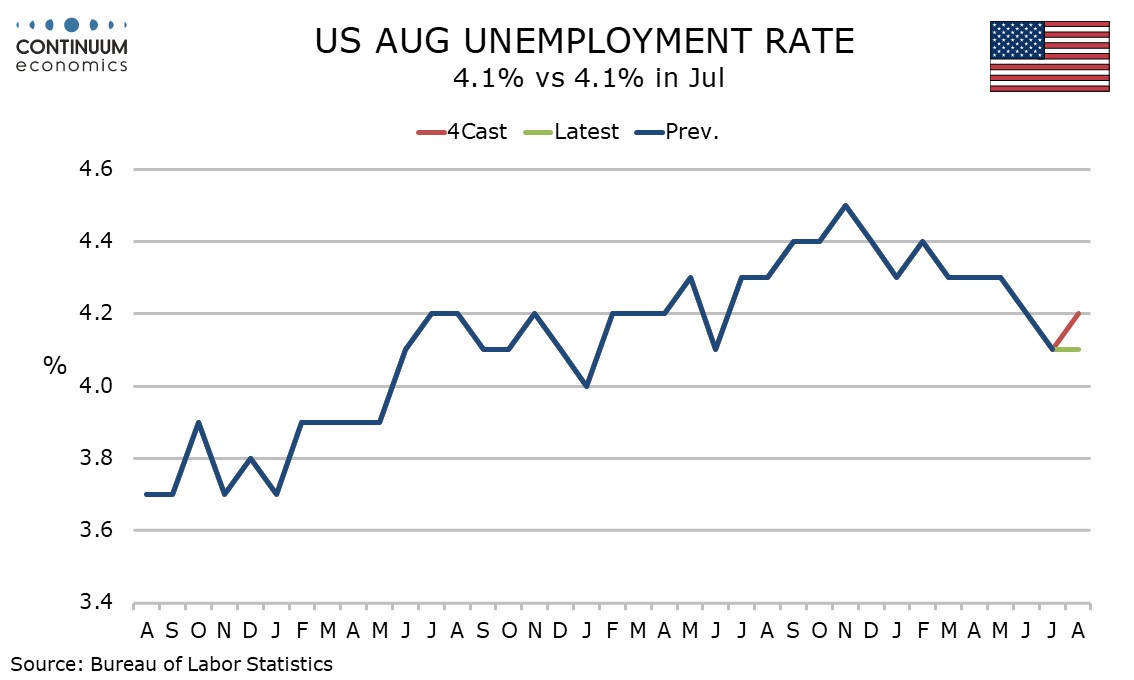
The unemployment rate was steady at 4.1% but with a surge of 569k in employment after two straight declines totaling 594k (as measured by the survey of households rather than payrolls) with the labor force up by 683k after two straight declines totaling 984k.
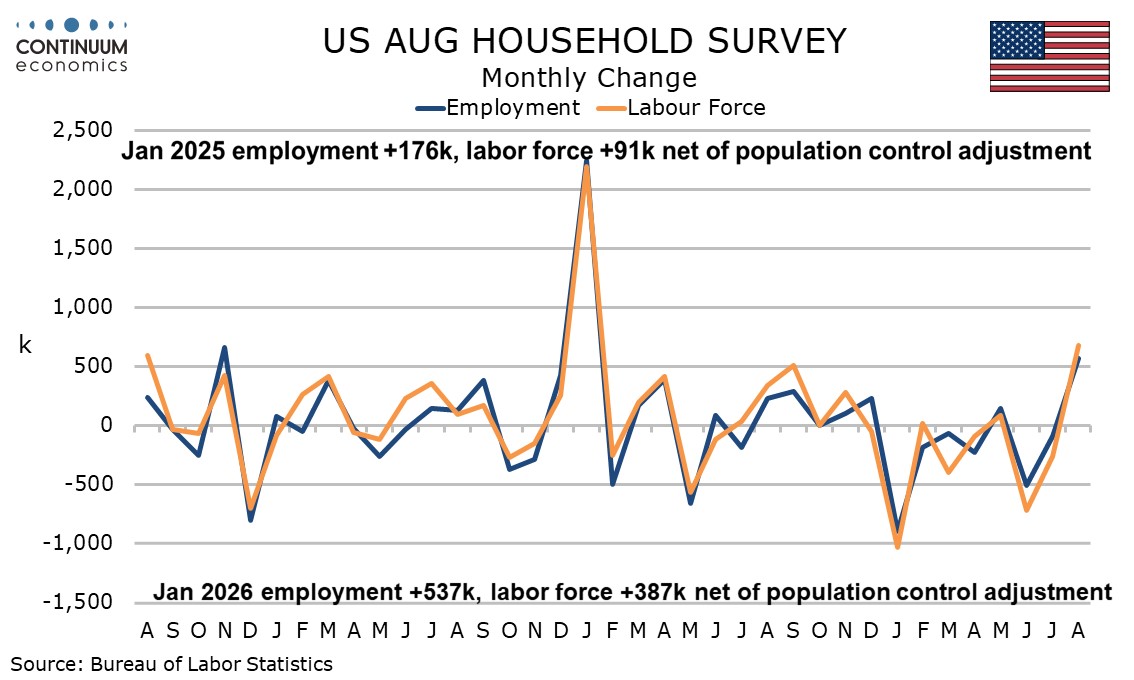
Fears of a sharp decline in the labor force tightening the labor market may be eased somewhat by these corrections adding to the case for the FOMC not to put too much weight ion this data. The large swings in leisure and hospitality work may reflect labor supply rather than labor demand.
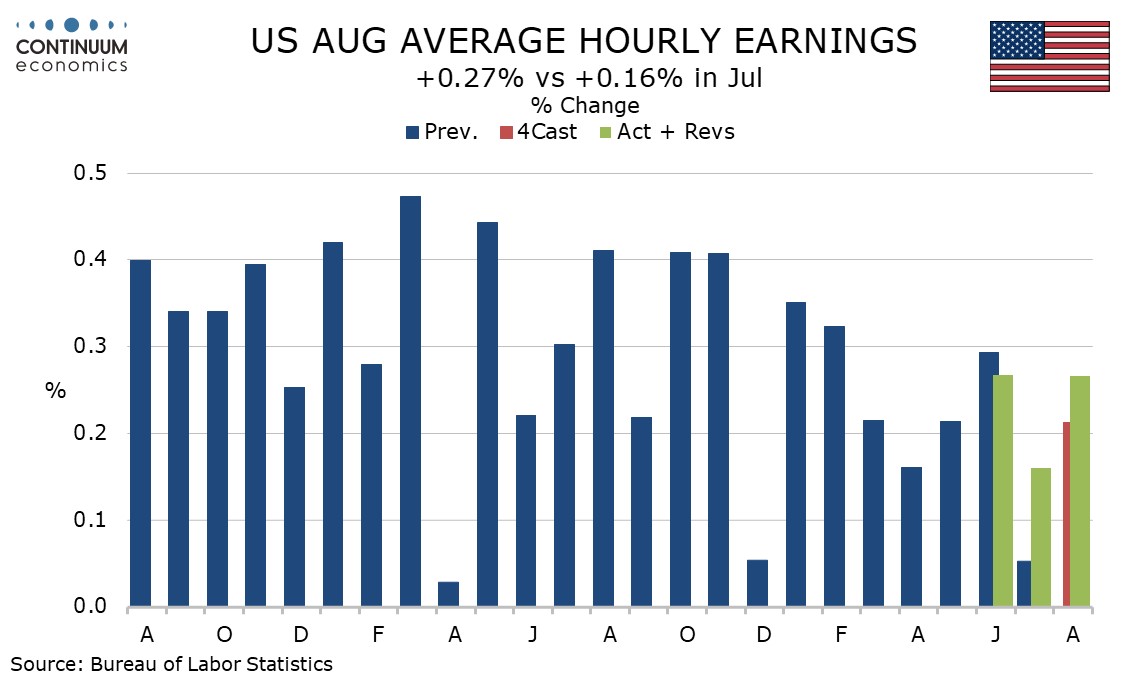
Average hourly earnings rose by 0.3%, 0.27% before rounding with July revised to 0.21% from 0.08% which outweighs a downward revision to July to 0.29% from 0.32%.
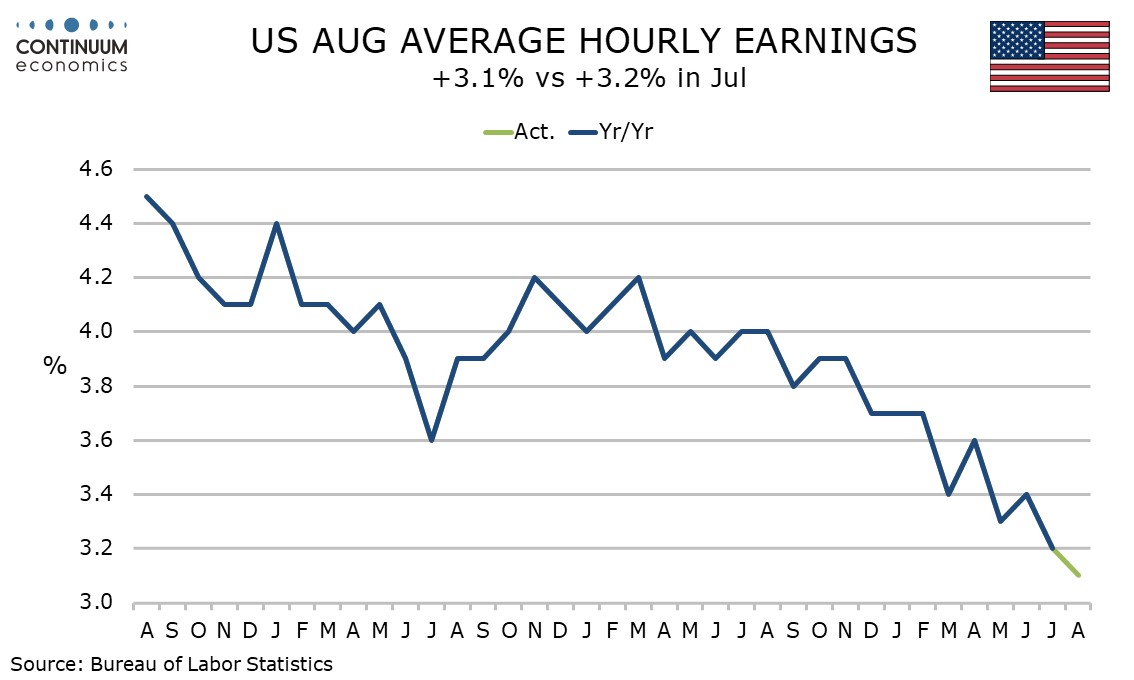
Trend is slowing and appears to now be close to 0.25% per month and consistent with 2% inflation given productivity gains. Yr/yr growth of 3.1% from 3.2% is the slowest since May 2021, though Fed’s Chair Warsh downplayed the significant of wages as an inflation guide in his recent speech.
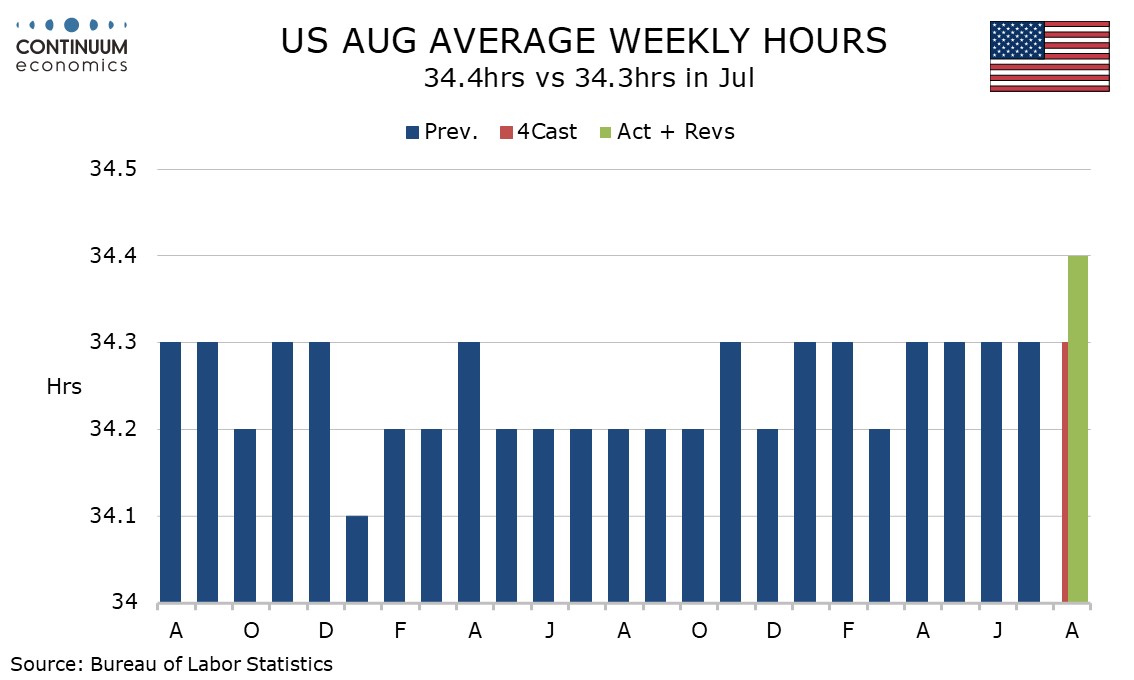
While there are several reasons to downplay the significance of this report relative to upcoming data it is still a strong one. The workweek at 33.4 hours after four straight months at 34.3 is the strongest since March 2024.
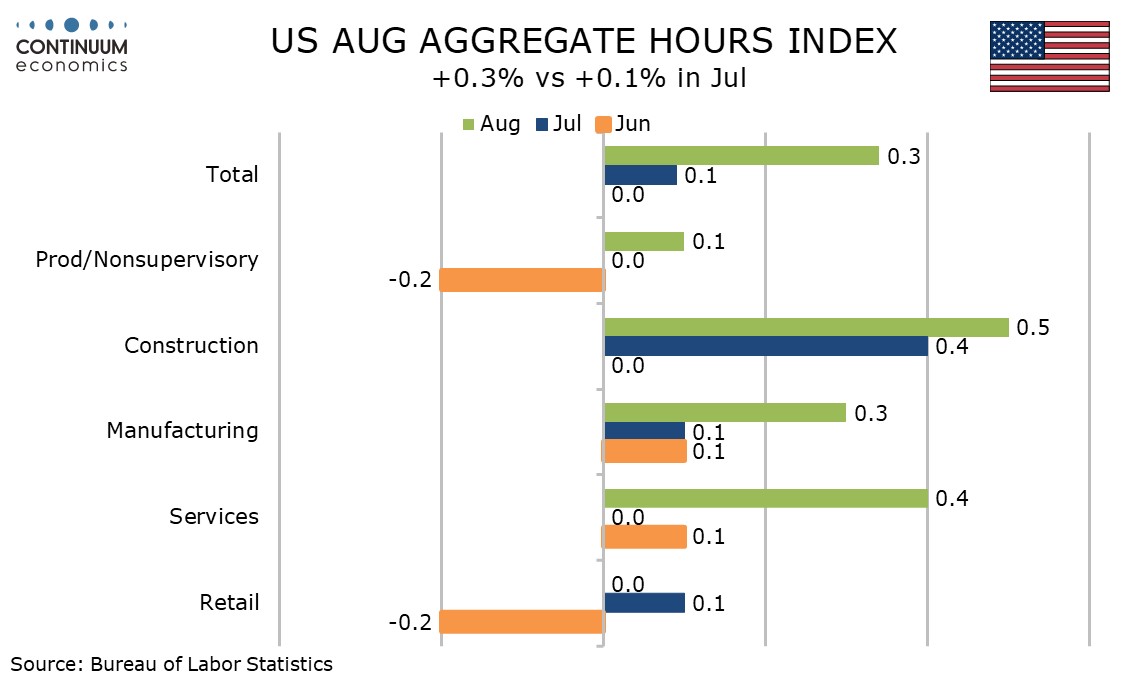
This meant that aggregate hours worked increased by 0.34% after a 0.09% rise in January and this is consistent with other signals that Q3 GDP is likely to see a healthy increase. Construction, manufacturing and services all saw healthy gains in aggregate hours worked.
September 16 Fed expectations are getting whipsawed with Warsh seeming to signal a hike but Waller providing a subsequent offset. Both Warsh and Waller stressed inflation data rather than employment and it this employment report does not suggest much change in underlying trend. However, in a close Fed call, it could shift the balance towards a tightening.