EZ HICP Preview (Mar 3): ECB Too Focused on Services Inflation as Goods May Soon Take Core Below Target
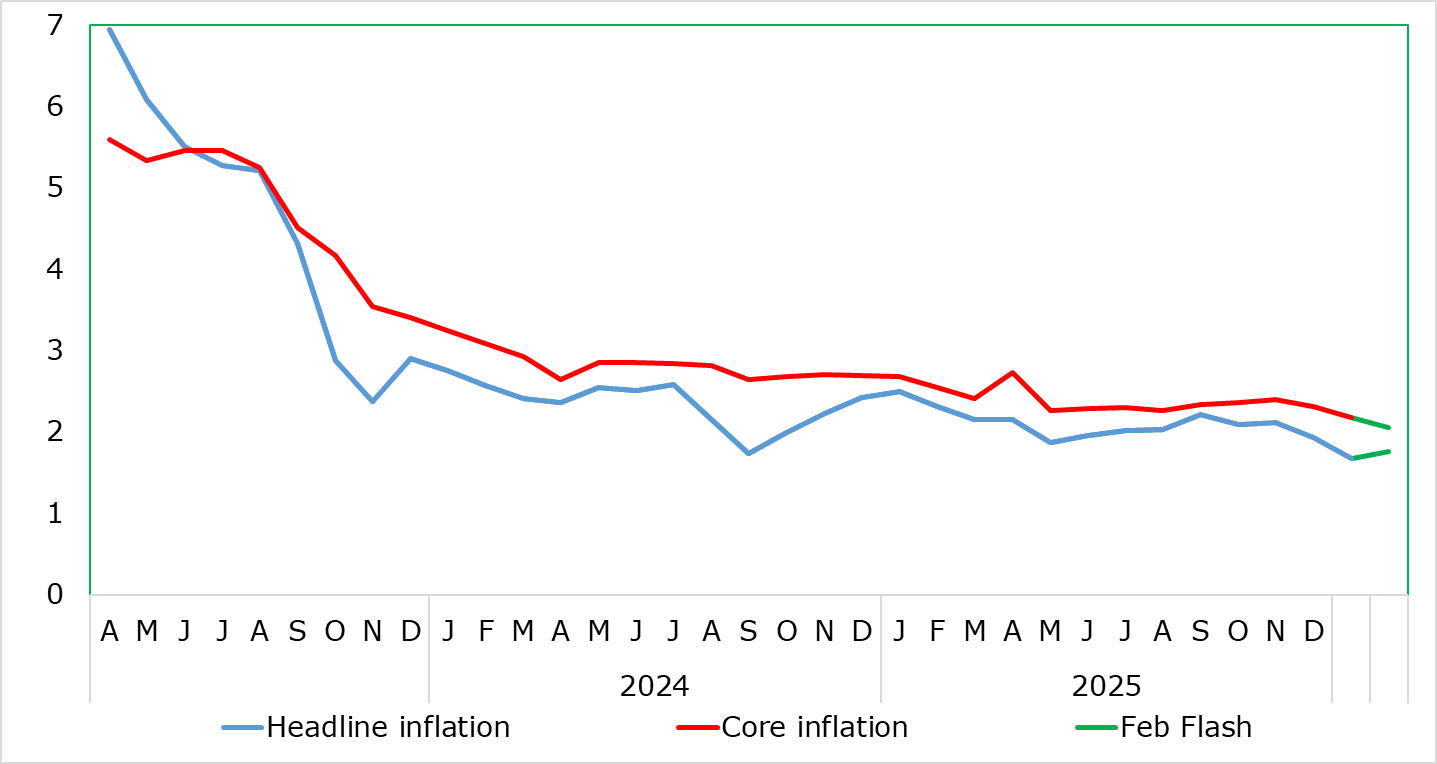
Having dropped to 1.7% in the January data, thereby matching expectations and the short-lived Sep 24 outcome, it is possible that the headline HICP rate may not be any lower through this year and into next. Indeed, we see the headline rate edging up to 1.8% in the February flash mainly due to energy. But the core could drop another notch from January’s 2.2%, that being the lowest in over five years and hinting at a clear undershoot of the ECB’s Q1 2026 projection. Partly this reflects a further slowing in services inflation, but also even weaker non-energy goods prices (NEIG). To a large extent, this expected fall in the latter reflect softer import prices. But while inflation is not much of an issue for the ECB given its proximity to target, more weakness in services allied to possibly NEIG inflation may cause fresh concern at the ECB is (as we forecast) it soon results in core inflation undershooting target.
Figure 1: Headline and Core Converge?
Source: Eurostat, CE
As of the January numbers updated today, several methodological changes take effect in the HICP. Over and beyond the usual annual reweighting of the components, the index will also now be compiled according to the new classification. What is clear is that with (hitherto relatively resilient) services now having seen an increase in its weighting in the last four years this has acted to push up recorded overall inflation. Admittedly, this reweighting has not prevented the fall in services inflation in the last few months, instead reflecting weak demand paring back the ability of companies to raise prices, particularly those typically made at the start of each year!
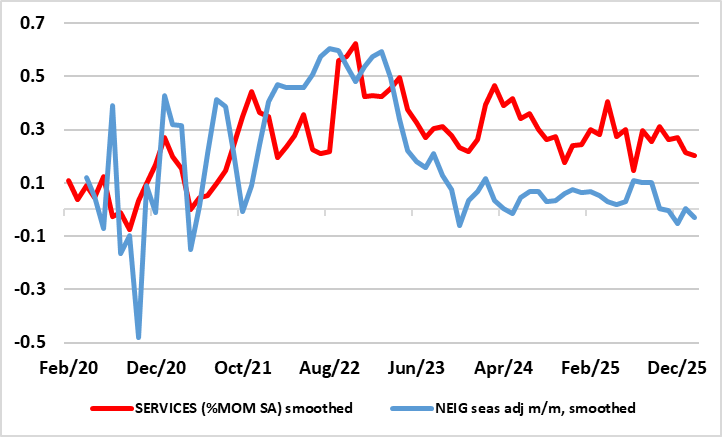
Regardless, the diehard hawks at the ECB remain focused on the recent rise, or at least apparent resilience, in services inflation - this despite still target-consistent outcomes in more short-term seasonally adjusted m/m data (Figure 2). Even so, hawkish thinking seems to have reverberated within the ECB and seemingly prompted the upward revisions made in December to the 2026 HICP outlook. Regardless, over and beyond a justified more amenable reassessment of services inflation, we think the hawks will have to come to terms with other component of core inflation, namely non-energy industrial goods (Figure 2) which accounts for one third of core HICP (services the other 2/3.
Figure 2: NEIG and Services Adjusted Inflation Both Pulling Core Lower
Source: Eurostat, CE,
Both services and NEIG have allowed the overall core rate to hit a five and half year low of 2.2% and where a drop to 2.0% in coming months seems likely, something the ECB does not envisage occurring until 2027. Moreover, with non-energy industrial goods inflation already having slowed to near zero in y/y terms, this may increasingly be seen as increasing evidence of softer import prices. In fact, we see more softness in NEIG to come (Figure 4) mainly stemming from Chinese export dumping – ie such evidence is echoed by the clear fall in overall import price numbers of late, although the stronger euro may also be a very important contributory factor. From the ECB Council’s perspective either factor is important, not least as both stem from U.S trade policies and the uncertainties and swings they have triggered both in terms of the near record high in the trade-weighted euro and/or dumping by China if goods it no longer is able to sell to the U.S.
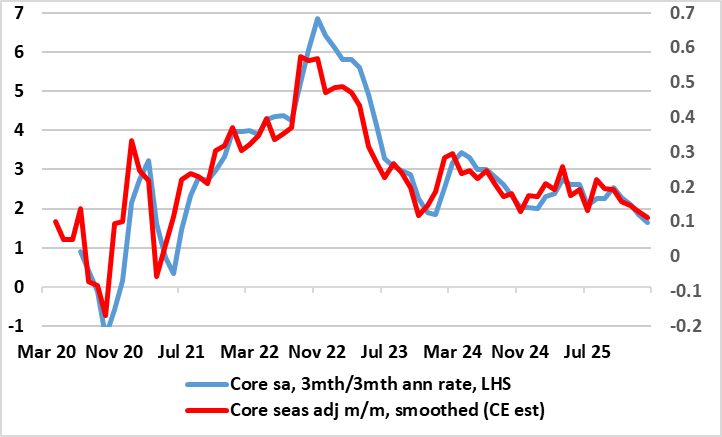
Figure 3: Core Rate Below Target Already?
Source: Eurostat, CE
All of which intensifies the question as to whether what may be more than a cyclical fall in core goods inflation will offset any further (but not expected) resilience in services, should the latter not succumb to lower wage pressures as we think will be the case. Instead, and as hinted above, core inflation may now be seeing a two-pronged downward push, something already evident in short-term adjusted core data (Figure 3) which is running at around 0.1% m/m or just over 1% on an annualized basis. With this in mind, out projection of the more familiar y/y core rate falling below the 2% ECB benchmark in Q2 and then averaging around 1.75% in H2 is far from implausible. A fall by another notch is on the cards for the February flash!