ECB: September Hike 50% Probability?
· Lagarde disclosed that some ECB board members considered a hike at today’s meeting and she noted that the consensus was to wait for incoming data before the September 10 meeting and then reassess. This clearly signals that the September meeting will seriously consider a 25bps hike, but she was less hawkish elsewhere and highlighted that the Straits of Hormuz and energy prices are big swing factors. Given the wage inflation trajectory, little sign of 2nd round effects, tight financial conditions, plus Trump’s bias to lower gasoline prices (and a renewed ceasefire) we attach a 50% probability to a hike at the September meeting rather than the 70% discounted in the money market.
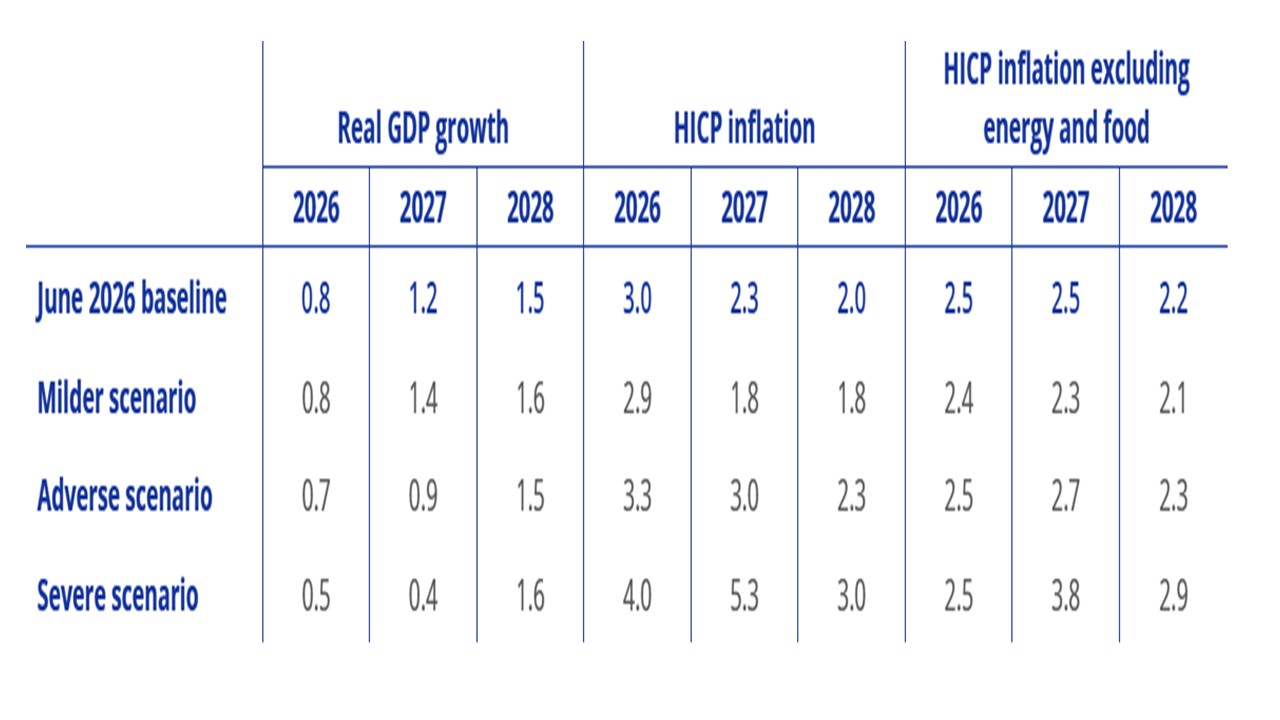
Figure 1: Key euro area variables under the baseline and alternative scenarios (%)
Source: ECB (here)
The July 23 ECB meeting had a number of insights.
· Hawkish stance maintained. The ECB remained hawkish, despite some recent data including the June HICP inflation figure. The ECB statement felt more comfortable on Q2 GDP, but the interpretation of the labor market data is that a softening is currently underway. On inflation, Lagarde in the statement acknowledge that wage inflation and labour cost index are coming under control, which we feel that lagged effect of the economy slowing and also financial conditions being tighter than the level of the ECB depo rate. Even so, 1st round inflation effects are clear and will get worse in July with the renewed surge in energy prices.
· Energy prices swing factor. The primary uncertainty remains the Straits of Hormuz with the Iran/U.S. hostilities having reignited energy prices in July – with a big step change in 2026 TTF gas prices in the last week (though 2027 futures prices remain much lower). Lagarde noted that the ECB view energy prices as close to the baseline (Figure 1), which would see CPI inflation hitting 2.0% in 2027 if a further 25bps hike is evident. Nevertheless, the ECB knows that the situation in the Straits of Hormuz can change quickly and a further ceasefire could ease energy prices by the September 10 ECB meeting.
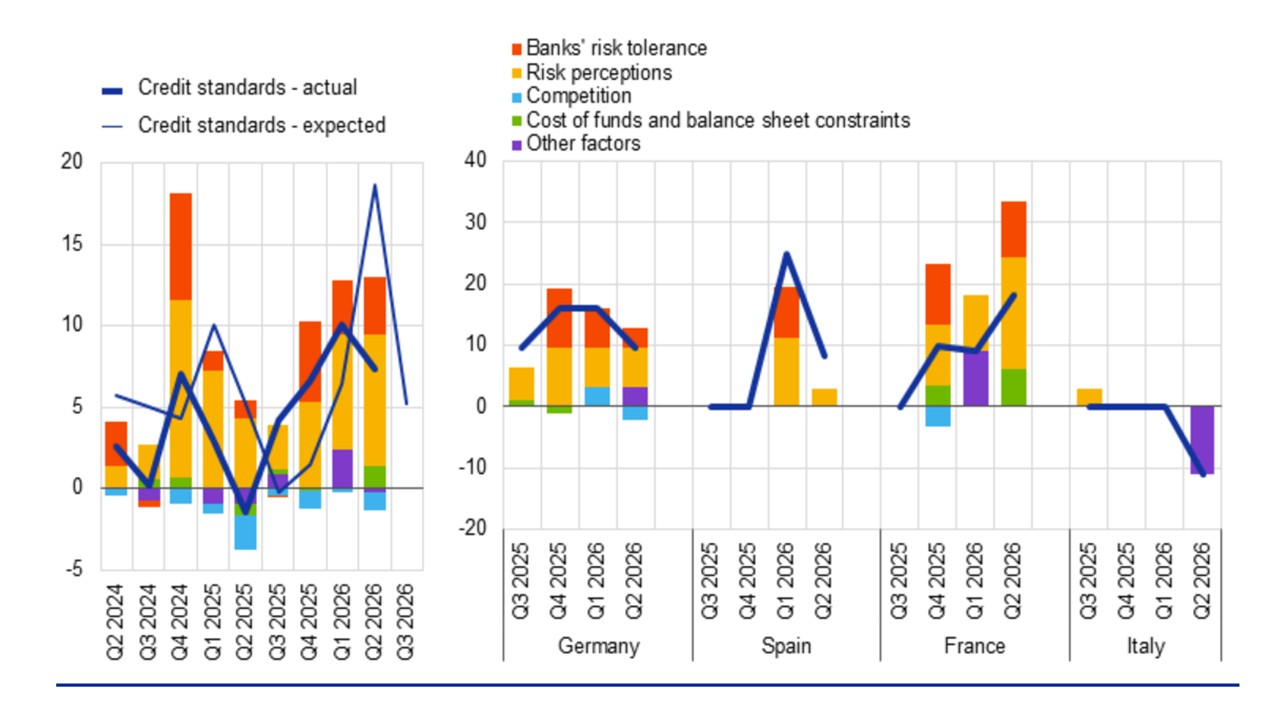
· Financial conditions. The ECB statement and Lagarde Q/A did not provide some acknowledgement of still tight financial conditions, but we feel that they are still underestimating the impact on GDP growth and future inflation. The latest quarterly ECB bank lending survey showed further tightening of credit standards by banks for companies (Figure 2) and also for households. This is one of the reasons why we have been below ECB forecasts on GDP growth and inflation.
Figure 2: Changes in credit standards for loans or credit lines to enterprises, and contributing factors (net percentages of banks reporting a tightening of credit standards)
Source: ECB Bank Lending Survey
· Forward Guidance and September? Lagarde in answering the 1st question decided not to be too hawkish and emphasized that the energy price situation is fluid and could change either way. Additionally, Lagarde indicated that the ECB are not currently seeing 2nd round inflation effects from the Iran/U.S. war. However, Lagarde disclosed that some ECB board members considered a hike and she noted that the consensus was to wait for incoming data before the September 10 meeting and then reassess. This clearly signals that the September meeting will seriously consider a 25bps hike, it would also fit in with previous mini cycle with a 3mth gap between rate hikes. However, we would say that the probability of an actual hike is fluid and we still feel that Trump’s instinct is to get U.S. gasoline prices down and this increases the odds of a renewed ceasefire. Given the wage inflation trajectory, little sign of 2nd round effects, plus tight financial conditions, we attach a 50% probability to a hike at the September meeting rather than the 70% discounted in the market. Indeed, into 2027 we still feel that energy prices will come down and this will allow the ECB to reverse interest rate hikes during 2027.