UK CPI Preview: Headline Inflation to Increase on Higher Energy Costs but no Second Round Effects
· Inflation figures will come ahead of BoE meeting on September 17 in which the Bank is expected to keep rates on hold. Headline annual inflation rose to 2.9% in July and is forecast to increase to 3.1% in August with core also ticking up to 2.7% from 2.6% previously. The numbers are unlikely to be a major surprise to the Bank given the backdrop of higher oil and natural gas prices, both of which increase the likelihood that headline inflation could peak closer to 4% in the latter part of this year.
What is still crucial to BoE, however, is whether this increase in energy costs can be contained and not lead to a broadening in inflation pressures via second round effects. So far there is little sign of any spill over to wages or to other parts of the CPI basket. Food inflation remains contained.
Figure 1: UK CPI and Key Components (Yr/Yr %)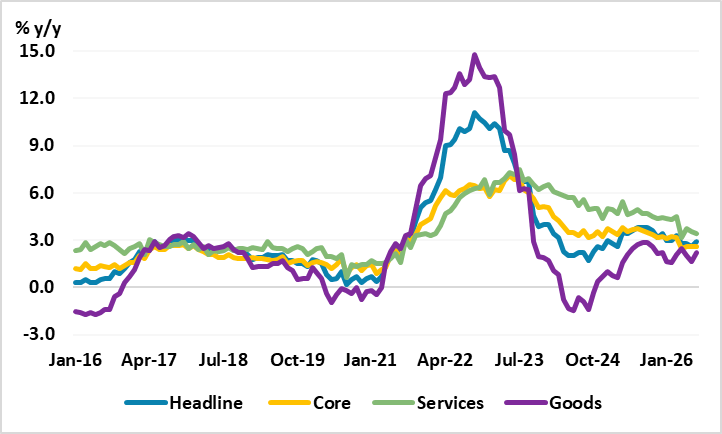
Source: Datastream/CE
July’s increase in headline inflation had been driven by the rise in household energy bills and also a bigger rise in social rents than this time last year. That was offset by July’s short-lived dip in petrol and diesel prices both of which increased again in August and will boost headline inflation. One key sign for the Bank would be if these higher inflation numbers result in higher nominal wage demands. But there is little sign of that being the case. The labour market remains fragile, the unemployment rate is rising and wage growth remains under control as weak demand conditions prevent workers from pressing for higher wage claims.
Figure 2: Wages slow as pay growth in the private sector cools (Yr/Yr %)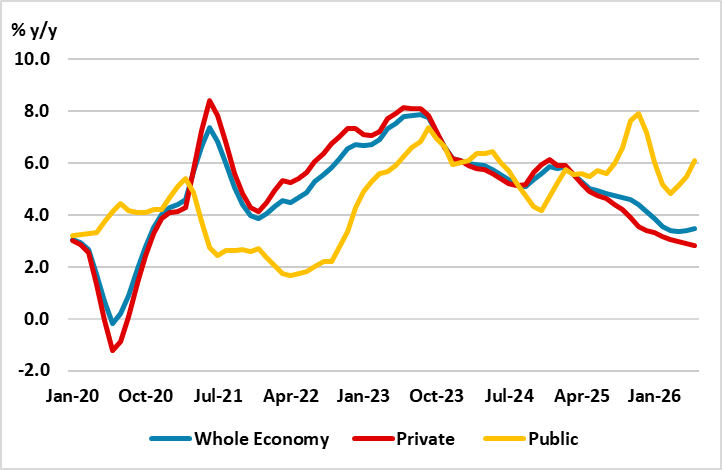
Source: Datastream/CE
The NIESR wage tracker also suggests that private sector wage growth will slow further in the coming months, and expected to moderate from 2.8% in Q2 to 2.5% in Q3, while recent public wage settlements will keep wage growth in this sector above 5%. With nominal wage growth weakening, real private sector wages will come under some pressure as CPI inflation picks up in the next few months. Given that wages are the largest component and driver of Services inflation, we expect inflationary pressures in the sector to remain contained. Inflation in the Services sector has been slowing since peaking at 6.6% in early 2023 and the latest print showed it easing to 3.5% in July.
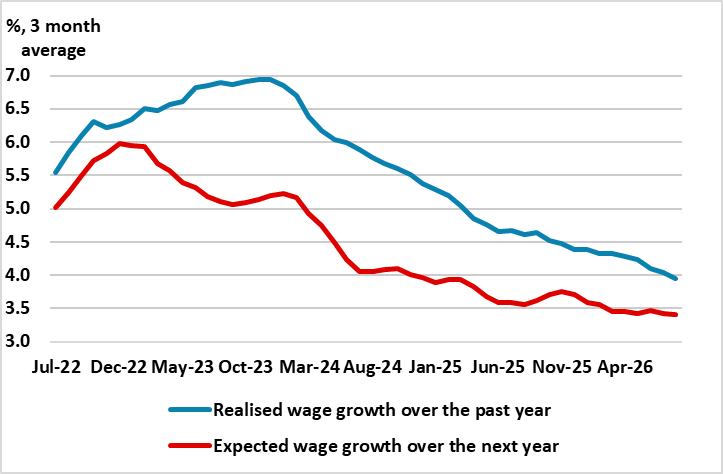
Figure 3: Realised and Expected Wage Growth (3month average %)
Source: Datastream/CE
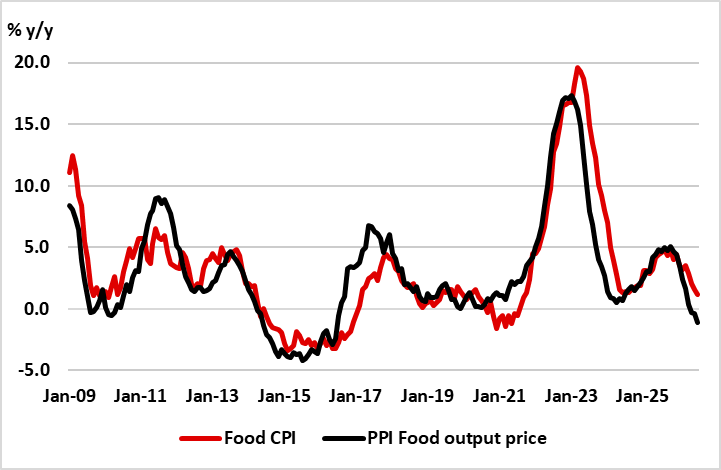
The BoE’s own “Decision Maker Panel” of CFOs also suggests that services inflation will stay around current levels. The latest report shows that firms reported annual wage growth of 4.0% in the three months to August, unchanged from the three months to July. Expected year-ahead wage growth also remained unchanged at 3.4% in the three months to August. This implies that firms expect their wage growth to decline by 0.6 percentage points over the next 12 months.What is also striking about recent CPI figures is just how benign food inflation has been. That could change over time as the increase in fuel and fertiliser prices push up food costs with a time lag; the latest producer price data (an indicator of pipeline inflation pressures) suggests food inflation will continue to fall sharply over the next couple of months. As the BOE has noted in the past, food prices play a key role in shaping consumer inflation expectations, and the latter remain fairly contained. The overall message from the labour market, food prices, the service sector is that there’s scant evidence so far – beyond energy prices – that the war in Iran is having a tangible impact on inflation.
Figure 4: Food CPI and PPI Food Output Price (Yr/Yr %)
 Source: Datastream/CE