U.S. June CPI - Some volatile moves, but a clear relief for the Fed
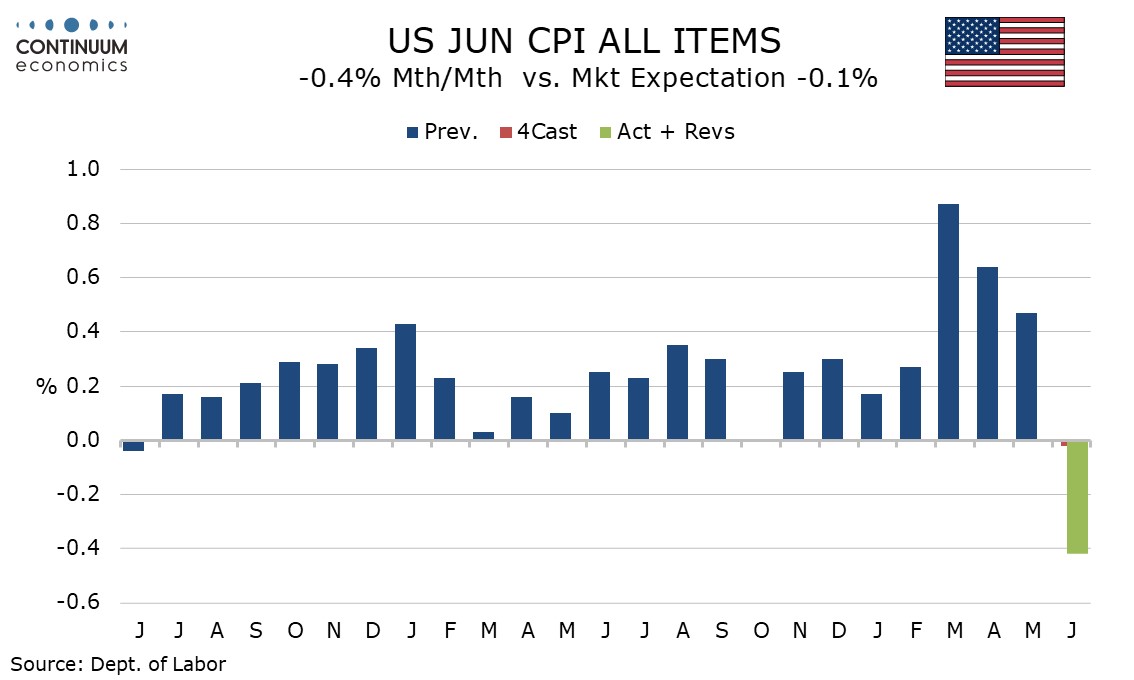
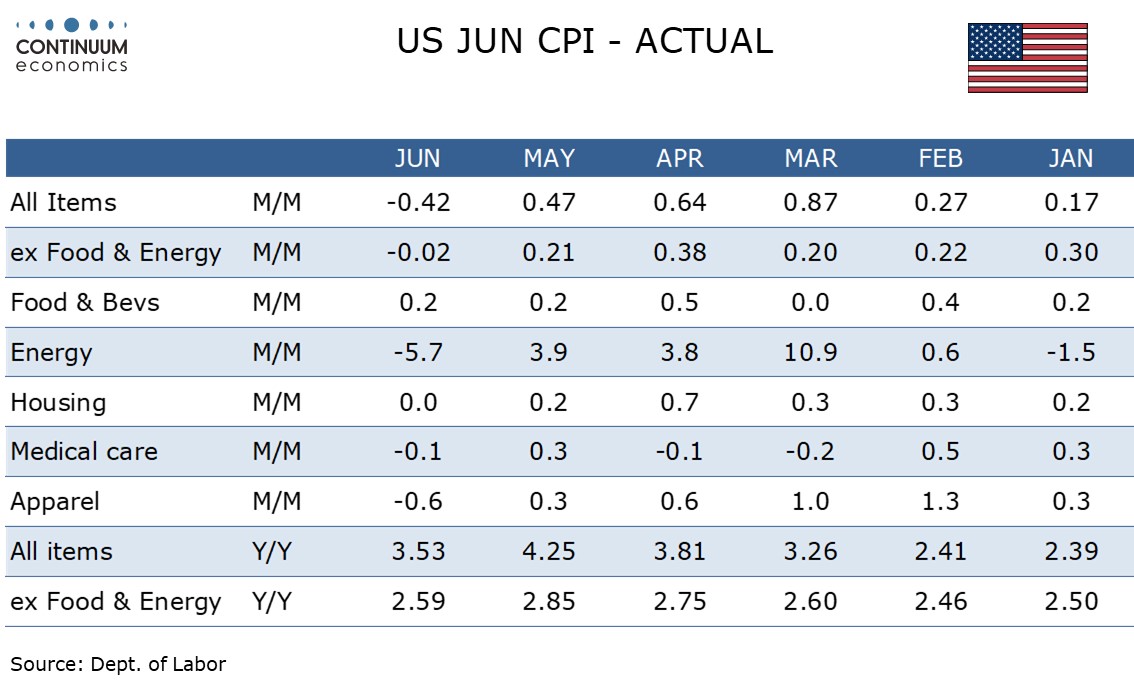
June CPI is significantly softer than expected, both on the -0.4% headline and an unchanged outcome ex food and energy, with the respective figures before rounding being -0.422% and -0.017%. While there are a number of volatile declines in the breakdown and recent events in the Middle East present renewed upside risks to energy, the data argues against a rate hike at the July 29 FOMC meeting.
Energy fell by 5.7% in a partial reversal of there straight strong gains with gasoline down by 9.7%. Energy services also declined, by 0.7%, led by a 1.0% fall in electricity. Food saw only a modest increase of 0.2%.
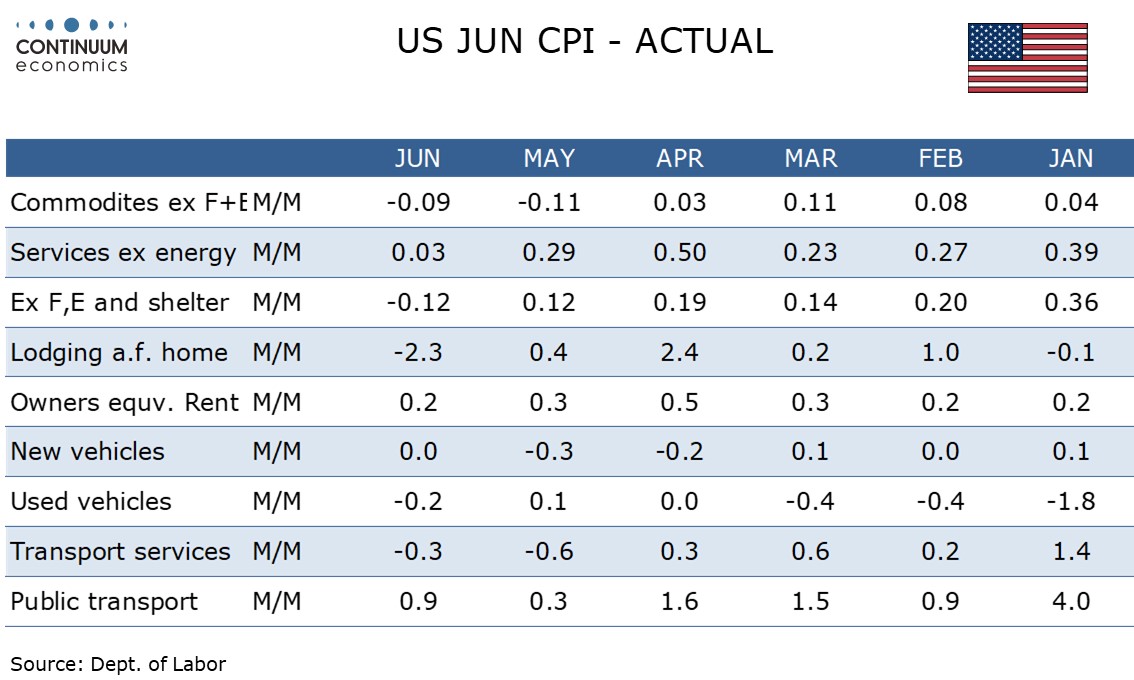
Commodities ex energy fell by 0.1% for a second straight month with a notable negative from tariff-sensitive apparel at -0.6%, its first decline since November and sharpest decline since January 2025. New vehicles were unchanged after two straight declines but used vehicles ell by 0.2% in a first fall in three months.
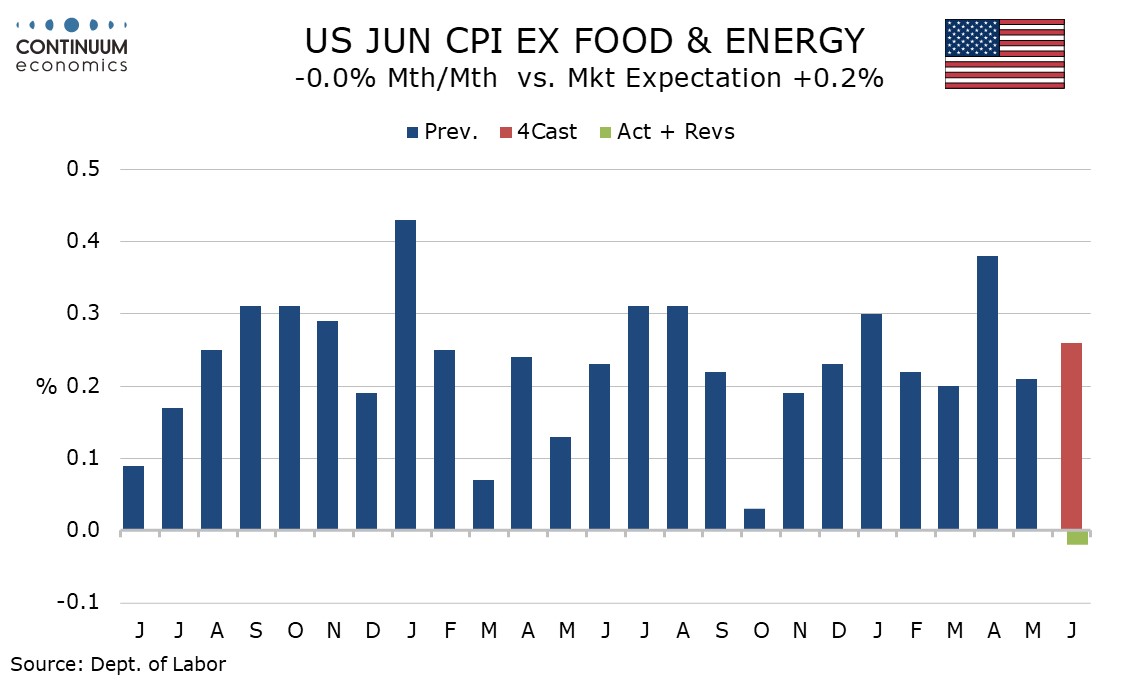
More surprising was an unchanged outcome from services less energy. Shelter rose by 0.1% restrained by a 2.3% fall in the volatile lodging away from home component, not seeing the lift from the World Cup that we had expected. Owners’ equivalent rent at 0.2% was only slightly below trend. Medical care services fell by 0.1% and transport services fell by 0.3% led by second straight sharp fall, by 2.0%, in motor vehicle insurance. Air fares rose by a marginal 0.2%, in a pause from recent energy-led strength. Education and communication services fell by 0.8% after a 0.9% May increase as telephone services fell by 3.0% after a 2.0% increase in May. Excluding food, energy and shelter, CPI fell by 0.1%.
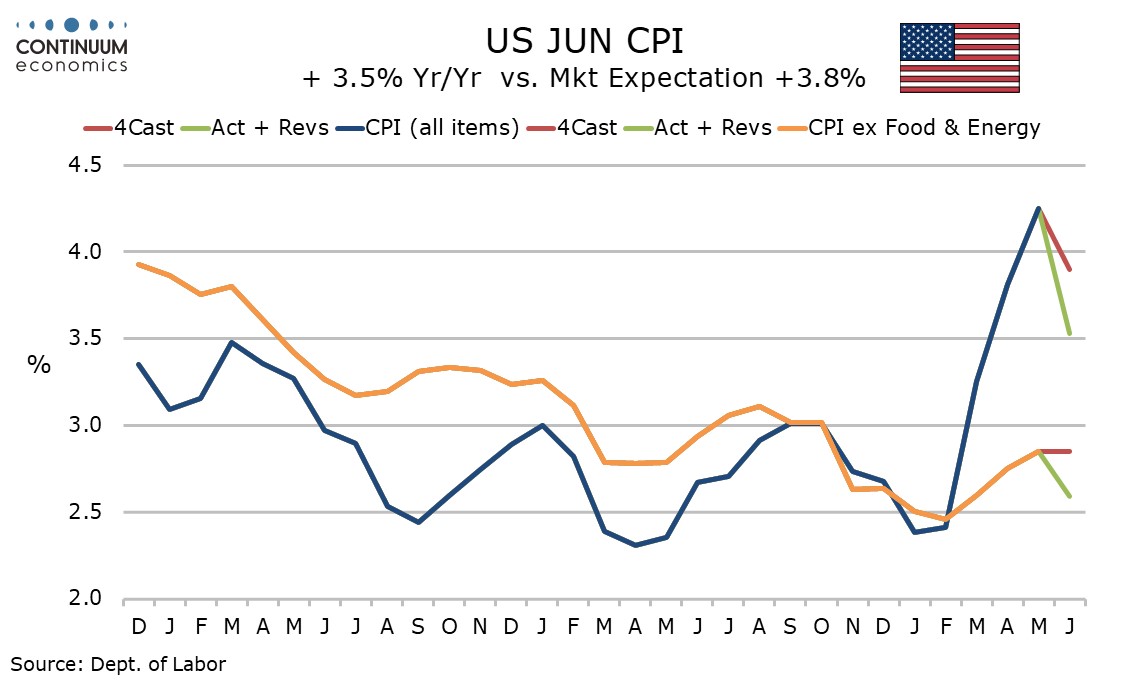
The yr/yr rate of 3.5% from 4.2% is still elevated by energy if less so, while the yr/yr rate ex food and energy fell to 2.6% from 2.9%. This is still above a recent low of 2.5% seen in February but yr/yr data from November through March were depressed by a lack of collection of housing data in October which is done every six months due to the government shutdown, a distortion that was resolved in April. A 2.6% yr/yr rate ex food and energy can be seen as a signal of slowing core inflation.
Fed Chairman Warsh has released the text of his upcoming testimony to Congress and reiterated his commitment to reducing inflation without giving many clues on policy. Yesterday, Governor Waller, who is influential, suggested that this inflation figure would determine whether the Fed would tighten in July. Waller is probably relieved enough by this data to favor steady policy, and that now looks likely to be the majority decision.