U.S. July Employment - Softer payroll and falling unemployment hint at labor shortages, but no lift to earnings
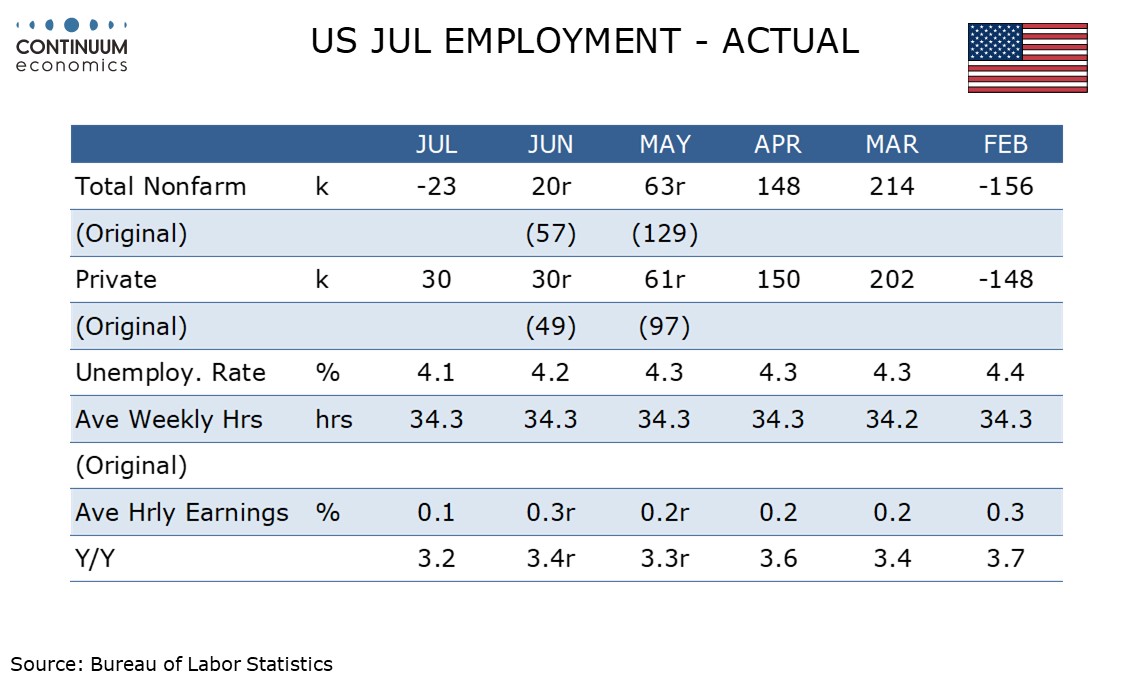
July’s non-farm payroll at -23k with negative back month revisions is weaker than expected but largely because of negatives in government led by local government education and leisure and hospitality, which may reflect labor shortages. A declining labor force saw the unemployment rate fall, to 4.1% from 4.2%. Despite signs of a tight labor market, average hourly earnings surprised on the downside, rising by only 0.1%. The data only slightly damages the case for Fed tightening, with CPI data next week likely to be more significant.
July’s payroll fell by 23k, with June revised down to 20k from 57k and May revised down to 63k from 129k, a net downward revision of 103k. Private payrolls increased by 30k, matching a downwardly revised June (from 49k) while May was revised to 61k from 97k, a net downward revision in the private sector of 55k.
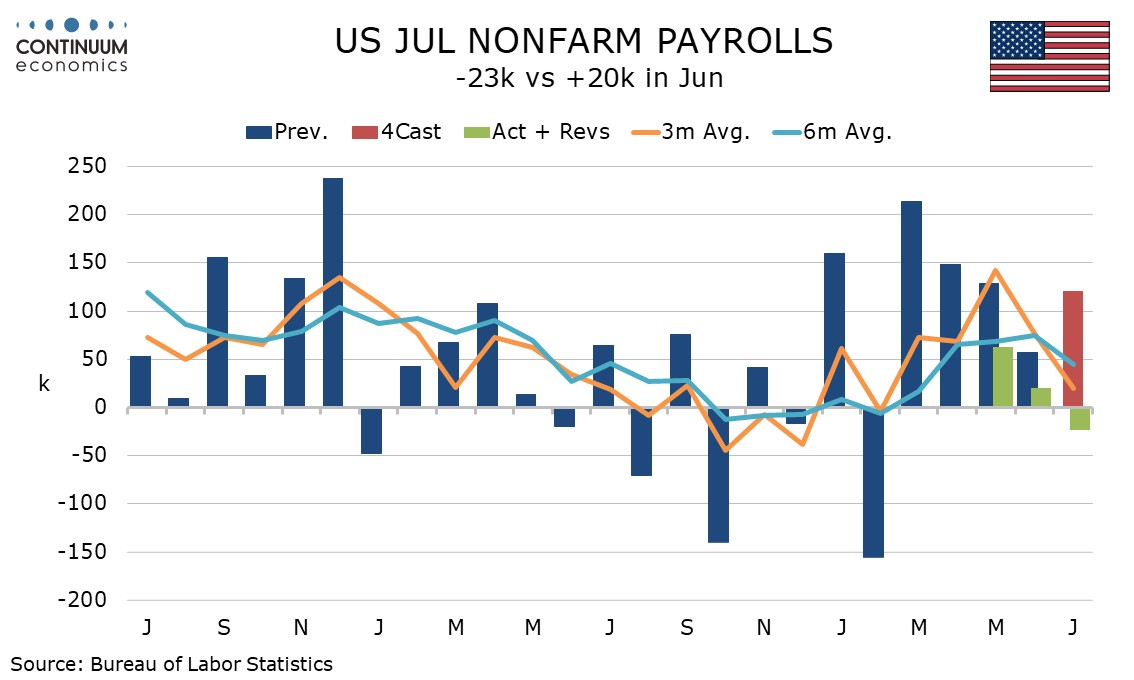
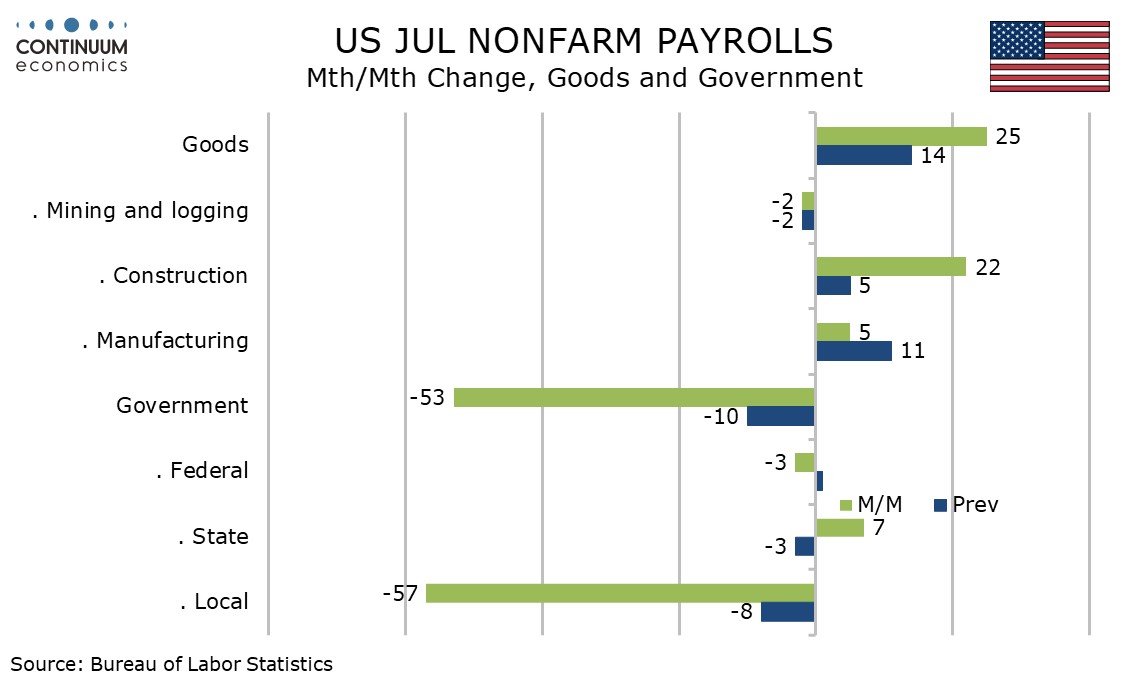
Government fell by 53k in July, with the decline largely on a 50k decline in local government education. July sees large seasonal adjustments in education as schools close for the summer. The fall means more layoffs (or potentially retirements) than usual. It is likely that the negative in July is at least partially offset by a rebound in September as schools reopen.
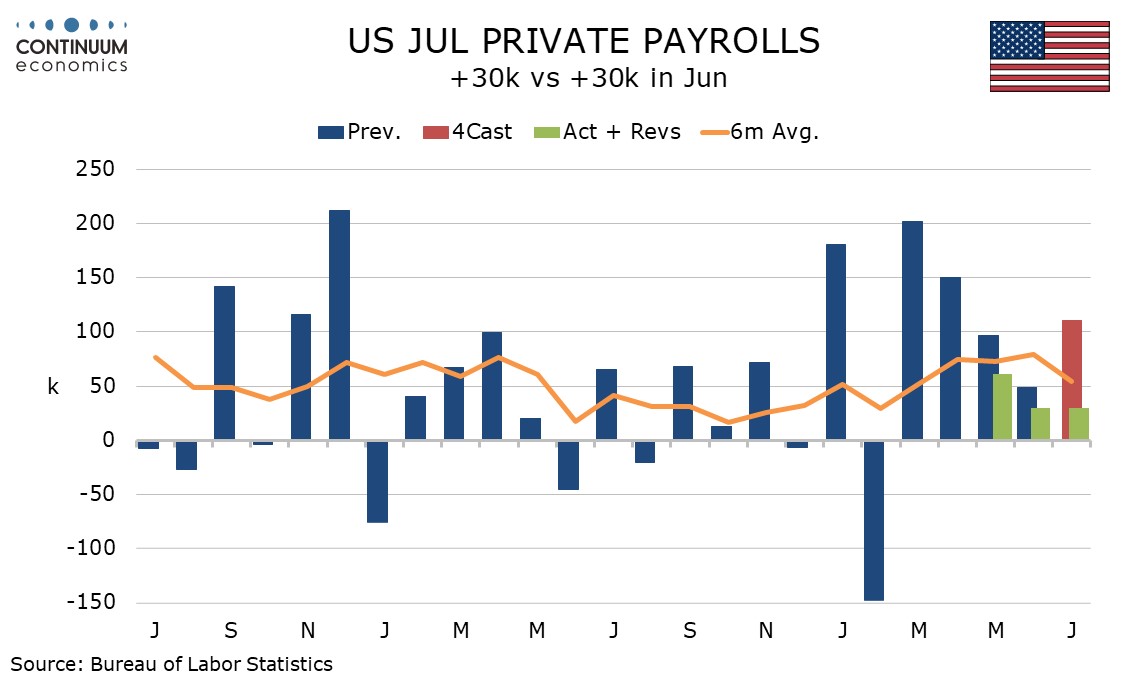
The main negative in the private sector was leisure and hospitality, falling by 40k after a 43k decline in June. Many felt this sector would be lifted by the World Cup and the downside surprise may reflect a shortage of workers to hire in the summer (when seasonal demand is strong) rather than a lack of demand. It is possible we will see a correction higher in the winter when seasonal demand for such work is weak and seasonal adjustments work in the opposite direction.
Private sector payrolls excluding leisure and hospitality increased by 70k in July, 73k in June but only 19k in May, when leisure and hospitality rose by 42k. The latest data does not suggest a dramatic change in underlying momentum.
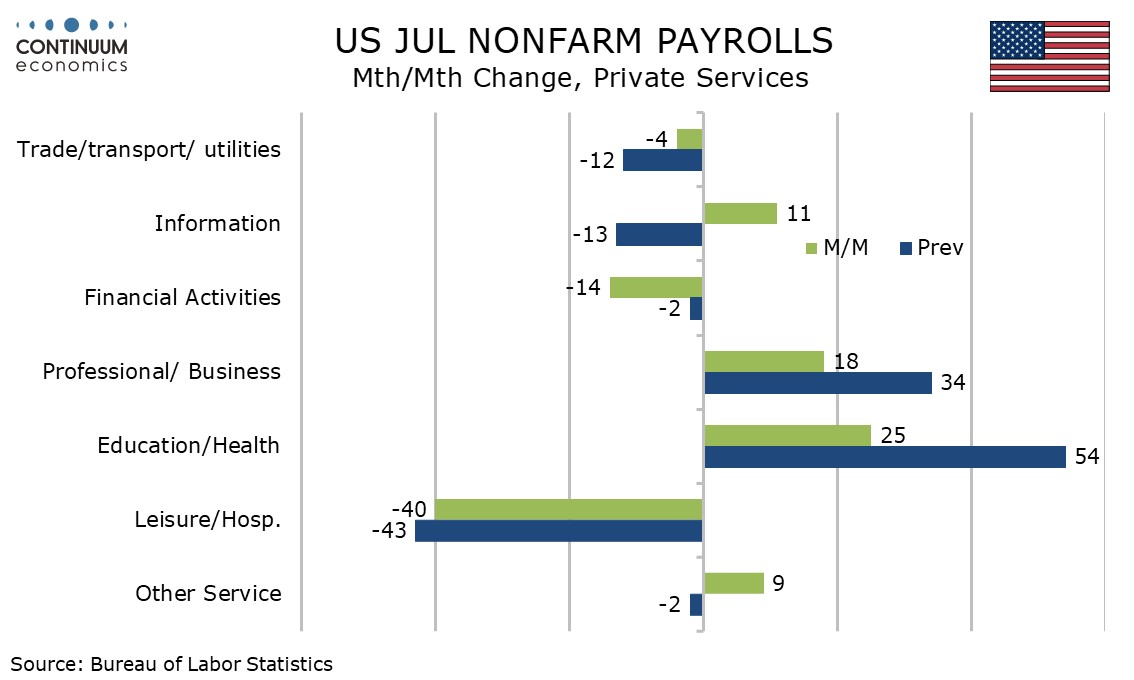
Private health, which has led most recent payroll gains, was however well below trend at 23k, with private education and health at 25k. Retail was weak at -19k, a hint of slowing consumer demand, Financial remains weak at -14k possibly due to AI but information, which has also been trending negatively, corrected higher by 11k. Gains in manufacturing of 5k and more so construction at 22k were on the firm side of trend.
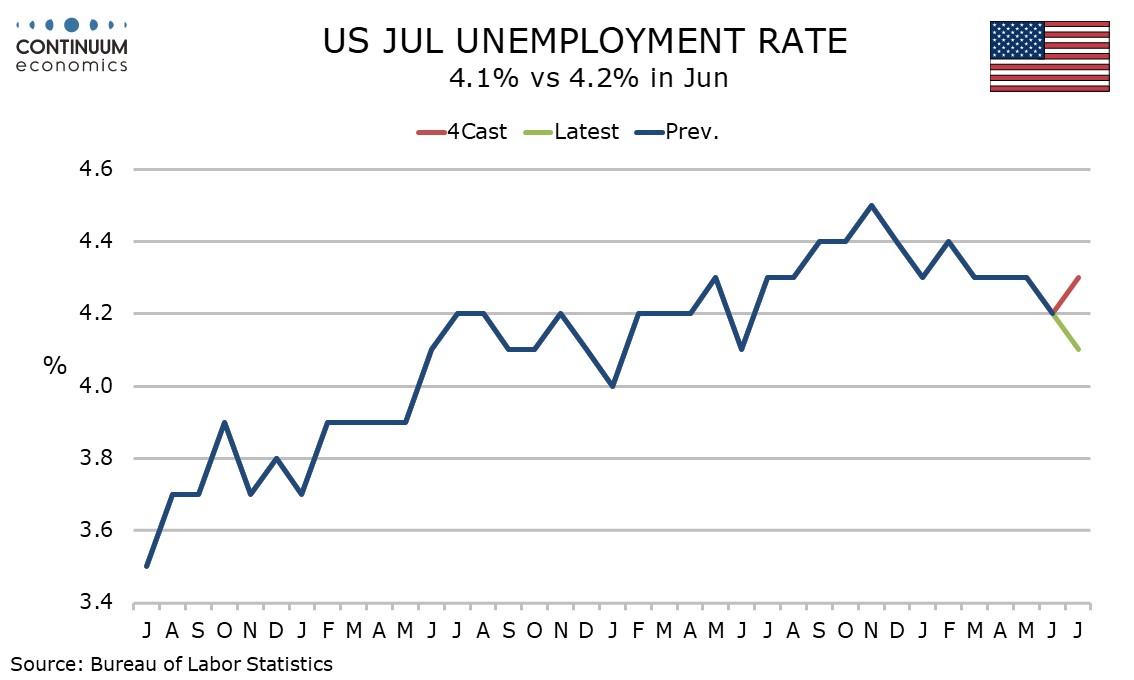
The household survey, which calculates the unemployment rate, saw employment falling by 87k after a 507k June decline while the labor force fell by even more, down by 264k in July after a 720k plunge in June. This suggests the normal summer demand for labor was not met due to supply shortages. The unemployment rate fell to 4.1% from 4.2% in June and 4.3% in March, April and May, reaching its lowest since June 2025.
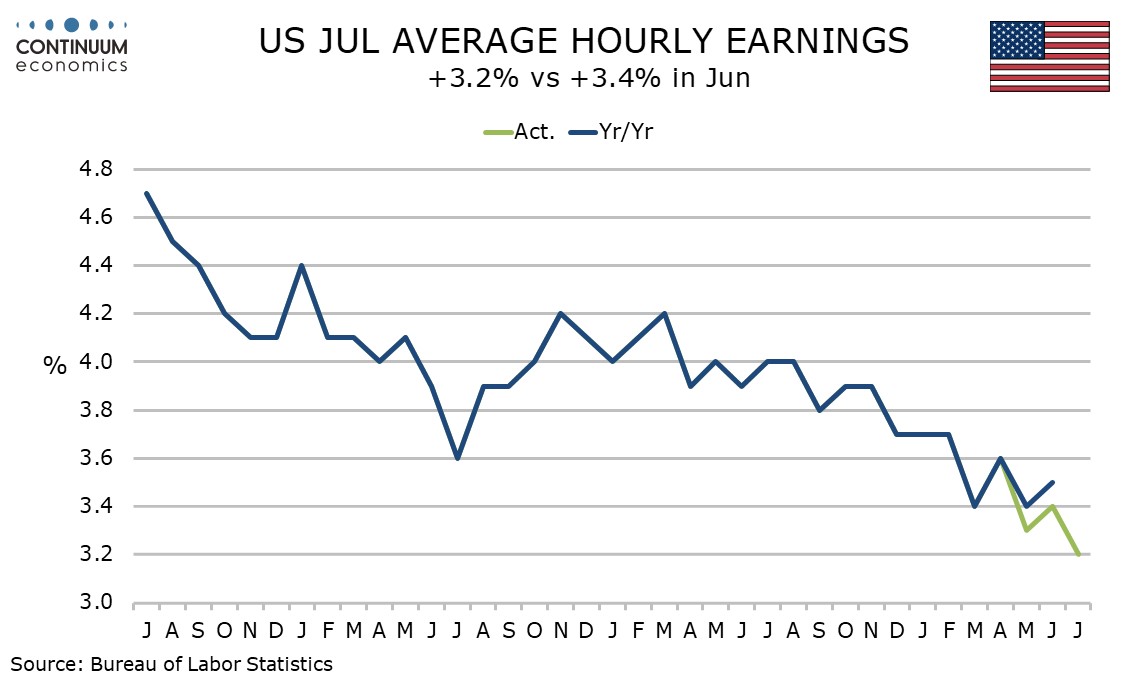
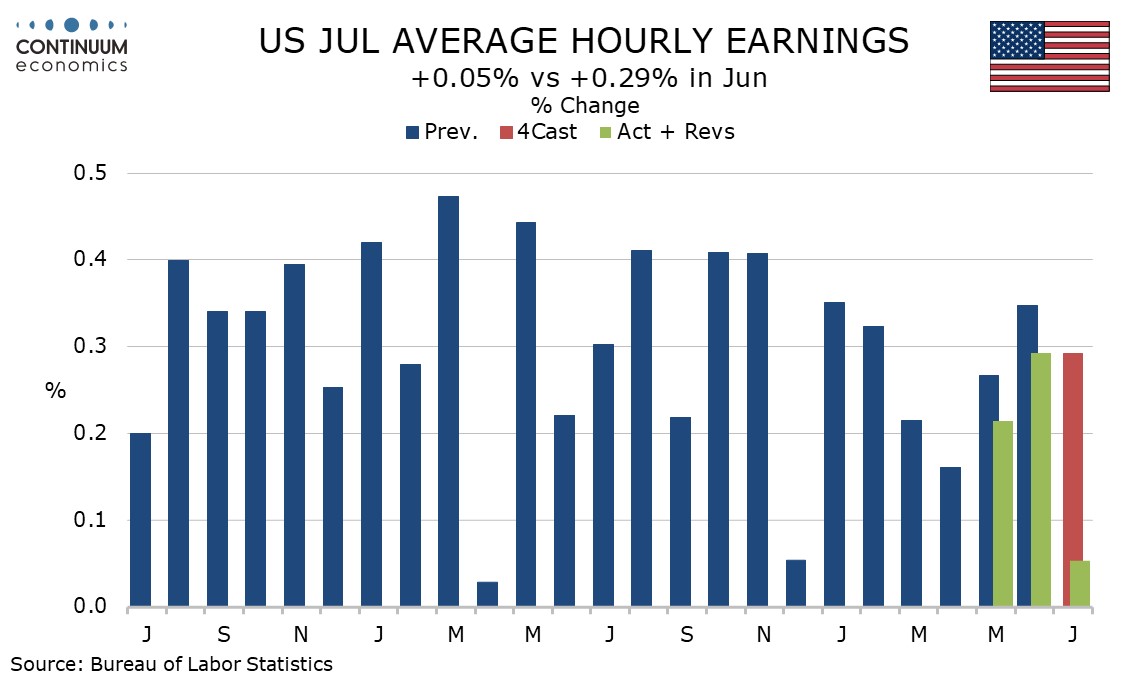
This shows a tight labor market, but that does not appear to be lifting wages, with the weak 0.1% increase in average hourly earnings being only 0.053% before rounding. May and June saw downward revisions too, totaling 0.14%. Yr/yr growth in average hourly earnings at 3.2% is the slowest since May 2021.
The average workweek was stable at 34.3 hours for a fourth straight month and trend here has improved from 2025 which saw five straight months at 34.2 ending in October. A slightly longer workweek may also be a product of labor supply shortages.
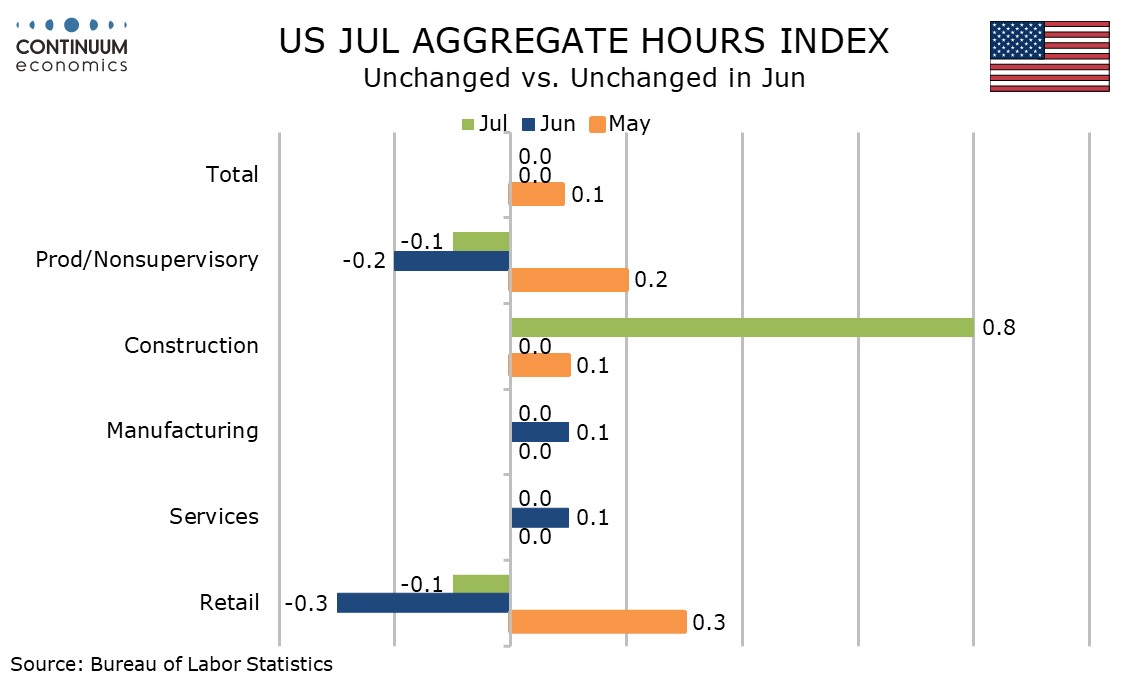
Aggregate hours worked were unchanged for a second straight month with construction at 0.8% the only significant positive. Manufacturing and private services were unchanged with retail down by 0.1%.