UK CPI Preview: Further Increase Will Push the BoE to Hike in November
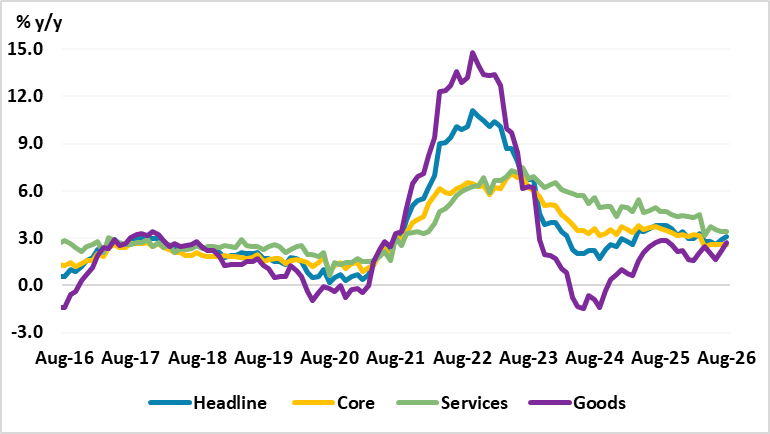
This week’s CPI headline is expected to continue to reflect the impact of the oil price shock with markets seeing an increase to 3.4% y/y in September from 3.1% before. To date, energy has been the main culprit behind the rise in headline inflation with goods also showing a modest increase (see Figure 1) but little evidence seen elsewhere in services or core inflation - so far. There are also no signs of second round effects. Nevertheless, this will be the last CPI print before the BoE meets on the 5th November and with higher inflation along with last week's better GDP outturn the Bank is likely to lift rates by 25bp. Markets are pricing in a 94% chance of a hike while the latest Reuters poll also shows that 54 of 63 economists expect a hike in November. We now expect the BoE to implement a 25bp insurance rate hike.
The bulk of the initial inflationary shock to date has been absorbed through lower profit margins according to the most recent BoE Decision Maker Panel (DMP). The survey showed that profits were one of the primary ways UK firms were absorbing the inflationary and energy cost pressures. But that position will become increasingly difficult to maintain the longer the energy crisis persists, as Governor Bailey and others in the committee have asserted in recent days. With energy prices remaining elevated, Bank officials have made it increasingly clear that a hike is likely if energy prices didn't fall significantly ahead of the November meeting.
Inflation is expected to rise briefly and “slightly over 4%” in Q1 2027, according to the BoE (a forecast that may yet be revised up in November), supported by a substantial increase in the Ofgem household energy price cap in January 2027. A decision on whether that cap is actually increased will be made on the 25th November.
Higher headline inflation along with this week’s GDP outturn might be enough to force the Bank’s hand in November. The 3-month GDP growth data to August showed an economy that remains resilient in the face of current headwinds. But is the economy resilient enough to withstand the 4 rate hikes the market is currently expecting? Pill this week sought to temper those expectations by noting that this is not the start of a series of hikes.
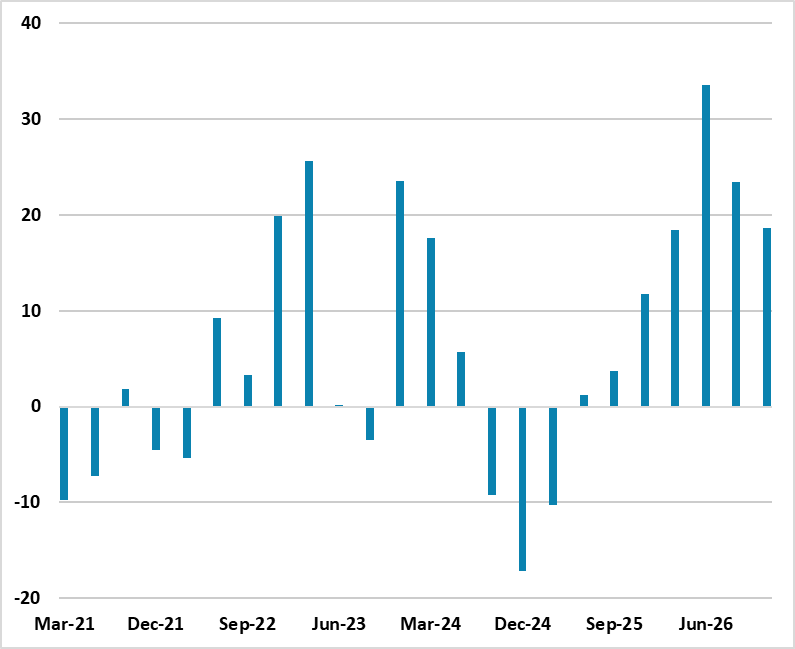
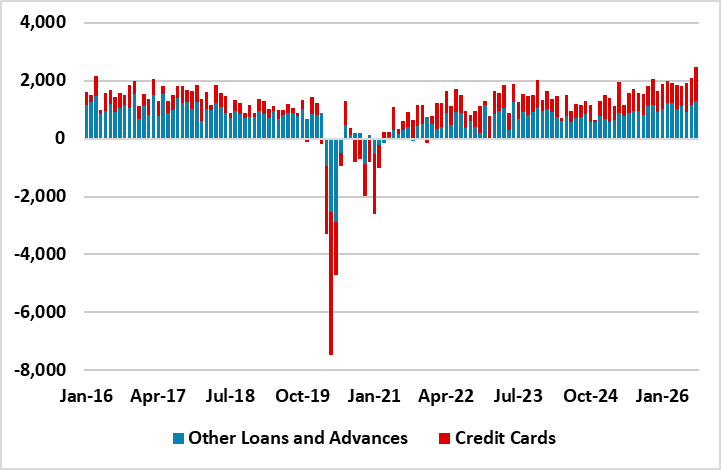
And that might prove to be a relief to households. While the headline GDP outturn was better than expected, the data also showed signs of underlying weakness for households with consumer-facing services sector falling by 0.3% on the month, after a decline of 0.1% in July. Mortgage costs are also rising, increasing the vulnerability of consumer finances. Households appear to be reducing savings to maintain spending. The recent BoE Credit Conditions Survey also showed an increase in defaults on credit card debt for the sixth consecutive quarter underlining the increased strains on UK consumers. Despite this, these exposures are increasing with consumer credit up GBP 2.5bn in August to a new record high. Persistent inflation and squeezed household disposable incomes have forced more households to bridge gaps in their budgets by resorting to credit. With credit card interest rates at elevated levels, these figures (defaults and unsecured credit) will deteriorate if rates increase further.
While the backdrop of the economic data has been positive to date, the outlook for households is looking increasingly shaky. Given that backdrop market expectation of 4 hikes over the course of coming months feels misplaced to us. We still do not expect inflation to broaden via second round effects and if we are proved correct, we think the Bank will cut rates before next year is out.
Figure 1: UK Inflation By Key Categories
Source: Datastream/CE
Figure 2: Default Rates on Unsecured Lending to Households (Net Percentage Balances, %)
Source: Datastream/CE
Figure 3: Consumer Credit Flow - Monthly Change (GBP Millions)
Source: Datastream/CE