ECB won’t come to France’s rescue
Bottom Line: France’s 10-year government bond spread to Germany widened past the 2012 highs last week prompting market speculation that the ECB could soon deploy its Transmission Protection Instrument (TPI). However, TPI is unlikely to be implemented, firstly because the ECB has firmly dismissed talk of activating it and secondly because France does not qualify for TPI.
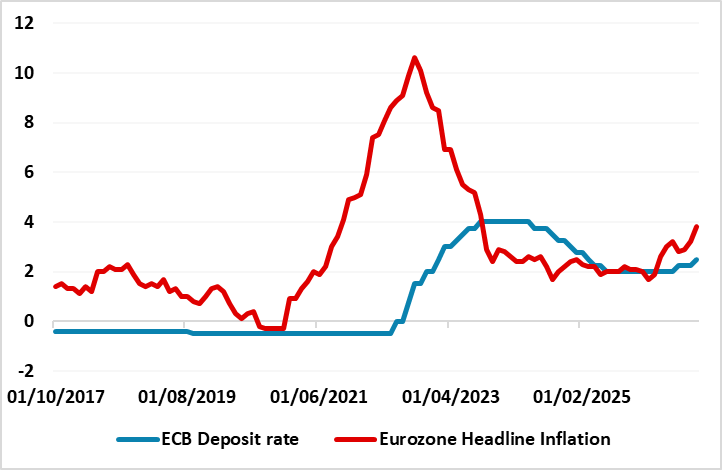
Back in 2022 when Eurozone yields rose and spreads widened rapidly the ECB adopted - but never used - TPI. Faced with the need to tighten monetary policy given rising inflation, the ECB accompanied its first rate hike in ten years in July 2022 with the introduction of the TPI, against a backdrop of fears about the stability of the monetary union.
The stated objective of the TPI was to ensure the “effective transmission of monetary policy” in all euro area countries. Similar to Mario Draghi’s famous 2012 "whatever it takes" pledge, the TPI was a statement of intention to markets, one that made it clear to speculators that trying to short vulnerable Eurozone debt would mean trading against a central bank with infinite buying power.
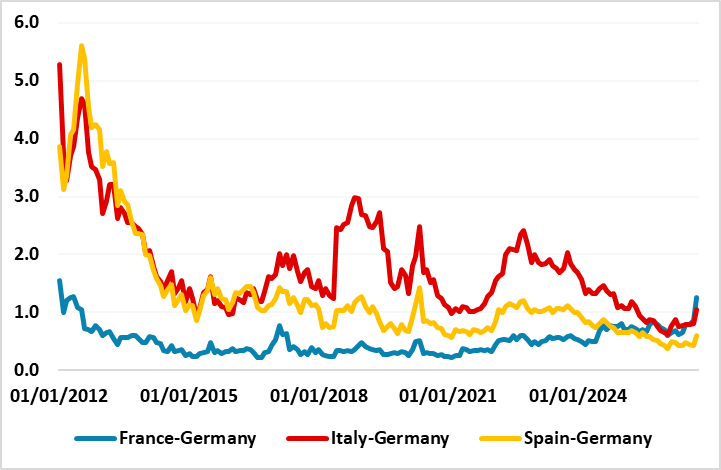
Figure 1: Eurozone Government Spreads (to Bunds)
Source: Datastream/CE
In practice, TPI allowed for the purchase of securities on the secondary market, similar to QE, though these two schemes differed in their end objectives. QE was intended to stimulate the economy while TPI aimed to prevent fragmentation (“the unwarranted, disorderly divergence of bond yields between member states”).
When the ECB introduced TPI the weak link was Italy at a time when its 10-year spread against Germany had widened to around 250bp. Today that weak link is France. Fiscal concerns and political instability have pushed up the cost of borrowing with OAT/Bund spread widening to around 150bps at one point (here). France fiscal backdrop is worrying; the country intends to issue a record gross EUR340bn of medium and long-term government bonds next year. Germany’s debt agency also expects its own borrowing to exceed the record planned for 2026. Both countries also have populist right-wing parties topping their polls and achieving greater electoral representation. Spain has also just called a snap general election for November 29, 2026.
Figure 2: ECB Introduced TPI at the same time it hiked rates in July 2022
Source: Datastream/CE
Despite speculation over the use of TPI, the bar for its actual implementation is very high. To qualify for the scheme a country (France?) would need to (i) comply with the European Union’s fiscal framework (France does not meet the fiscal deficit of 3% of GDP or the public debt of 60% of GDP), (ii) not suffer from severe macroeconomic imbalances, (iii) have a stable fiscal trajectory, and (iv) pursue sound and sustainable macroeconomic policies.
TPI is unlikely to be implemented, firstly because the ECB has firmly dismissed talk of activating it and secondly because France does not qualify for TPI. France is already under a European Union excessive deficit procedure, failing a key ECB criterion. With this year's budget deficit of 5.4% set to fall only to 5% next year, it is hard to argue it that it meets condition (iv).
Moreover, the ECB would not want to relieve French policymakers – who are ultimately responsible for the fiscal problems – of pressure too early. Pre-emptive activation, i.e. before the onset of a sovereign debt crisis, would run counter to the TPI’s objective of countering “unwarranted, disorderly market dynamics”. Ultimately, bond markets would therefore need to come under considerably more stress before the ECB activated the TPI.
The ECB would in any case use other tools at its disposal before turning to TPI. It could for instance soften its language - it could downplay the hawkishness of its policy statements - by dampening expectations of rate hikes. It could also intervene verbally by stressing its willingness to deploy other instruments at its disposal, if disorderly market movements were to occur.
For instance, the ECB could begin reinvesting the proceeds from maturing bonds (i.e. stop QT) bought under the pandemic emergency purchase programme (PEPP), with a particular focus on French government bonds. A 2ND more likely option is a slowing in the pace of ECB APP and PEPP QT, as Northern EZ countries would object to abandoning QT. During Covid, for instance, the ECB bought a disproportionate amount of bonds issued by countries that had been more severely affected by the pandemic. In short, there is no quick near term fix for France’s fiscal and political woes.