U.S. September Employment - Trend looking subdued again
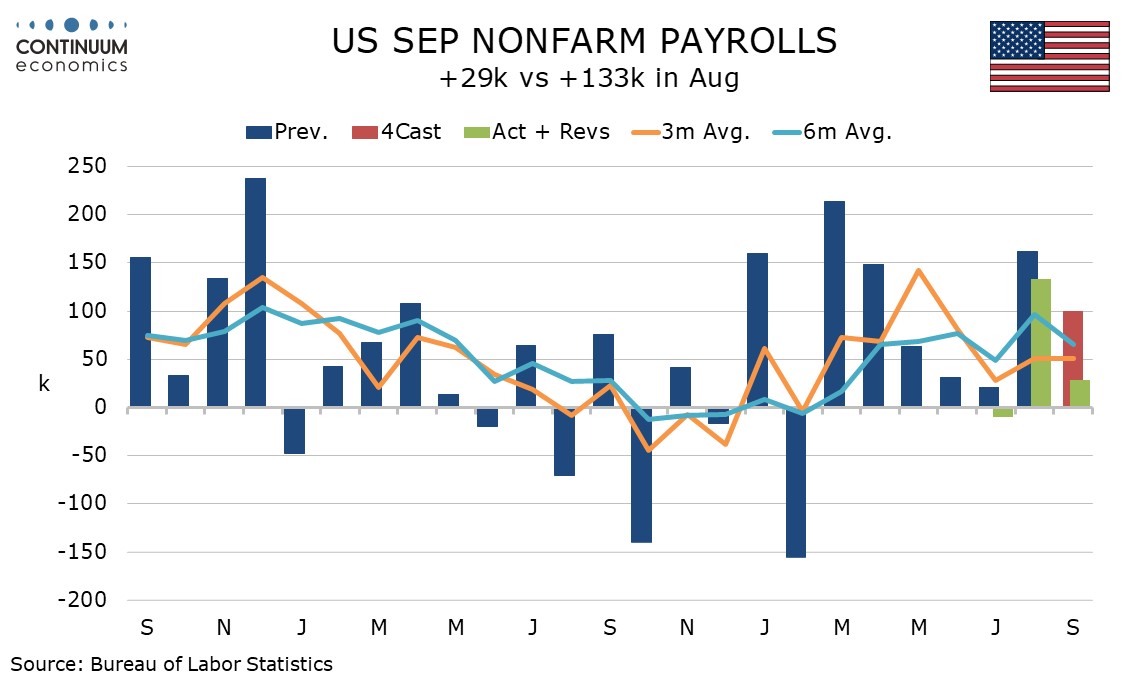
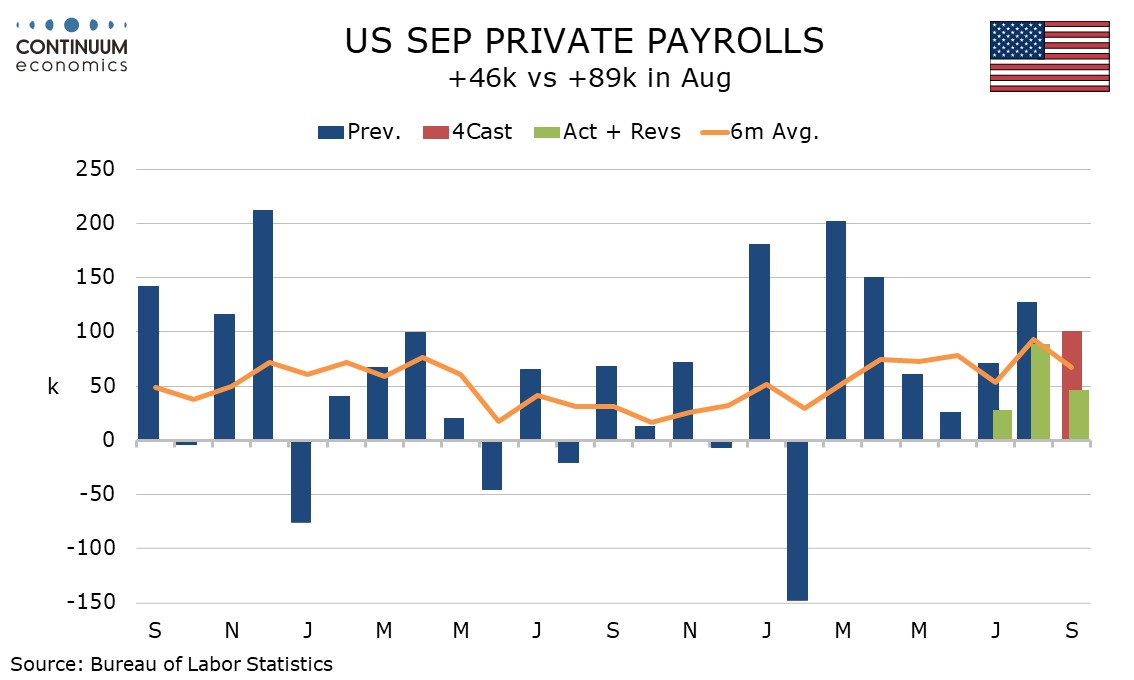
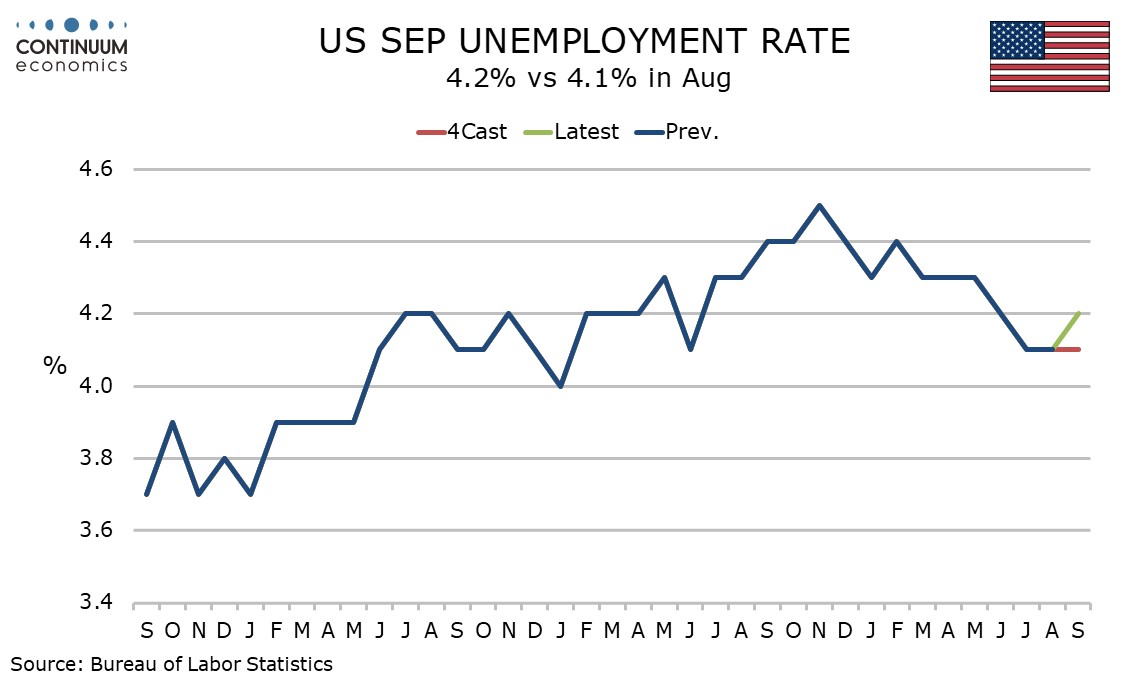
September’s non-farm payroll at 23k, 46k private, with negative back revisions, is weaker than expected and returns the picture to near flat after the stronger August. Average hourly earnings are slowing, up only 0.1%, though the rise in unemployment to 4.2% from 4.1% is on a rise in the labor force not a fall in employment. The workweek also held at August’s firmer 34.4 hours.
The data reduces the risk of a Fed tightening in October, though does not eliminate it with the CPI likely to be more significant than the payroll. Still, signs that the economy was picking up in Q3 may be starting to fade, hinting at a slowdown in Q4.
August payrolls were revised to 133k from 162k, and July to -10k from a 21k increase, making a net downward revision of 60k. For private payrolls August was revised to 89k from 127k and July to 28k from 71k, making a net downward revision of 81k.
August detail shows no large changes. Health care and social assistance, as has often been the case in recent months. led the payroll gain, but its 23k increase shows a continued slowing in trend. Private services were barely higher than this at 28k, with negatives from information and financial (both impacted by AI) as well as professional and business.
Construction at 11k and manufacturing at 9k both managed modest gains. AI is a positive in these sectors. The 17k fall in government was led by local government excluding the recently volatile education.
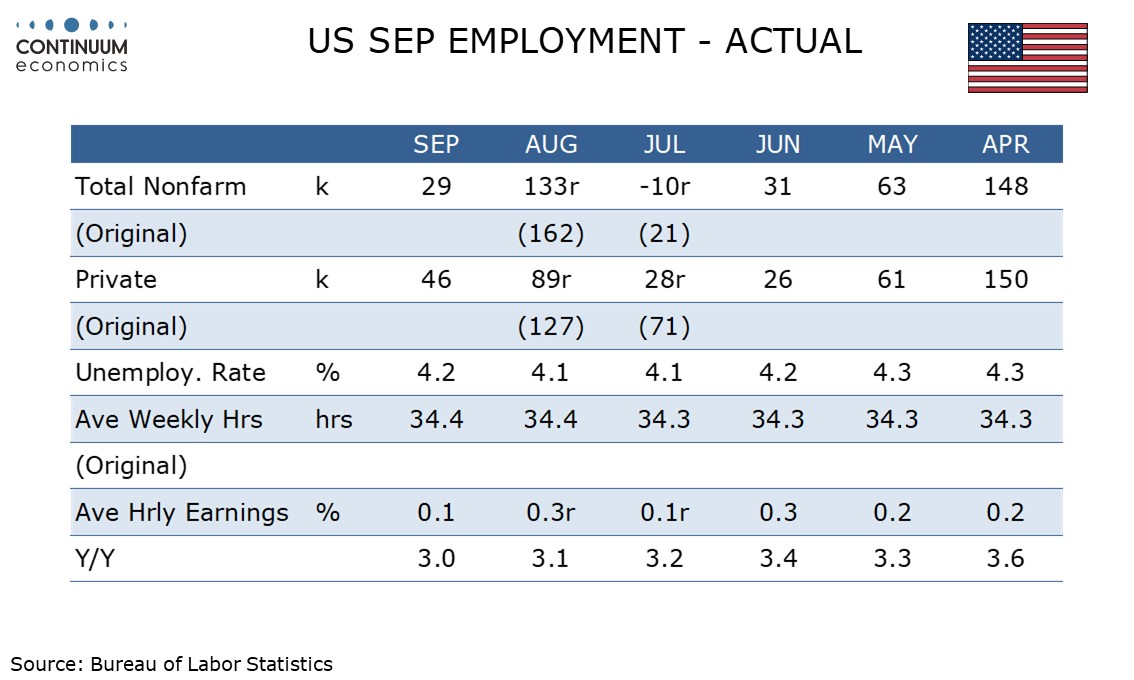
The increase in unemployment before rounding was marginal, to 4.18% from 4.14%, with the household survey showing strong gains in both employment, of 404k, and the labor force, of 485k, a second straight gain in each to more than fully reverse declines seen in June and July.
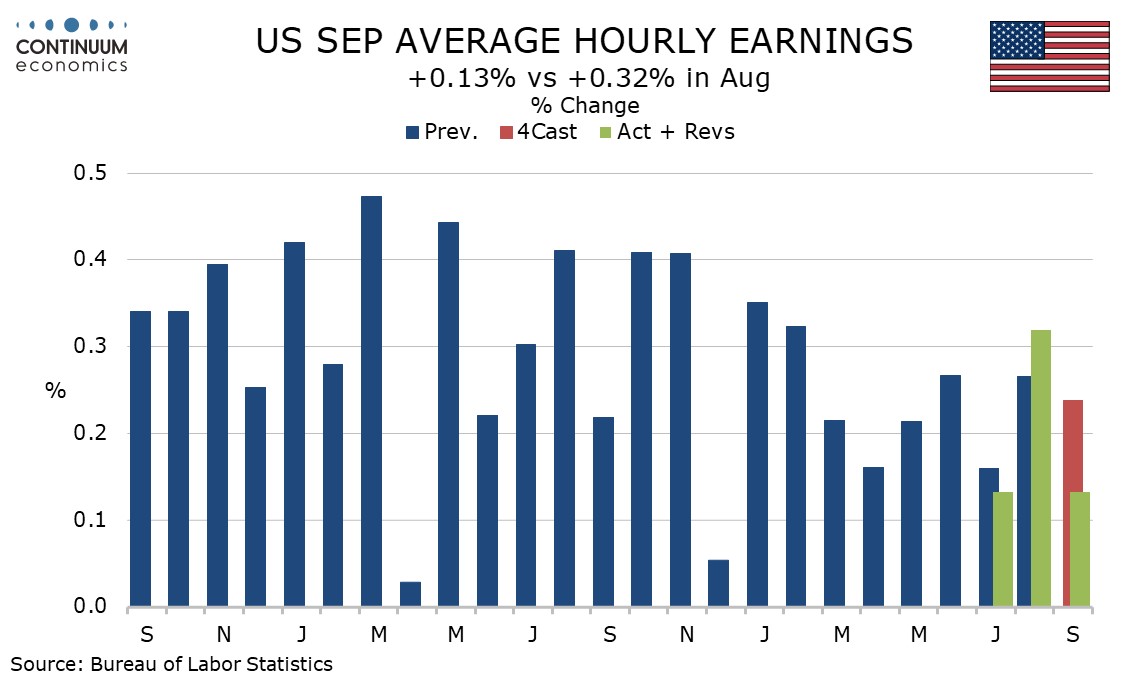
Average hourly earnings rose by 0.13% before rounding. Trend now appears to be around 0.2% per month, with March, April and May rising by that amount, and 0.3% gains in June and August followed by 0.1% gains in July and September.
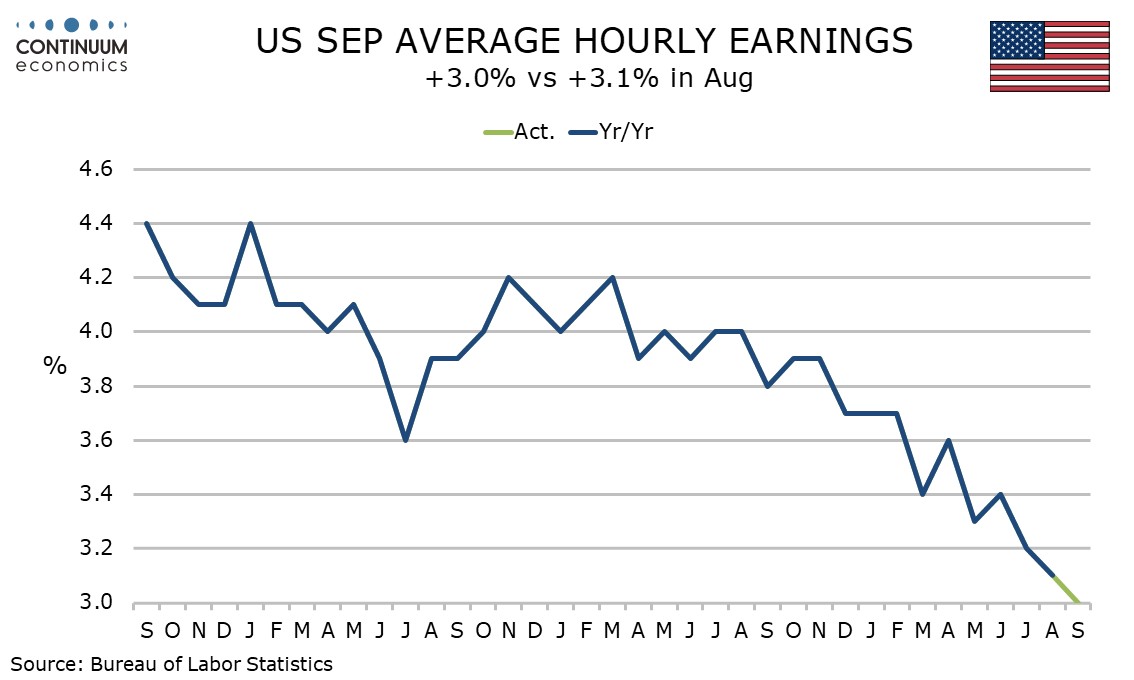
Yr/yr growth of 3.0% from 3.1% is the slowest since May 2021 and looks set to slow further if monthly trend is only 0.2%. With prices rising due to gasoline, this will put a restraint on consumption.
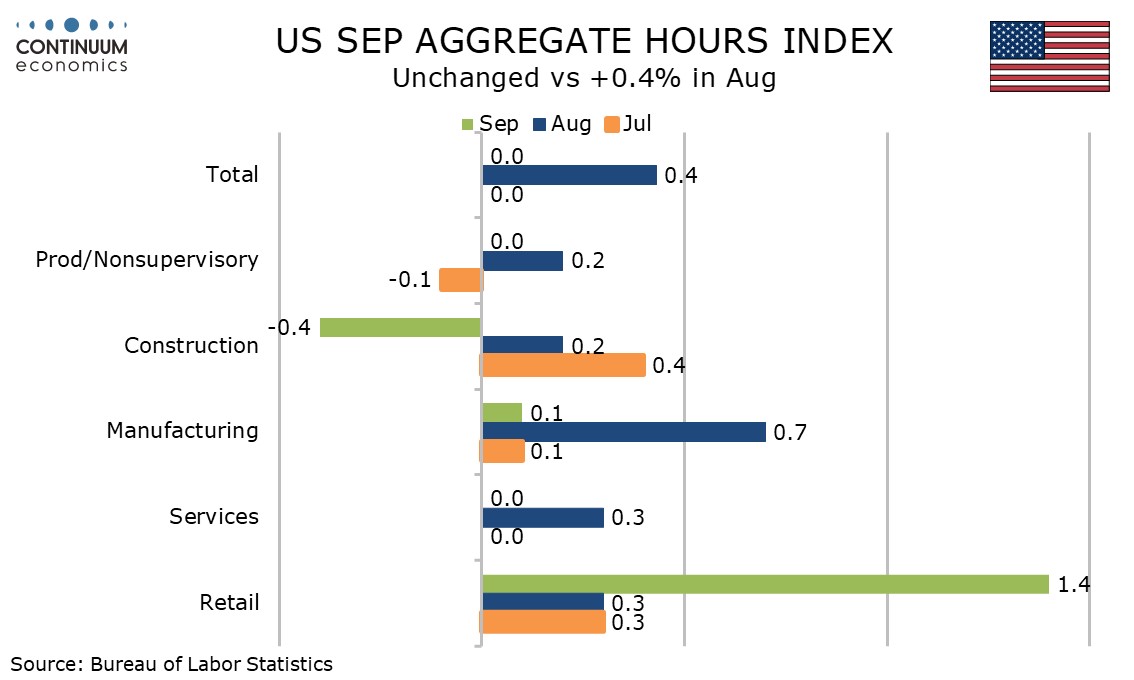
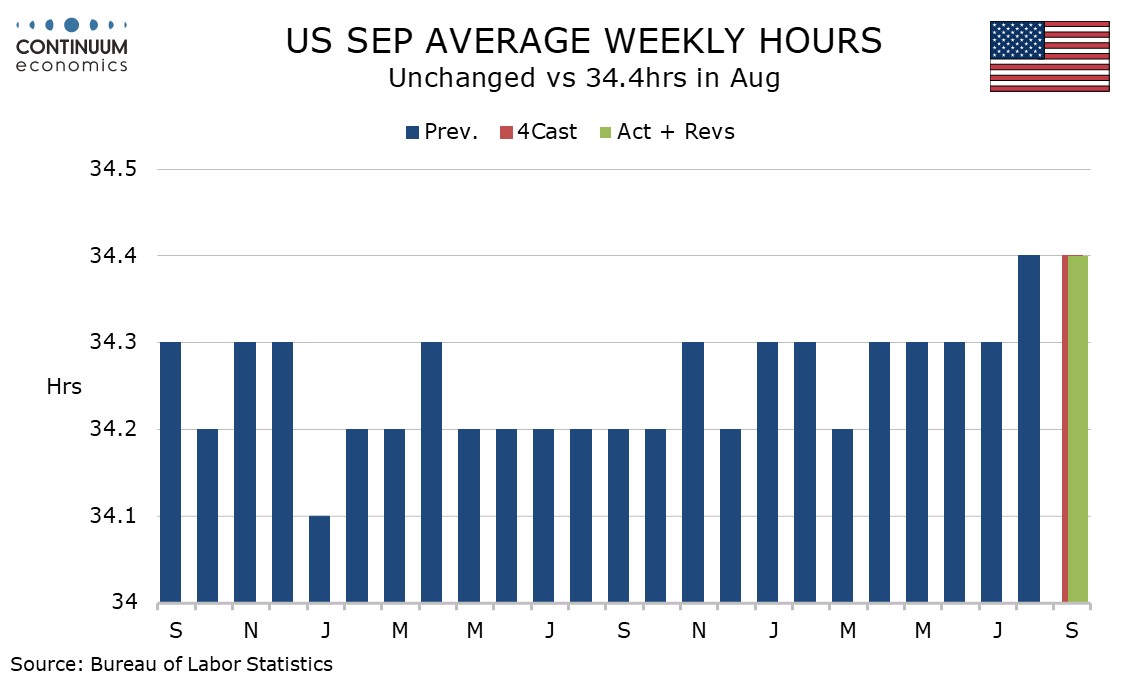
The workweek sustained an August bounce to its highest level since March 2024. Aggregate hours worked were unchanged in September leaving Q3 up by 1.3% annualized, only marginally improved from 1.2% in Q2, meaning a likely GDP acceleration will require stronger productivity.
Within the aggregate hours data retail showed a strong 1.4% rise which contrasts downside risks to real disposable income in the payroll breakdown. Manufacturing rose a marginal 0.1% but construction fell by 0.4%.