U.S. July CPI - On consensus, detail a marginal disappointment
July’s CPI is largely as expected, up 0.1% overall and 0.2% ex food and energy, with the latter at 0.215% before rounding only a marginal disappointment, though possibly a little more so in the detail. This does not provide a compelling case for Fed tightening in September, though by that meeting they will have also seen August data, while developments in oil prices will also be important. FOMC minutes due on August 19 will give important insight into how close the Fed is to tightening.
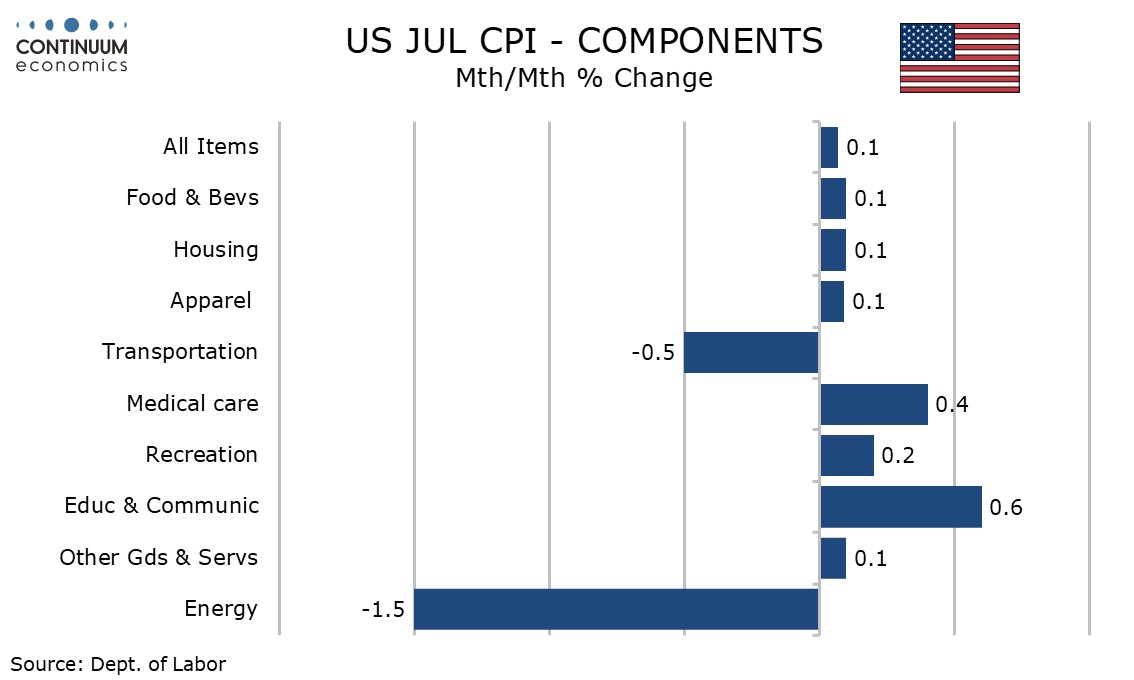
Overall CPI rose by 0.074% before rounding with food up by only 0.1% and energy down by 1.5%, led by a 2.9% decline in gasoline, a second straight fall that marks only a partial correction from three straight strong gains. Gasoline prices ended July stronger than they had started but there is not yet any sign of a strong acceleration in August in weekly data.
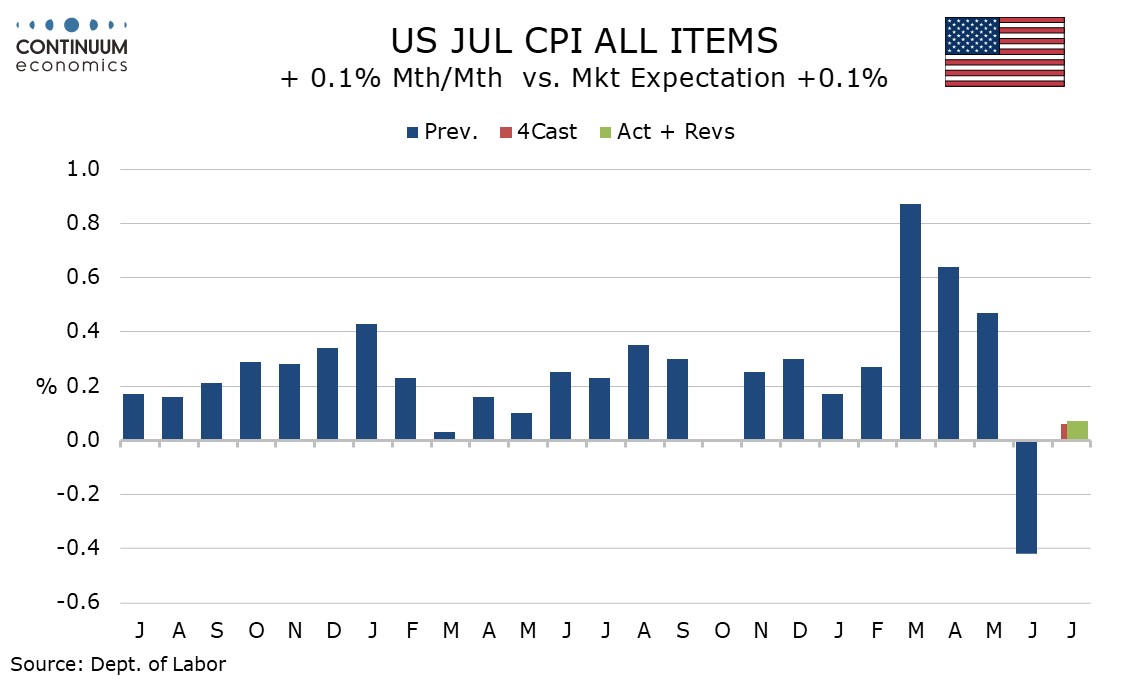
The latest data represents a return to trend after a surprisingly soft June when core CPI was unchanged. June’s soft core rate saw two components standing out on the downside. Firstly June saw a 2.3% fall in lodging away from home which was surprisingly followed by a 2.8% fall in July, the World Cup clearly not providing the boost that some had expected. June also saw a 2.3% fall in motor vehicle insurance. This was followed by a modest 0.3% decline in July. Transport services rose by 0.3% after a 0.3% June decline, led by a 2.2% increase in air fares.
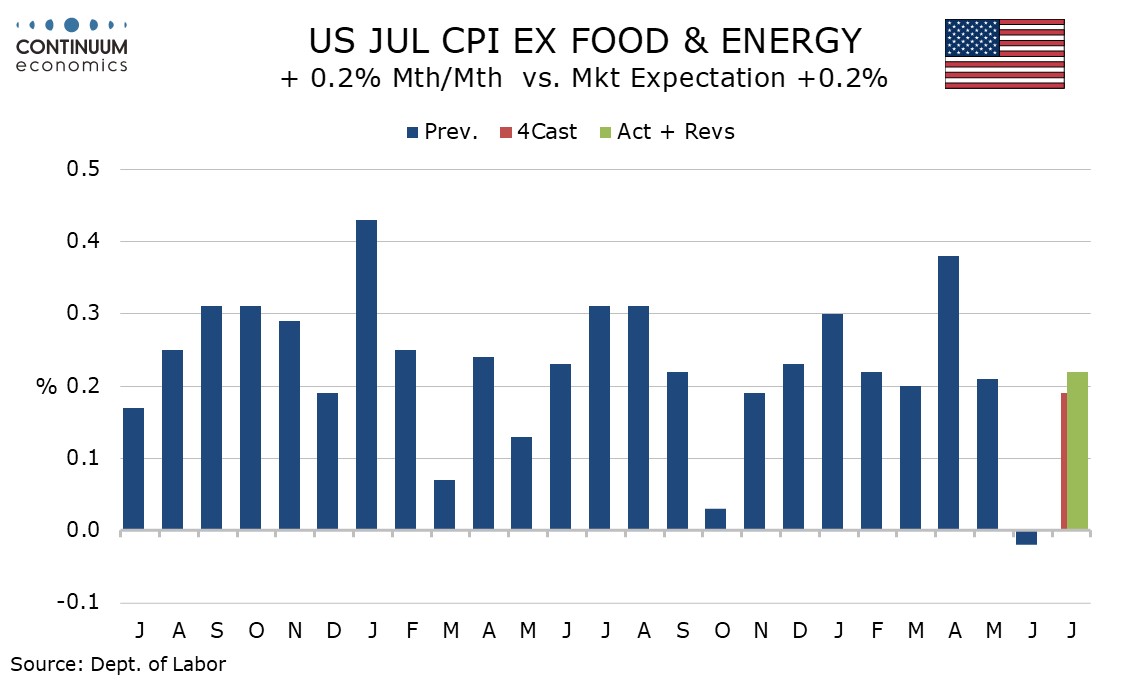
The weakness in lodging away from home ensured that shelter was subdued with a second straight rise of 0.1% despite a slightly firmer 0.3% increase in owners’ equivalent rent. This means that CPI ex food, energy and shelter was on the firm side at 0.3% (0.278% before rounding) in a correction from a 0.1% decline in June.
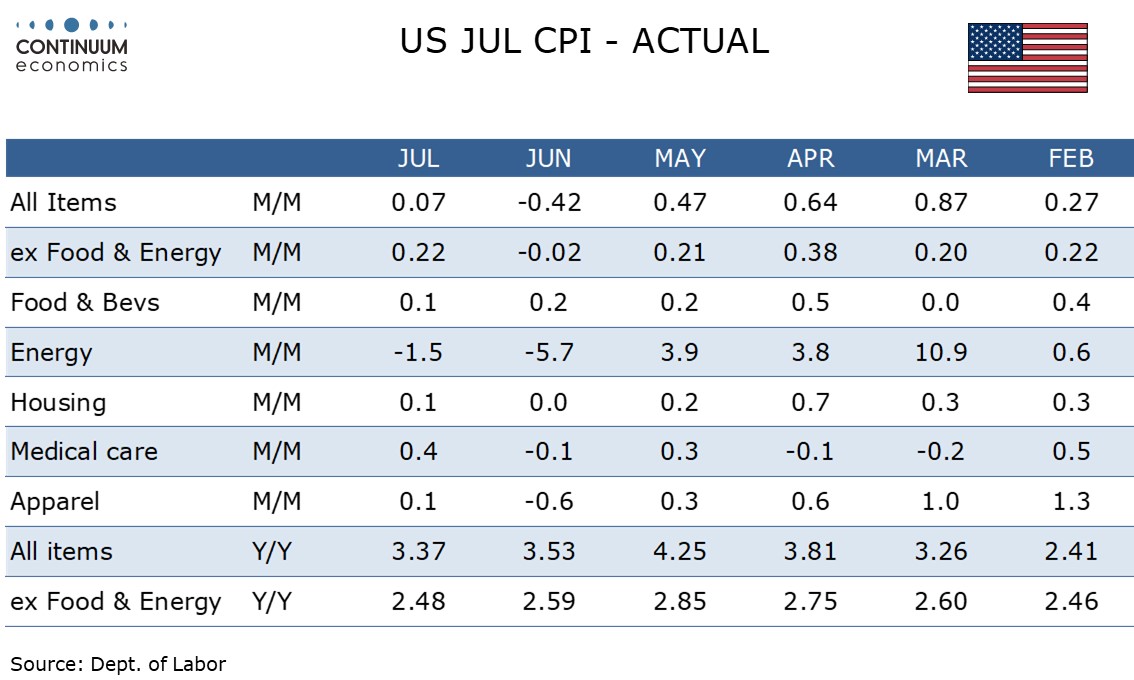
Goods less food and energy and services less energy both rose by 0.2%, a narrower gap than usual though the former at 0.198% before rounding was still softer than the latter at 0.228%. Core goods got a lift from a 0.4% rise in used autos after a 0.2% June decline. Recreation commodities at 0.6% were also firm as were education and communication commodities at 1.3%, the latter led by computers.
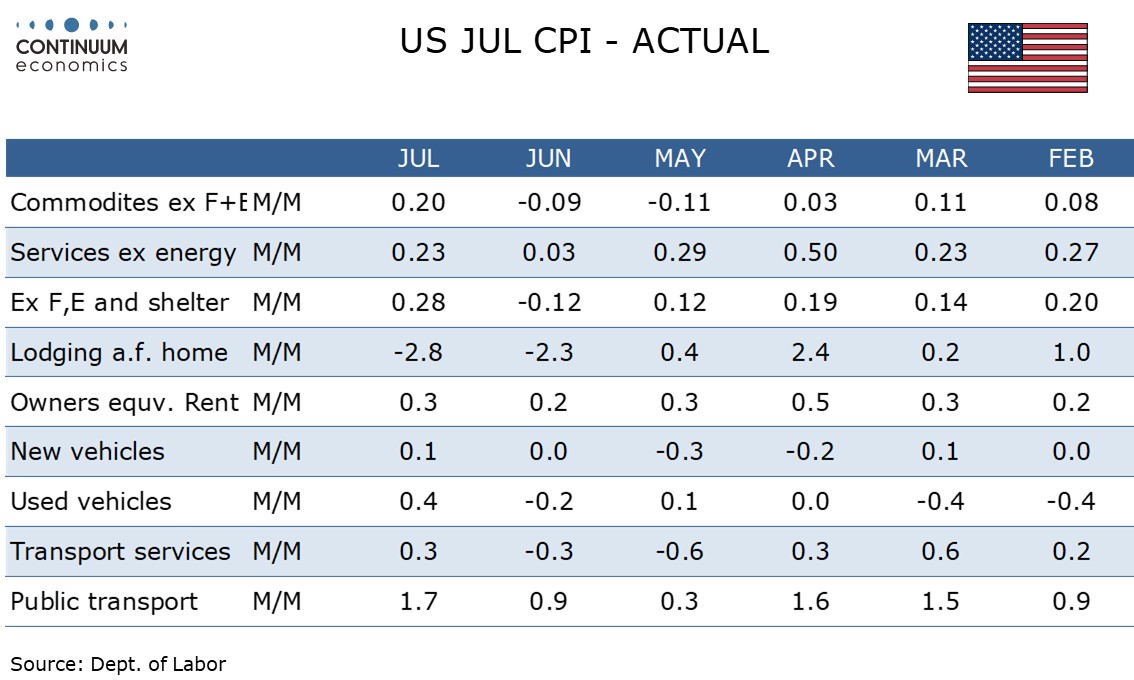
Core services were supported by a 0.6% increase in medical care services, though medical care commodities remain weak with a 0.6% decline. Education and communication also saw some strength in services at 0.5% though elsewhere the core services detail was subdued.
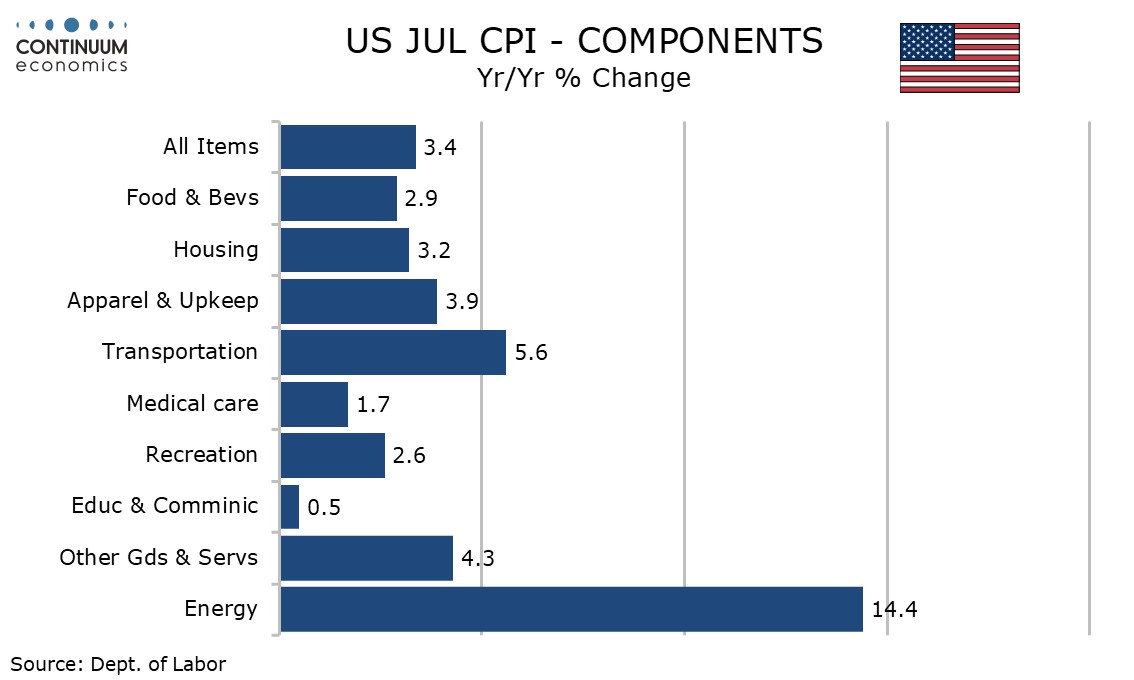
Yr/yr CPI at 3.4% from 3.5% has fallen further from its May high of 4.2% but remains well above the pre-war pace of 2.4% seen in January and February. The yr/yr ex food and energy pace of 2.5% from 2.6% in June is however back at the January and February pace, after rising to a high of 2.9% in May.
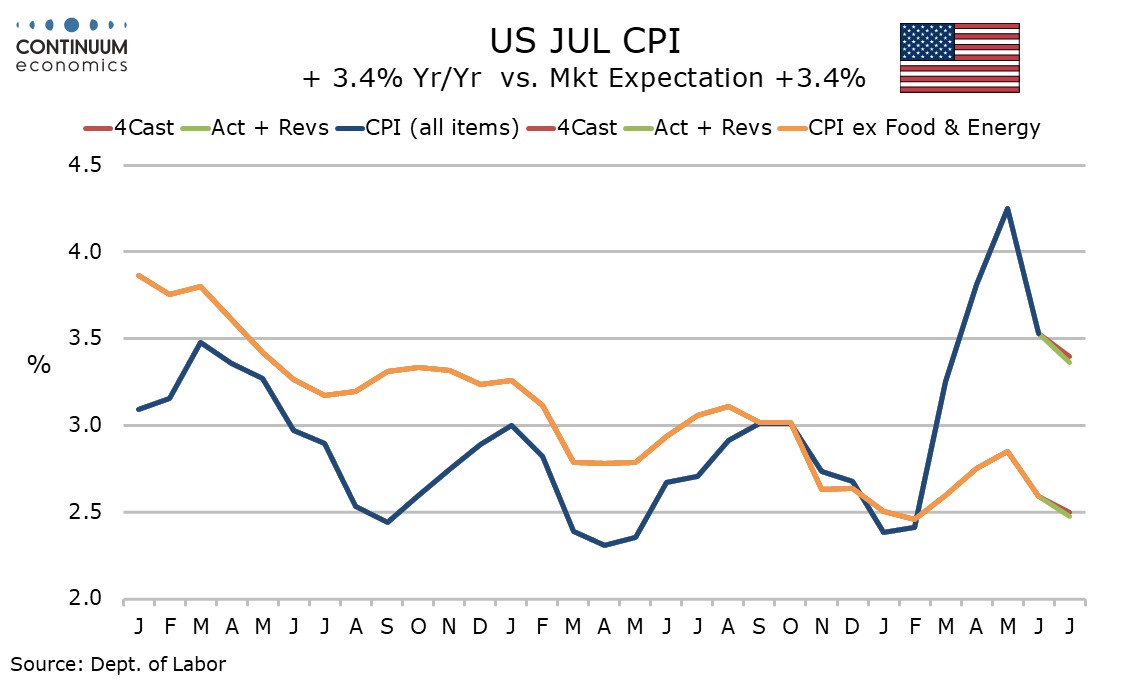
The data can be seen as a marginal disappointment given the volatility of lodging away from home which caused a significant restraint in the both the June and July data, though it does appear that trend is near 0.2% per month. Normally a 0.2% core CPI trend, consistent with yr/yr core CPI of around 2.5%, is consistent with core PCE prices near the Fed’s 2.0% target, though recently core PCE prices have been unusually outperforming core CPI, in part on a greater impact from computers. The case for a near term Fed tightening is not overwhelming, but the data is consistent with core inflation remaining a little above target, with no clear sign that it is heading back to 2.0%.