Running on Empty - Low Rivers could add to Europe’s Supply Squeeze
* Drought is not only directly impacting water-dependent activity, fire damage, and food crops. It is also seeing extreme low river levels across the major Rhine–Danube/Central-European industrial corridor
* That can significantly impact freight flow, adding to costs and disrupting industrial production, particularly in Germany - 2018 episode was seen hitting GDP by around 0.4%.
* Adds another layer to the supply-side issues and the upside-price-risk, downside-growth-risk headache
The Iran war remains the critical, ongoing supply squeeze factor as it drags on and continues to restrict global trade and hamper flow of key refined and input products. It is not the only supply problem felt across central Europe however. Drought has already been impacting agriculture, wild fire damage and tourism. But it is also having an increasingly significant impact on some of the most important major industrial waterways.
While the Danube has been getting much of the recent media attention, the unprecedented low water levels are also seen across the Rhine and Elbe.
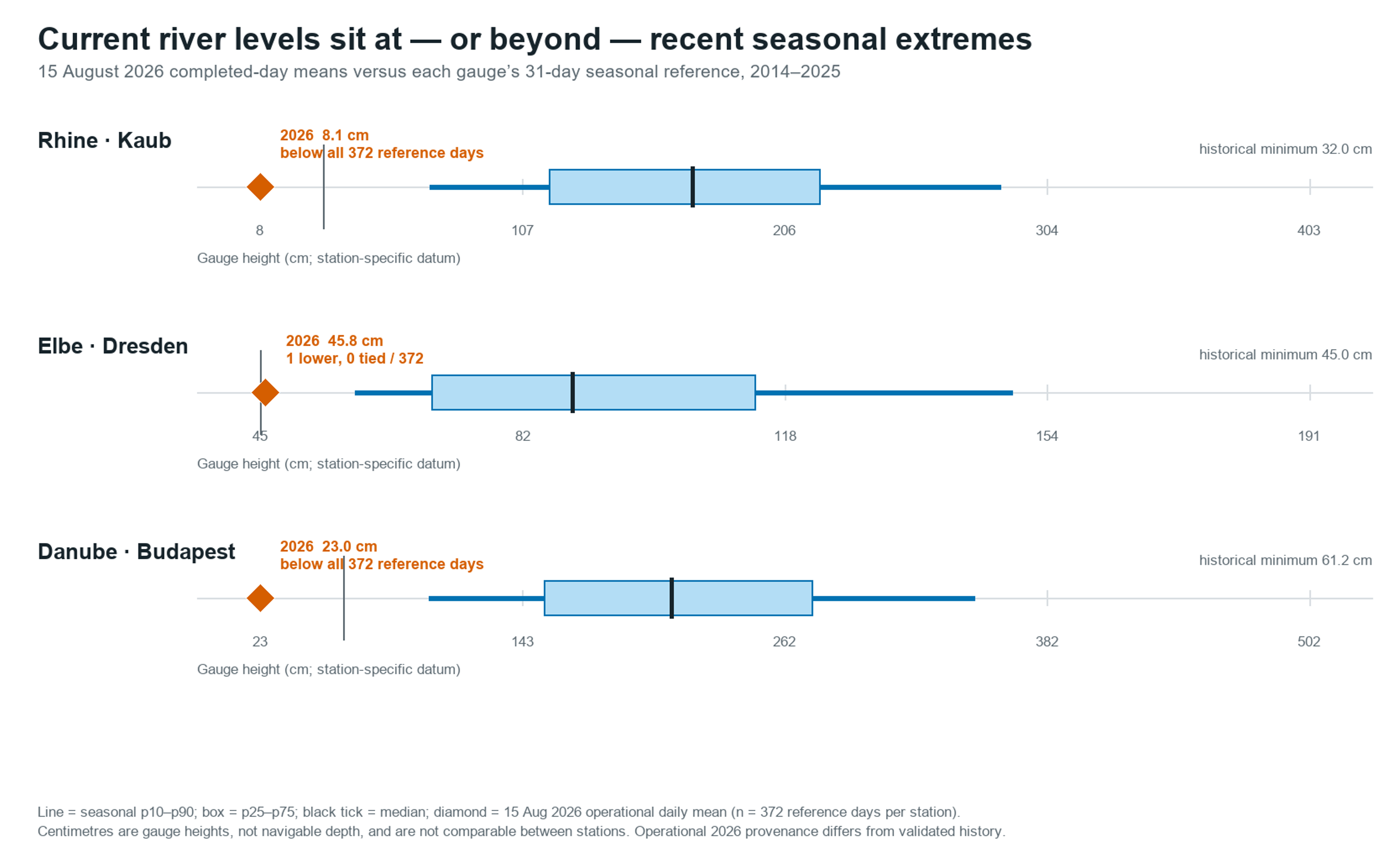
Figure 1: Extreme low river readings versus zero gauge
Source: German Federal Institute of Hydrology (BfG), Hungary National Water Directorate (OVF); CE
Looking at data available for the last 12 years, current daily water levels at Kaub on the Rhine and Budapest on the Danube are below every comparable late-summer observation. Dresden, using that gauge as the general proxy on the Elbe, had only one lower day. All three have been sat in their seasonal bottom decile for the last two weeks.
Alongside the broader effect of water draw restrictions on water dependent sectors, the direct logistic impact can also be significant. Reduced payload and vessel numbers can lift freight costs and disrupt and restrict bulk input and final shipment deliveries, resulting in lower industrial output.
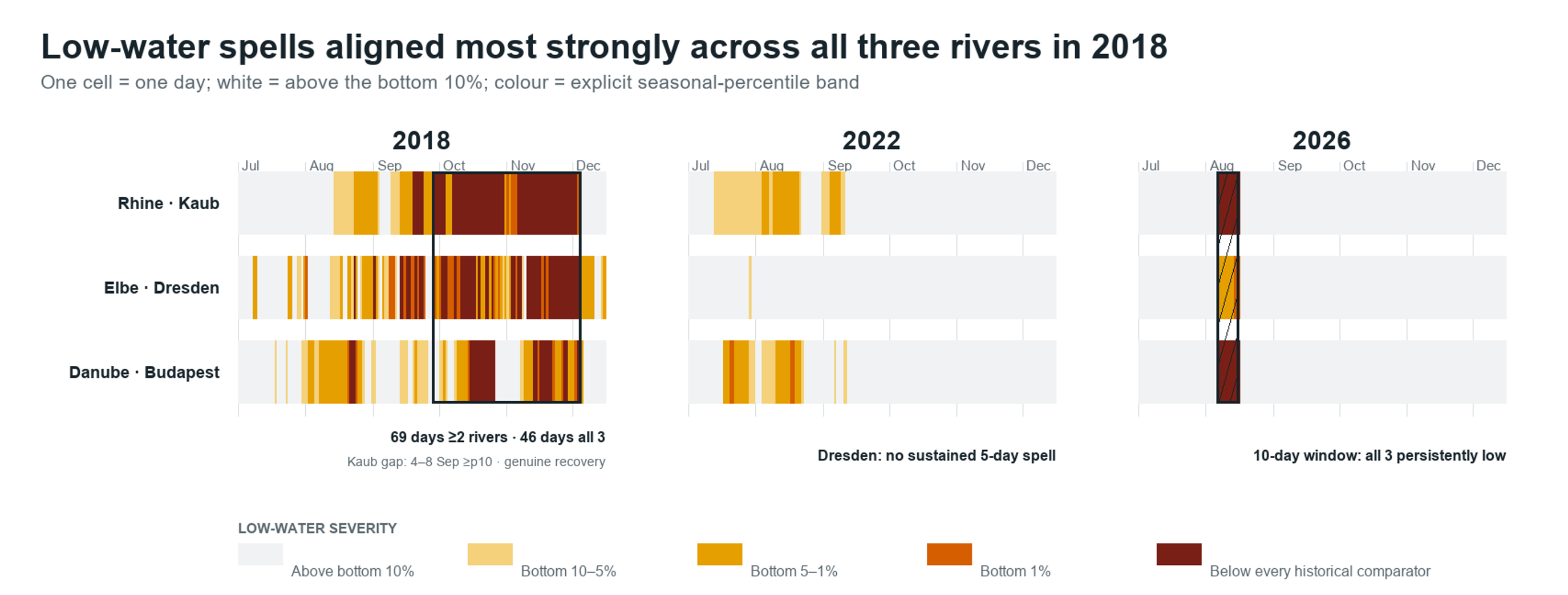
Figure 2: Current recent extremes vs 2018 and 2022 history
Source: BfG, OVF ; CE
2018 and 2022 are the strongest parallels to the current situation, with the former the cleanest comparison.
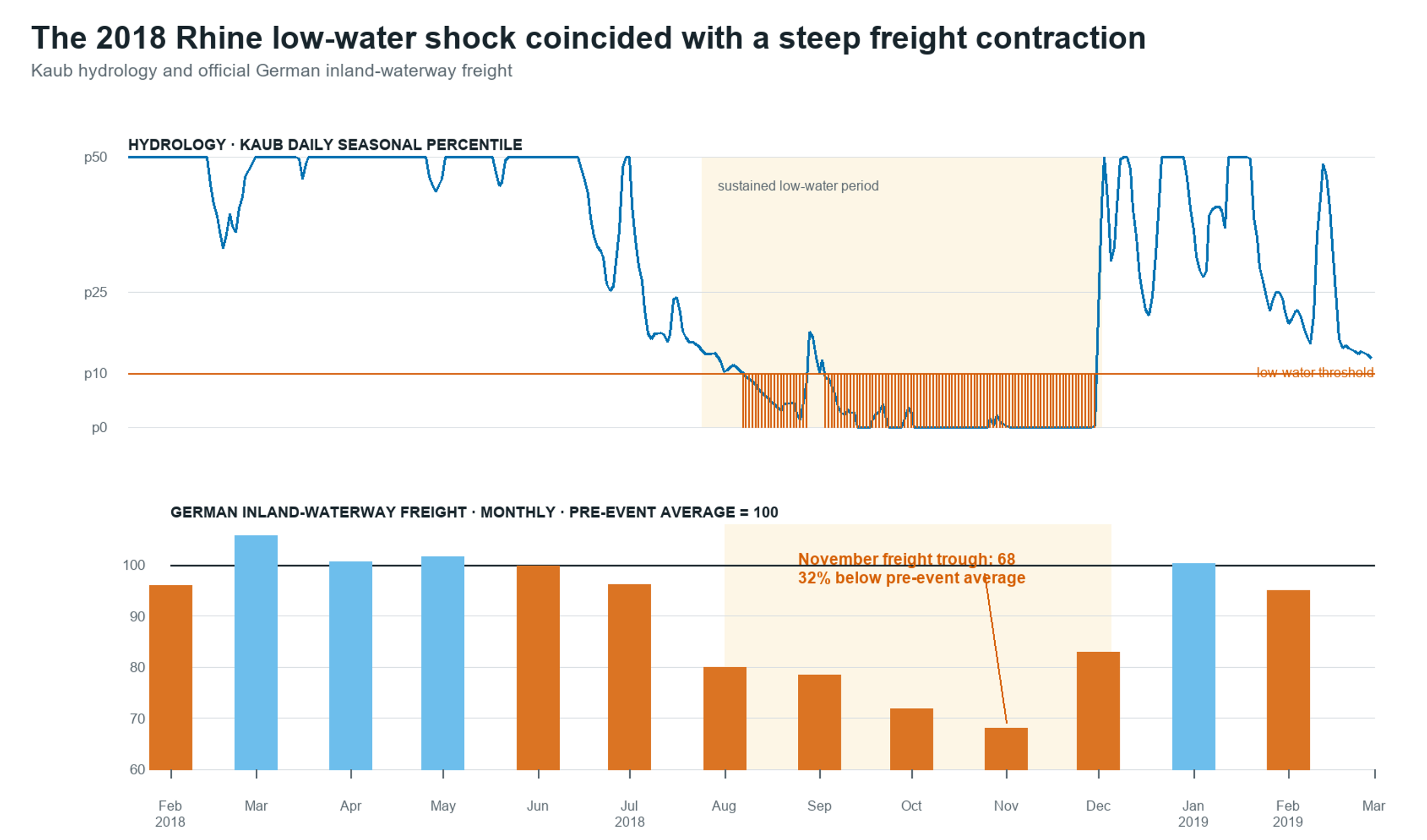
That year, at the Rhine reference point, extremes kicked off in mid-August, eased briefly, before persisting through early December. German inland-waterway freight fell from 18 ½ mn tonnes prior to 12 ½ mn in November, down a third year-on-year. Manufacturing and particularly exposed sectors like chemicals and refined petroleum, were notably affected. Indeed, BASF had to declare force majeure, halting production at some hubs over that period, later reporting resulting earnings hit of around EUR250mn.
Figure 3: 2018 gauge levels and German inland water freight
Source: BfG gauge data; Destatis inland-waterway freight statistics
Looking at related research, the Kiel Institute have estimated that 30 low-water days equates to roughly 25% lower freight and 1% lower German industrial production. In 2018, they modelled the impact on production as being in the order of -1.5% compared to normal baseline or, applying GVA share, around -0.4% for GDP.
Whether this year’s impact also proves as persistent, as well as extreme, as that event is now weather-dependent heading into the autumn. 2018 was so felt because of the length of the impact as much as the extent. What is clear however is that drought is already intensifying logistic and supply side pressures through a number of channels. That adds another potential strand to the current ‘upside price risks vs downside growth risks’ headache coming from global forces.