UK External Account: The Ugly and the Good
· The UK has seen a ugly persistent worsening of the EU goods trade deficit since leaving the EU in 2020, but two current account trends are good. The UK is helped by a surging services surplus and also a pick-up in investment income from UK portfolios invested overseas. Nevertheless, GBP is modestly overvalued and can see a gentle softening versus the EUR in 2027, as the BOE restarts rate cuts. Additionally, a game changing improvement on the trade front with the EU is unlikely. We see 0.89 on EURGBP by end 2027.
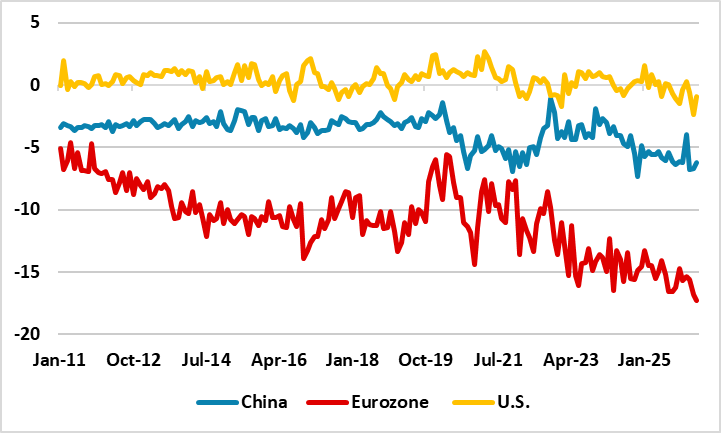
Figure 1: UK Goods Trade Balance Key Partners (%)
Source: Datastream/CE
The ugly is the UK goods trade balance with the EU (Figure 1), which has deteriorated on a trend basis since the 2016 Brexit vote and 2020 departure from the EU. UK small and medium sized businesses have significantly reduced exports to the EU, due to new regulations and the end of access to the EU single market. EU businesses in contrast have still maintained reasonable imports into the UK. This is one of the three ugly sides of Brexit with the others being low investment/GDP and slow growing government revenue with modest economic growth! While PM Burnham wants to improve the trade relationship with the EU, it is unlikely to a customs union that would be a gamechanger on the trade picture.
However, some good news has arrived in the UK external account on two fronts
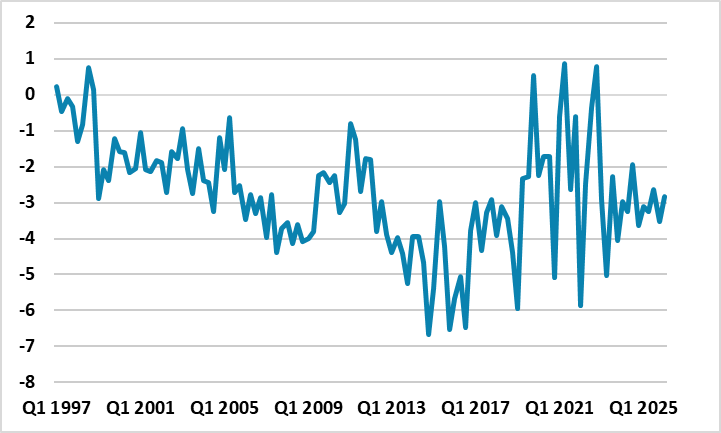
Firstly, the UK non-EU goods trade balance has not deteriorated like the EU balance, which could reflect UK specialism in certain sectors. Secondly, the EU and non-EU services surplus has been a noticeable counterweight to the deteriorate in EU goods. The service surplus has grown from £99bln in 2016 to £203bln in 2025. Financial services, technology and media/music have all helped the UK. This has meant that the balance on trade and services has been restrained and one of the factors helping a trend reduction in the UK current account (C/A) deficit in recent years (Figure 2).
Secondly, the other help to the UK C/A from primary income, as UK assets held abroad have risen at a faster valuation pace than foreign investors holdings of UK equities and gilts. This also helps to explain why the UK has only a -6% net international investment position (NIIP) as shrewd investment has counteracted a persistent C/A deficit.
Figure 2: UK Current Account Deficit (%)
Source: Datastream/CE
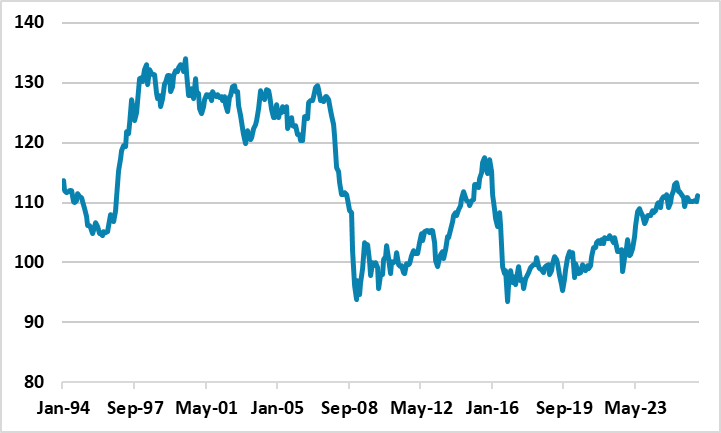
Looking at the financial accounts net transactions, the value of overseas portfolio assets in the UK for 2025 rose quicker than UK holdings of non UK portfolio assets, with net bond investment flows helping in C/A financing. UK government bond yields are higher than most other DM countries, while having a government that is more committed to fiscal consolidation than the U.S. -- though 10yr UK-U.S. spreads are also driven by relative BOE-Fed policy rates (Figure 3).
Figure 3: 10yr Gilt v U.S. Treasuries and BOE-Fed Funds (%)
Source: Datastream/CE
The UK external position will deteriorate in 2026 due to high energy prices from the Iran-U.S. war, but the multi-year trend is sustainable on the basis of the factors mentioned above. Thus it would take a big shock to destabilise current account financing and the GBP. The probability of the Labour government under PM Burnham abandoning the fiscal rules is very low (here) and the October budget will at worst see only fine tuning of the rule, if any change is seen. Meanwhile, Trump’s tariff wars have passed their peak and that is unlikely to change radically for the UK. Finally, though some senior Russian politicians have threatened the UK (after more support for Ukraine), Putin is unlikely to launch a major incident against the UK as he knows that Russia needs to convince a lame duck Trump to pressure for a Russia friendly peace deal again – a gray warfare incident between the Russian and UK short of an act of war is still a modest probability in the next 3-12 months.
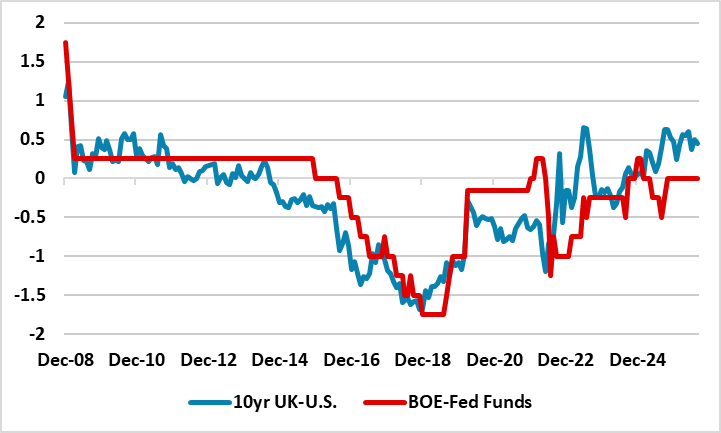
This does not mean it will be all plain sailing for GBP. Firstly, GBP is around 7% overvalued versus the 10yr average of the Real effective exchange rate (REER) in Figure 4, as UK inflation has outstripped trading partners in recent years. This could act as force gently weakening GBP. Secondly, we feel that not only is the BOE unlikely to hike in 2026 (here), but will cut policy rates by 50bps in 2027. The UK underlying fiscal consolidation will build greater disinflation, while the labour market is among the softest in DM countries and should ensure that core inflation comes back down to 2% in 2027.
Figure 4: GBP Real Effective Exchange Rate (%)
Source: Datastream/CE