UK Fiscal Policy and the New Chancellor
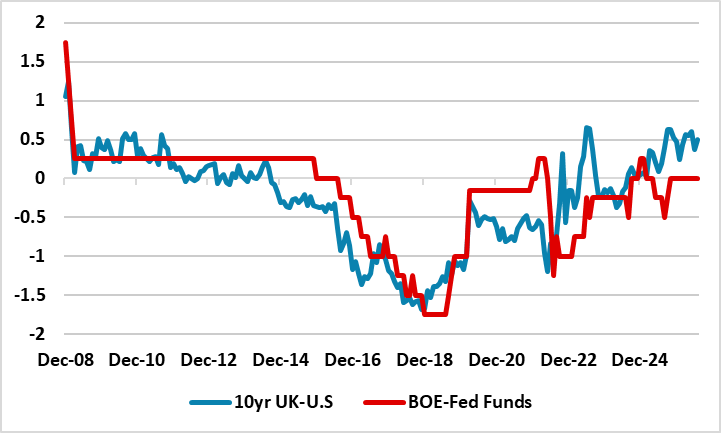
· Apprehension will exist until the Autumn budget, despite a repeated commitment by PM Burnham to stick to the fiscal rules. Spending commitments are clearer than tax raises measures, while new Chancellor Healey may not be strong enough to curtail spending pressures. This could mean a persistent risk premium in 10yr Gilts v Treasuries until the budget. Proof that the UK is sticking to the fiscal rules can help control the 10yr spread versus U.S. Treasuries later in the year, while the BOE also widely expected to slow the pace of QT to £50bln at the September MPC meeting.
Figure 1: 10yr Gilt v U.S. Treasuries and BOE-Fed Funds (%)
Source: Datastream/CE
Apprehension exists over new UK PM Andy Burnham’s government fiscal policy. While Burnham has reiterated yesterday his commitment to the fiscal rules and also suggested a little tax rise to pay for cost of living breathing space, markets remain nervous that political pressure will see fiscal slippage. This morning’s scrapping of VAT on electricity (£850mln 2026/27) is funded by scrapping digital ID's, but shows the political pressure the government is under. Nevertheless, this is not acute and the 10yr UK-U.S. Treasury spread is only mildly elevated compared to the 2022 period when yields spiked much more than the BOE-Fed policy rate spread would suggest (Figure 1).
The appointment of John Healey is mixed. While being a credible cabinet minister and good communicator, he has championed higher defence spending and may not have the political strength to block fiscal slippage from other cabinet ministers.
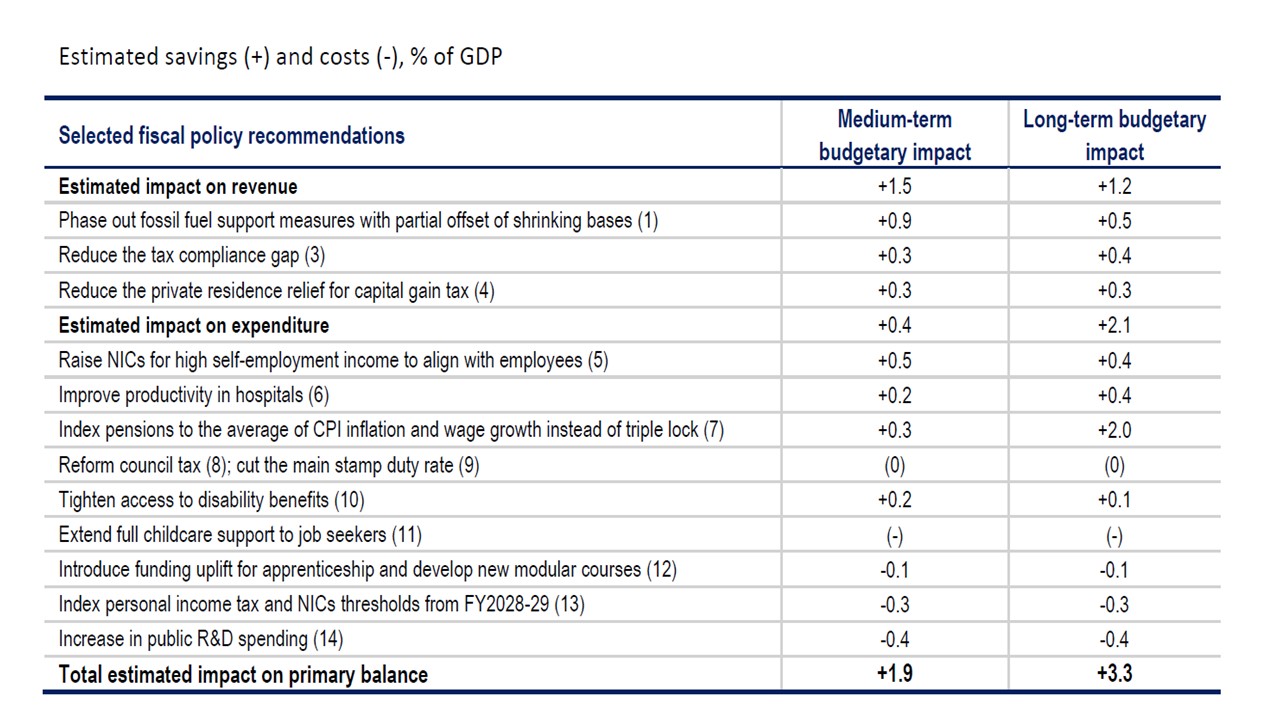
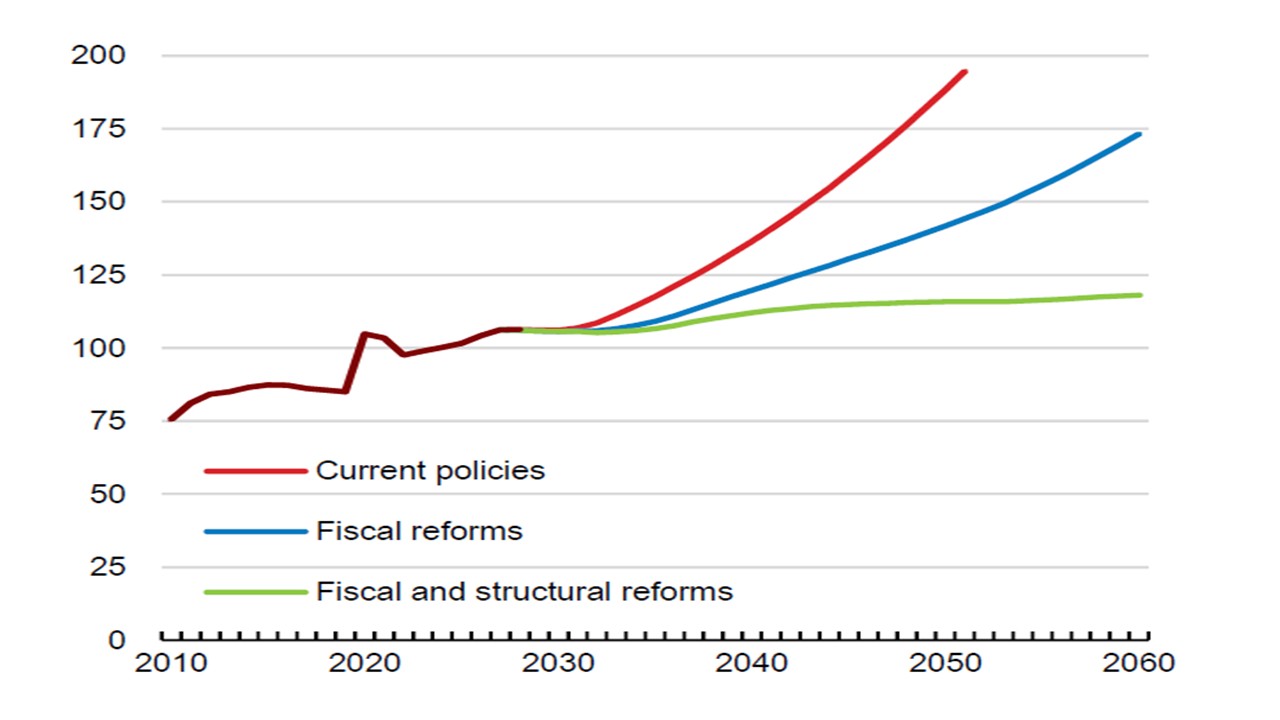
Work will begin in earnest now for the autumn budget, with some reports that the Burnham government would also like to review spending targets at the same time. A honeymoon period does provide scope for the new government to differ compared to the Starmer administration, but this is restrained by UK politics and a more centre left administration under Burnham than under Starmer. Some of this can be seen in comparison to the IMF and OECD UK reviews that have just been finished. Both recommend reducing the overgenerous triple lock rule for state pension increases, but this is likely to be politically too difficult before an expected 2029 general election. The same holds true for a land value tax/reform of property taxation and significant reform of disability benefits (Figure 2). These measures are important for the 2030’s and 2040’s when the UK fiscal trajectory deteriorates due to population aging and associated health/pension and disability spending increase (Figure 3).
Figure 2: Government gross debt: fiscal scenarios
Source: OECD July 2026
Figure 3: Government gross debt: fiscal scenarios
Source: OECD July 2026
Even so, some fine tuning of tax and spending can occur in the autumn 2026 budget, that would be consistent with the existing fiscal targets in the autumn budget. The Resolution foundation has also suggested that public entities not including in the fiscal rule such as the national wealth fund could boost investment spending by a modest £16bln in the coming years (here). PM Burnham yesterday indicated he wanted to use such wiggle room. Proof that the UK is sticking to the fiscal rules can help control the 10yr spread versus U.S. Treasuries later in the year, with the BOE also widely expected to slow the pace of QT to £50bln at the September meeting.