BOE: Split Does Not Mean September Hike
· Overall, the July MPC minutes and monetary policy report/press conference suggest that the MPC is not convinced of a September hike and a worsening of energy price rises and/or 2nd round effects would be required to shift the voting to a 25bps hike. While the MPC has a hawkish bias the press conference, the stronger argument is that tight financial conditions and an output gap guard against upside inflation risks. This sounds like a hawkish bias, but no guarantee of a 25bps hike at the September meeting and we forecast no hike. A moderately high risk will remain of a rate hike into Q4 2026, but on balance we forecast unchanged policy rates throughout 2026.
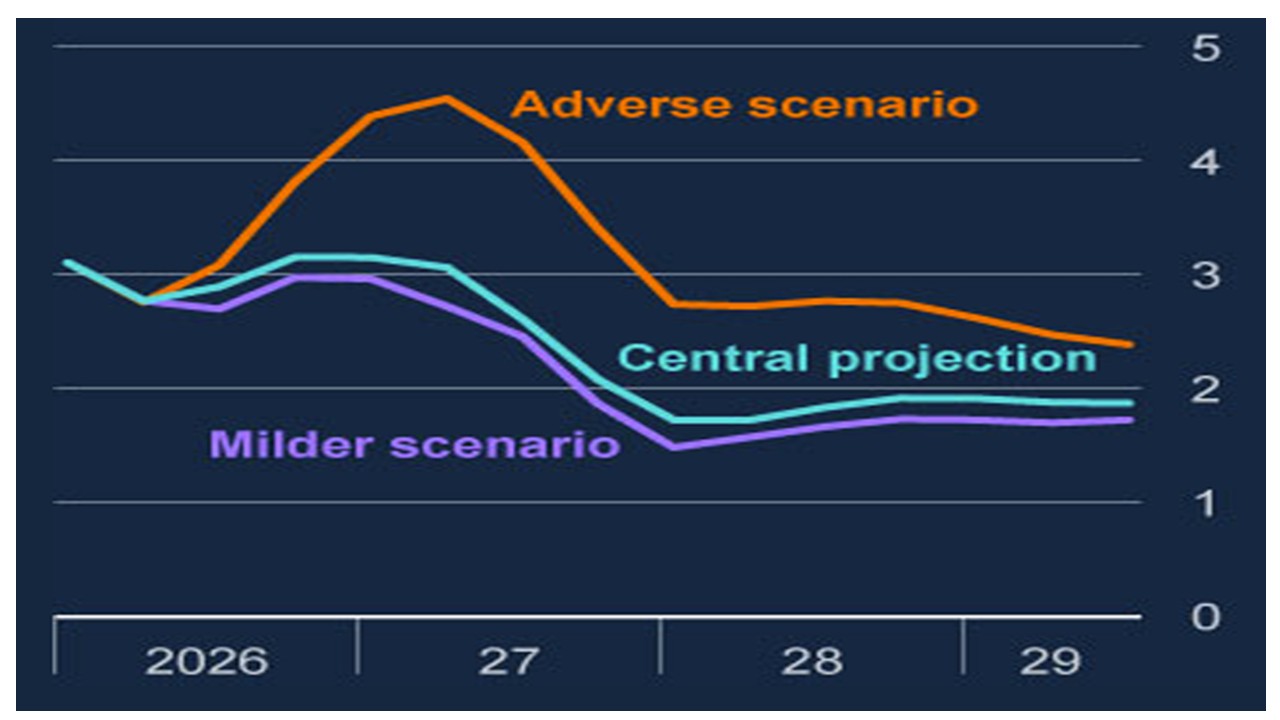
Figure 1: CPI projections from BOE (%)
Source: BOE July Monetary Policy Report
A number of points are worth highlight from the July MPC minutes and Monetary Policy report & press conference.
· Minutes 6-3 split and why. The three members that voted for a hike (Greene/Mann/Pill) were less reassured by the underlying disinflation process; were worried about 2nd round effects from high and volatile energy prices and concerned that inflation had overshoot target for 5 years. However, the 6 voting for unchanged rates believe in the underlying disinflation prices; 2nd round effects are not really evident and feel that the tightening in financial conditions can act against upside inflation risks. The option of a rate hike should be kept on the table however given the uncertainties. The key individual write up comes from BOE governor Bailey where he emphasized that the labour market continues to ease, and the domestic demand environment remains soft. It is worth noting that the three members voted for a 25bps hike, as risk management insurance and this is not an aggressive call for a hiking cycle at this stage. At face value this is a split that require further data to shift to a majority voting for a rate hike at the September meeting.
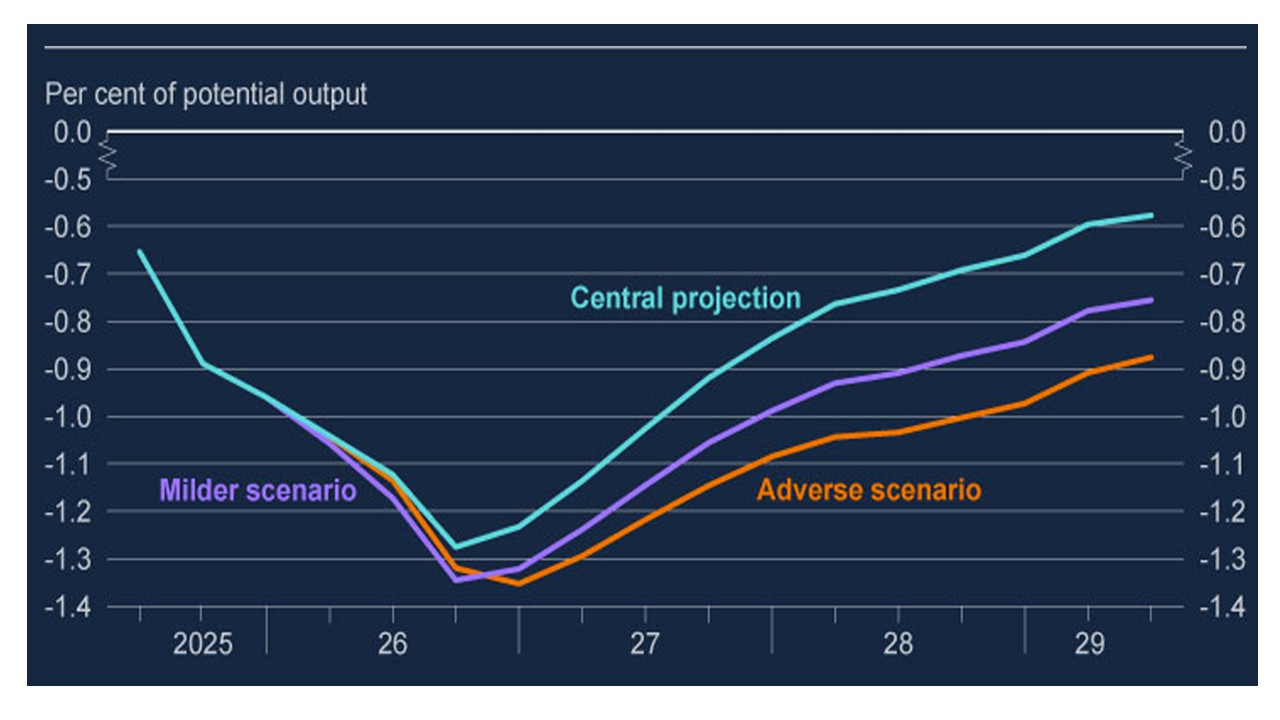
· Monetary policy Report. The key question that the BOE monetary policy raises is to balance the costs of leaning too little against potential inflationary pressures and the costs of responding too much. The key uncertainty is volatile energy prices, which the BOE acknowledge has returned since the June MOU broke down. The BOE note that energy prices could be still higher with a prolonged and more widespread war or lower is the ceasefire returns. The boxes in section 2 look for evident of 2nd round effects, which on balance is not yet evident but is a risk. However, the BOE assesses that labour market slack is clear looking at a variety of measures (e.g. vacancy/unemployment in Chart 1.13), while consumer confidence is soft; financial conditions is judged to have tightened (Box F) and housing demand has been hurt by higher market driven mortgage rates. This all fits in with the narrative from the six members voting for an unchanged policy rate in July, that feel that tighter financial conditions and the output gap (Figure 2) are likely to bring inflation back to target. The central projection includes one 25bps hike, but no more than a 25bps cut in 2028 (Figure 1), with the adverse energy price scenario and inflation outcome requires a cumulative 100bps hike in policy rates.
Figure 2: Level of the output gap in the BOE Central projection, Milder and Adverse scenario (%)
Source: BOE July Monetary Policy Report
· Press conference. Bailey introduction encompassed the key elements of the monetary policy report, though he emphasised that BOE agents noting weak feedthrough of higher energy prices to final prices or wages (3.5% expected and consistent with 2% inflation). In the Q/A, BOE bailey maintained this posture of hawkishness, without a sense of urgency to actually tightening. Indeed, Bailey did not take the opportunity to sounds too hawkish, despite attempts by journalists to get clarity. One final note Claire Lombardi dismissed ideas that she was closest to switching to the rate hike camp.
· September QT slowdown. The BOE has increased their assessment of the boost to 10yr gilt yields to 20-30bps versus 15-25bps when the QT review was done last year. Some of the MPC hawks will likely be reluctant to slow the pace of QT from September 2026. However, the majority will likely take the view that QT operates separately to policy rate setting and that the modest restrictive effect from QT could be tempered. More importantly, the asset holdings since 2022 have fallen steeply and we feel that on balance the MPC will vote to slow the pace from GBP70bln to GBP50bln in the 12 months from September 2026.
Overall, the July MPC minutes and monetary policy report/press conference suggest that the MPC is not convinced of a September hike and a worsening of energy price rises and/or 2nd round effects would be required to shift the voting to a 25bps hike. While the MPC has a hawkish bias the press conference, the stronger argument is that tight financial conditions and an output gap guard against upside inflation risks. This sounds like a hawkish bias, but no guarantee of a 25bps hike at the September meeting and we forecast no hike. A moderately high risk will remain of a rate hike into Q4 2026, but on balance we forecast unchanged policy rates throughout 2026. Indeed, given our view that Trump remains biased to lower energy prices and hence a new ceasefire, we still remain inclined to two rate cuts in 2027.