UK CPI Preview: A Further Rise is Expected but Still Waiting for Signs of Second Round Effects
A further increase in annual inflation shouldn't come as a surprise as the lagged impact of higher energy costs continues to filter through to the headline rate. Consensus expects CPI to rise to 3.7% in October from 3.5% in September with core remaining unchanged at 2.8% confirming our view that the ongoing surge in headline inflation remains largely an energy story. A month on month increase of 0.5% this week, similar to August and September readings, would put annual headline inflation at 3.7% whereas a 0.7% print, similar to that recorded at the start of the conflict, would put the annual rate at 3.8%. The BoE expects CPI to hit "around 5%" in Q2 of next year before it eases thereafter. We continue to watch the data for signs that the energy shock is spreading to the wider economy. So far there is little sign of that happening. The recent hike and a further near term 25bp increase should be seen as insurance hikes and current market pricing seems overdone to us.
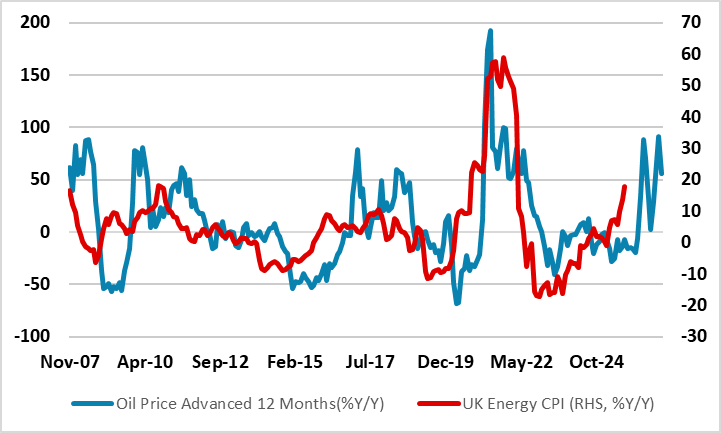
A further increase in annual inflation shouldn't come as a surprise as the lagged impact of higher energy costs continues to filter through to the headline rate (Figure 2). Consensus expects CPI to rise to 3.7% in October from 3.5% in September with core remaining unchanged at 2.8% confirming our view that the ongoing surge in headline inflation remains largely an energy story. A month on month increase of 0.5% this week, similar to August and September readings, would put annual headline inflation at 3.7% whereas a 0.7% print increase, similar to that recorded at the start of the conflict, would put the annual rate at 3.8%. The BoE expects CPI to hit "around 5%" in Q2 of next year before it eases thereafter.
We continue to watch the data for signs that the energy shock is spreading to the wider economy. So far there is little sign of that happening. There is scant evidence that higher energy prices are having large second-round effects either on inflation expectations or on wage pressures. The labour market appears to be stabilising but that is not the same as saying the labour market is firing on all cylinders and hence wage growth remains subdued at around 3.5%.
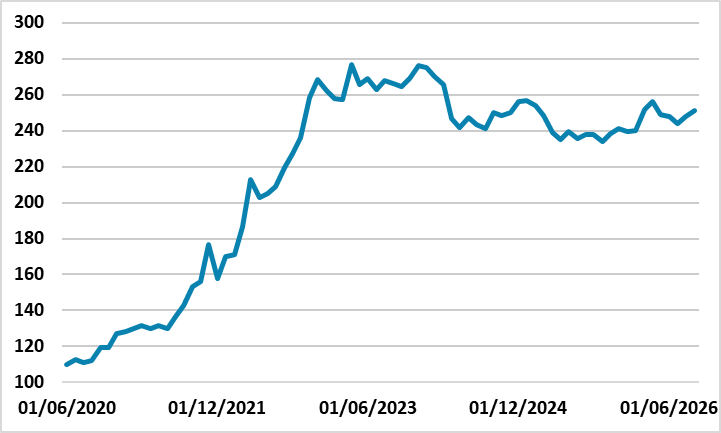
Higher energy costs are having limited impact on consumer prices partly because there has been limited pass-through of higher wholesale energy prices to firms’ costs (Figure 3). Where costs have increased these are largely being absorbed in firms’ lower profit margins. As the Bank noted in November's Monetary Policy Report “measures of the prices of electricity and gas paid by firms have not yet risen significantly. Contacts of the Bank’s Agents suggest that this may be partly explained by greater use of fixed-price contracts and hedging arrangements than ahead of the energy shock following the Russian invasion of Ukraine.”
The recent policy rate hike and the additional near term 25bp expected increase should be seen as insurance hikes. MPC members have emphasised the importance of “risk management” and “credibility”. Essentially, the thinking is that it is better to send a clear signal by getting ahead of the inflation risks now, rather than having to respond with even bigger rate increases later. As the Bank said, this is not the start of a prolonged hiking cycle. Higher mortgage borrowing costs are already hurting pockets and the forthcoming energy price cap increase at the start of next year will also add to household woes. We continue to think that the 3 hikes fully priced in by markets (with a potential further 25bp hike to 5%) by end 2027 is overdone.
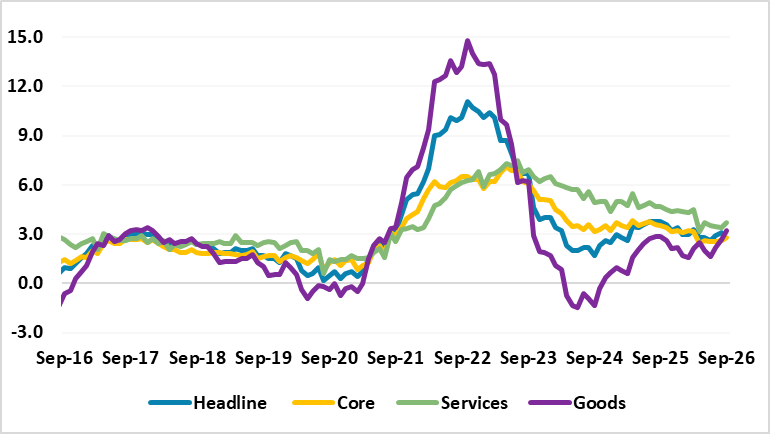
Figure 1: UK Inflation By Key Categories (%Y/Y)
Source: Datastream/CE
Figure 2: Oil Price Annual Change and Energy CPI (%Y/Y)
Source: Datastream/CE
Figure 3: Energy Input Costs Measured by Producer Prices (Index)
Source: Datastream/CE