UK CPI Higher in August But as Expected
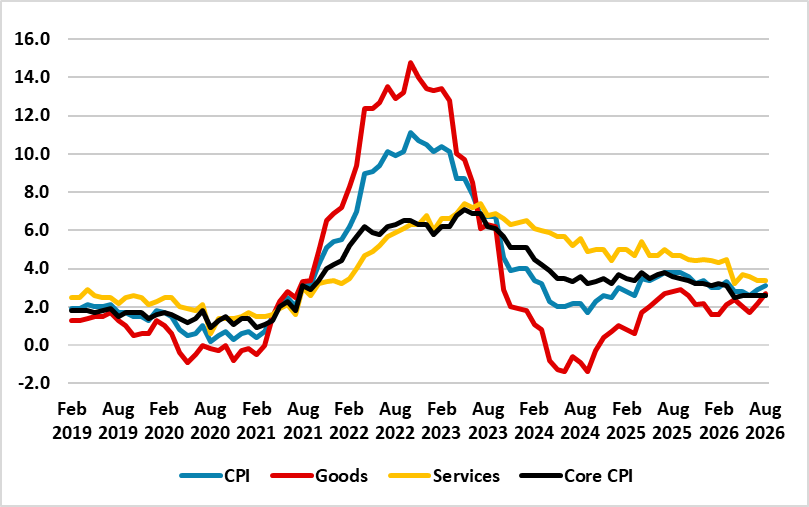
Headline inflation increased to 3.1% in August from 2.9% before and in line with expectations with the largest upward contribution coming from transport and in particularly motor fuels. The figures are not a surprise given that July’s short-lived dip in petrol and diesel prices were reversed in August. Core CPI, which strips out food, alcohol and tobacco, was unchanged at 2.6%, emphasising that energy was largely behind today's increase in the headline rate. There are limited signs that higher headline inflation is resulting in second round effects.
While August inflation is higher, the numbers are unlikely to be a major surprise to the Bank given the backdrop of higher oil and natural gas prices, both of which increase the likelihood that headline inflation could peak closer to 4% in the latter part of this year. The RAC Average UK forecourt prices reached new levels according to the RAC; diesel is now at its highest price since July 2022, with petrol reaching levels not seen since August 2022. Beyond fuel prices, there is little sign so far that food inflation is coming through with the ONS noting that Food and non-alcoholic drinks made the smallest contribution to inflation since September 2021. Importantly, given the weight of the sector in the CPI basket, Services inflation, which is closely watched by the BoE as a gauge of domestic price pressures, held steady at 3.4%.
Yesterday’s labour market data showed private sector payrolls fell another 34k in August, down 0.8% year-on-year. The situation remains particularly acute in consumer services – retail and hospitality – where, in annualised terms, job numbers are falling in excess of 3%. If anything, this rate of decline appears to be getting worse. Employment growth across the rest of the private sector is still slightly negative, consistent with major hiring surveys which suggest the wider jobs market is effectively flatlining. This picture is consistent with weak wage growth trends.
What remains crucial to BoE is whether the increase in energy costs can be contained and not passed on to other parts of the inflation basket or wages via second round effects. So far there is little sign of that. Food inflation remains contained for now.
Figure 1:
Source: Datastream/CE