UK CPI: Energy Prices and Weak Labour Market
· July UK CPI was broadly as expected and the new few months will be volatile and dependent on whether more shipping can go through the Straits of Hormuz and reduce energy prices (our baseline with a 60% probability). Underlying inflation trends in the UK are lower, as labour market data is soft and the private sector is reducing wage growth. We still see this reducing inflation back to 2.0% by H2 2027. Indeed, the weak labour market data this week should be enough to keep the MPC on hold for the remainder of 2026 and we see no BOE hike.
Figure 1: CPI projections from BOE (%)
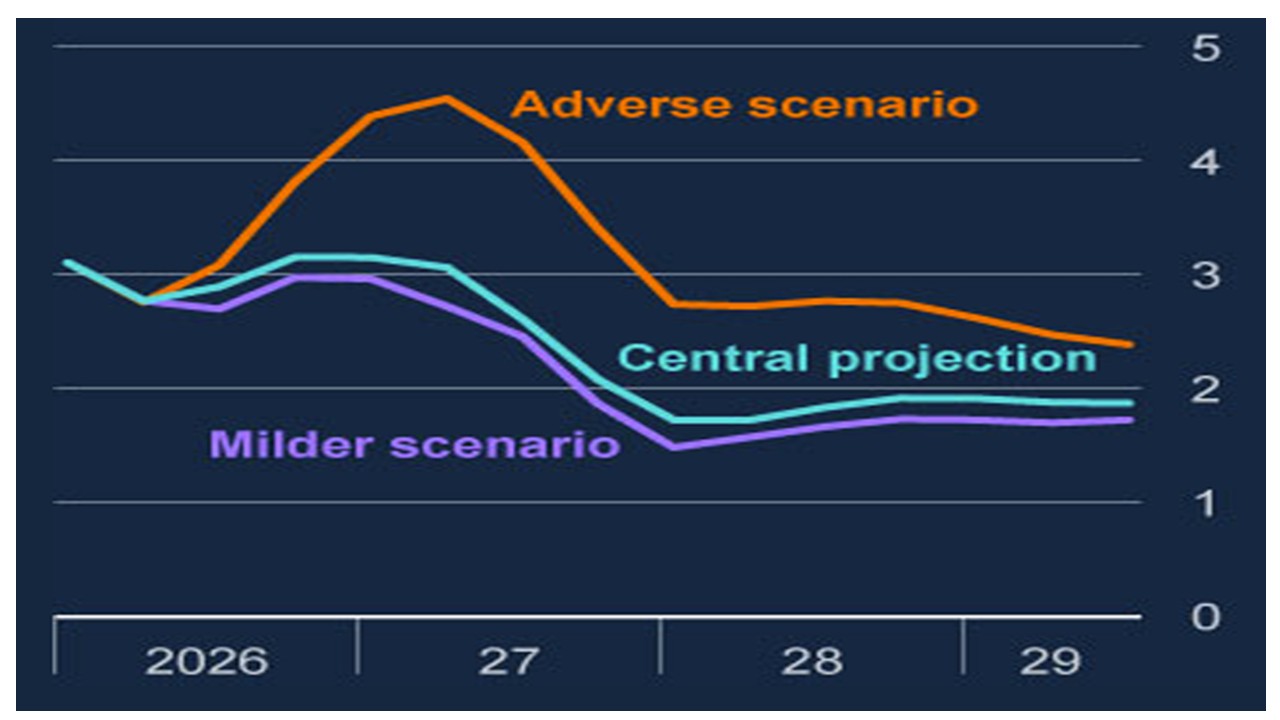
Source: BOE July Monetary Policy Report
· CPI. July CPI did not provide major surprises. Headline at 2.9% Yr/Yr came in line with expectations, with the core marginally above consensus at 2.6%. Housing and household services saw a 0.9% rise on the month; transport 0.2% (as energy prices rotated back higher), while clothing and footwear fell 0.9%. The near-term inflation trajectory is very dependent on energy prices and in turn whether the Straits of Hormuz sees a pick-up in shipping. We feel that the Trump administration wants this to get gasoline prices down, but Iran is split between hardliners and pragmatists (with the latter keen to get oil revenue flowing again). On balance, we still attach a 60% probability to another ceasefire and Straits of Hormuz deal, which should bring energy prices down in Q4. Underlying inflation into 2027 should also be helped by the weak UK labour market conditions.
· Weak Labour market. The labour market data released on Tuesday was weak, with a 13k decline in the July HMRC payrolled employees and the expected drift up in the unemployment rate to 4.9%. Though June average earnings excluding bonus came in marginally higher at 3.5% Yr/Yr, this is still consistent with a 2% inflation target. Additionally, annual private sector regular earnings growth was 2.8% in April to June, down from 2.9% in the previous three-month period. Combined with a further decline in job vacancies to 707,000 in the three months to July, the labour market suggests that wage growth will slow further into 2027. Given the close relationship with CPI services and wage growth, this still leaves us inclined to see CPI inflation down to 2.0% in H2 2027.