FX Weekly Strategy: Asia, Nov 30 - Dec 4
Post Thanksgiving and into Dec, can stretched markets attempt to relent?
Dollar has typically fared the worst in Dec, and it is long with a lot factored in
DXY rolling off fib resistance, and AUD/USD from support; also watching China
Payrolls the highlight of the week's data
December offers a reason to reassess some of the recent dollar strength. As we discuss in “Time for a holiday from the dollar?” (here), DXY fell in eight of the last ten Decembers, with EUR/USD rising in eight. That seasonal bias is worth keeping in mind as the market moves beyond November’s month-end adjustments and fund book-closing.
The latter can bring sizeable thematic trade squaring flows, amplified by piggybacking. And while it may be a less powerful influence than a few years back, it could still have added force to the reversal of the spring tech rally and the wider exit from long tech, Asia and carry. Its passing could remove an additional source of pressure and maybe even a bit of opportunitistic tactical short term dip buying.
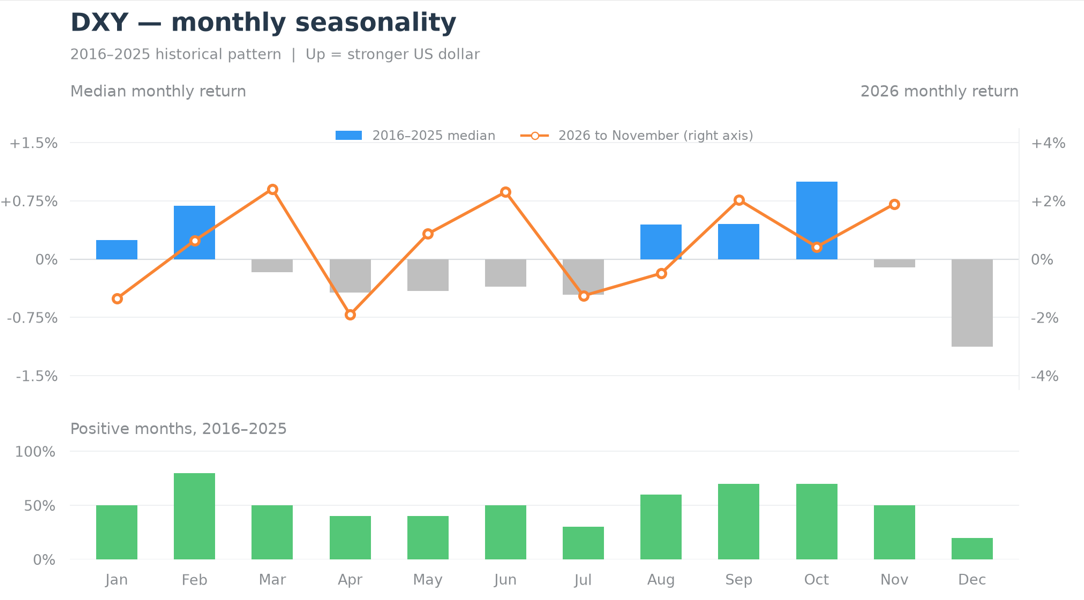
The market also already has a sizeable hawkish Fed reset priced in. An outcome within that range of expectations could leave room for a “sell the fact” response, particularly if China’s efforts to stabilise its markets help the risk backdrop. A fresh hawkish surprise or renewed Asia-centric forced selling would challenge that possibility.
EUR has the clearer seasonal case, AUD the more risk-sensitive expression. Its substantial shorts provide potential covering demand, although our tests offer little evidence that crowding alone identifies the turn here. The big debates over 2027 remain very much alive, but December nevertheless offers an opportunity for some of the more stretched recent moves to catch their breath, so its worth staying alive to the potential for to-do business, tactical action and year-end factors playing in over coming weeks.
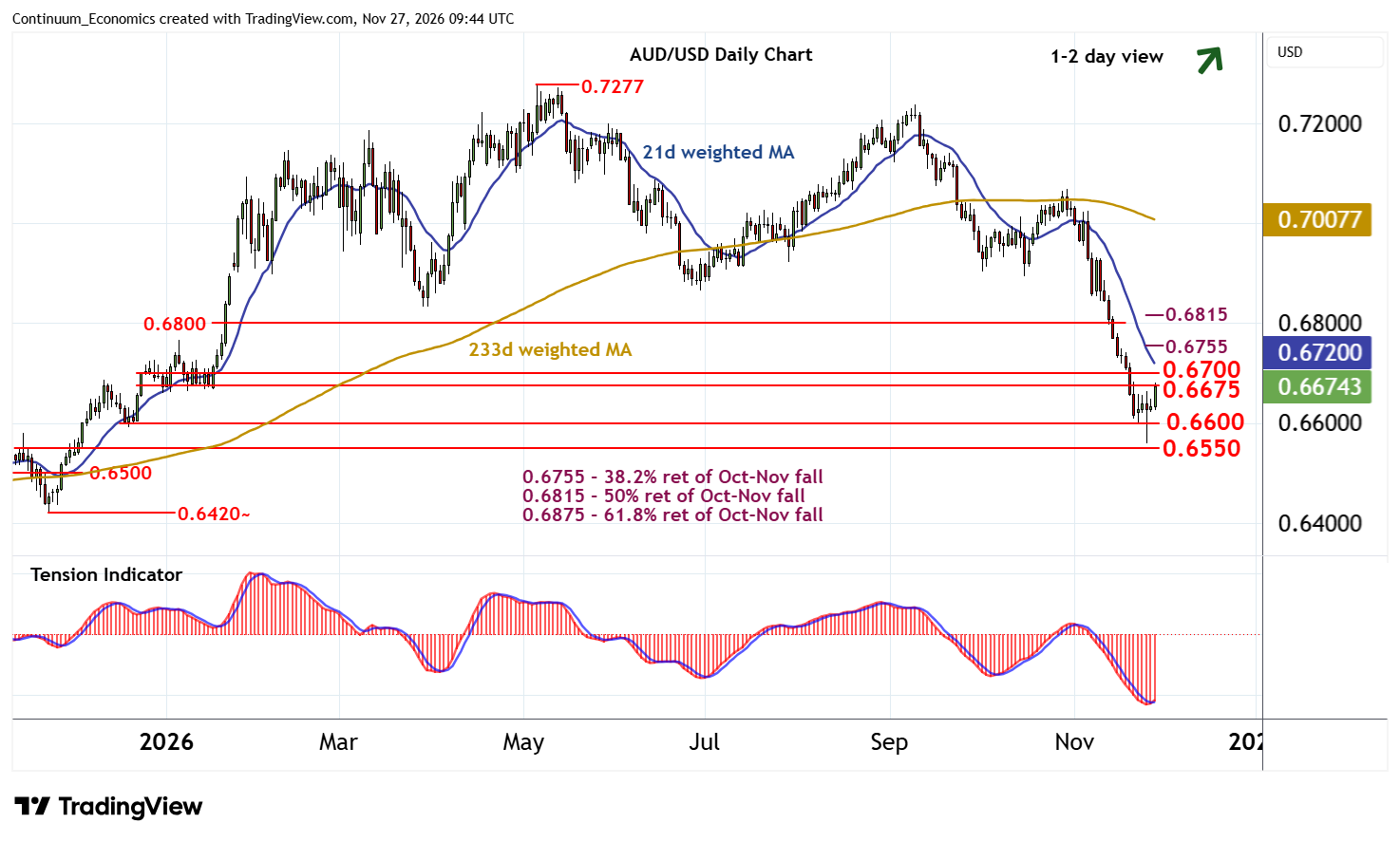
There’s a touch of backing starting to show up in the charts now, if only least tentatively and on a short horizon. AUD/USD has made a bounce attempt from the spike low through 0.66 to 0.650~. Oversold daily stochastics are unwinding and the daily Tension Indicator continues to improve, suggesting room for further gains in the coming sessions. A close above 0.6700 will help to improve sentiment and open up a test of the 0.6755 Fib.
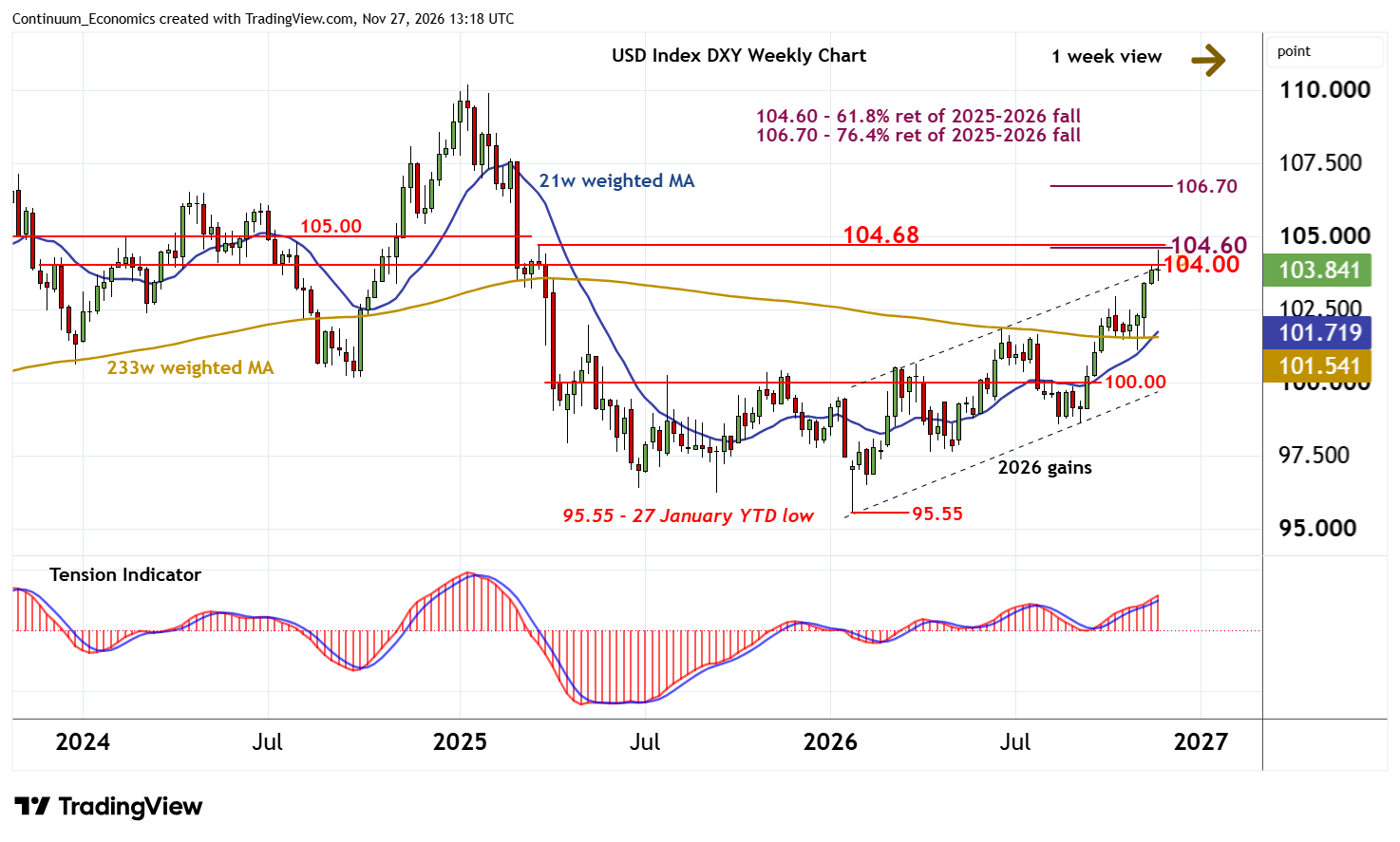
On DXY the recent tests made it to just shy of the notable 104.60 major 61.8% retracement level and that offers decent resistance, also playing to some post-Thanksgiving further reactions. A close below congestion support at 103.50 will add weight to sentiment and extend losses towards the 102.95 monthly high of 14 October and congestion around 103.00.
There is some notable US data out this week, including the always-watched payrolls. But nearby, focus could be more flows, positioning and mean-reverting than further data. Indeed, when it comes to the fundamentals, with the market already marking to recent shifts, there seems more scope for reaction to downside data surprises than upside at present, at least within reason.
In Europe, Spain’s election is of interest and while the result could add to the general tide of right-wing and more anti-immigration focused governments spreading across Europe, it is not in itself seen having substantial kneejerk impact. The more market sensitive Catalonia issue, that has brought Spain (and the euro) more onto the market radar in the past, is currently relatively fallow as dominant concerns have shifted more to cost of living, housing and immigration. For more see, “Spain Heads to the Polls With a Likely Defeat for PM Sanchez” (here).
Week Ahead
USA
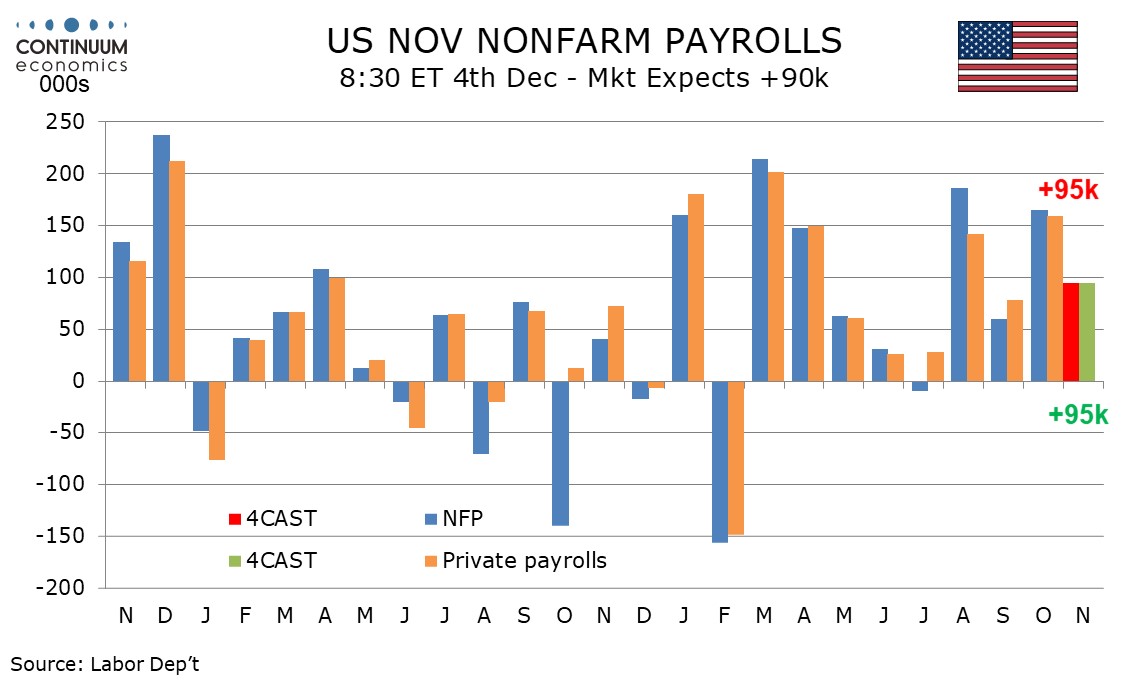
The US data highlight will be Friday’s non-farm payroll for November. We expect a healthy report, though not as strong as October’s, with a 95k increase in payrolls, both overall and private, an unchanged unemployment rate of 4.1% and a subdued 0.2% increase in average hourly earnings. On Wednesday we expect ADP to report a rise of 85k in private sector payrolls. Other labor market indicators due are October’s JOLTS report on job openings on Tuesday, and weekly initial claims on Thursday.
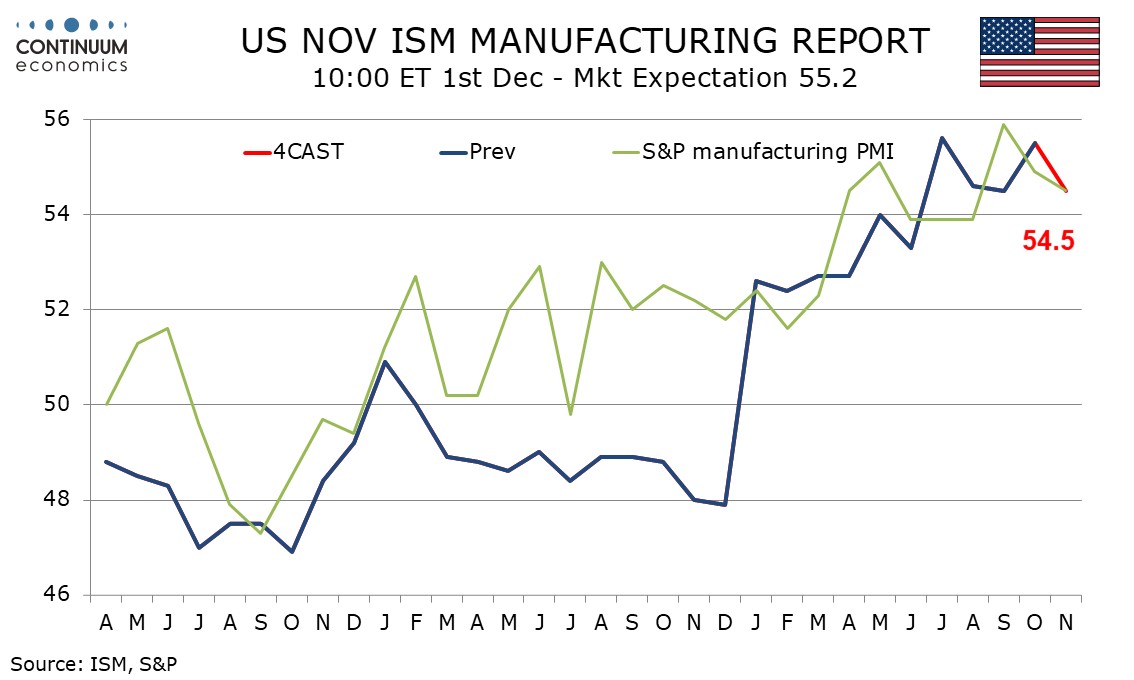
We expect Tuesday’s ISM manufacturing index to slip to 54.5 in November from 55.5 in October, but an unchanged November ISM services index of 54.5 on Thursday. October construction spending is due on Tuesday and October factory orders on Thursday. Friday sees the preliminary December Michigan CSI which will be interesting given a bounce in November’s consumer confidence index from the Conference Board. Fed speakers will be quiet awaiting the December 9 rates decision.
CANADA
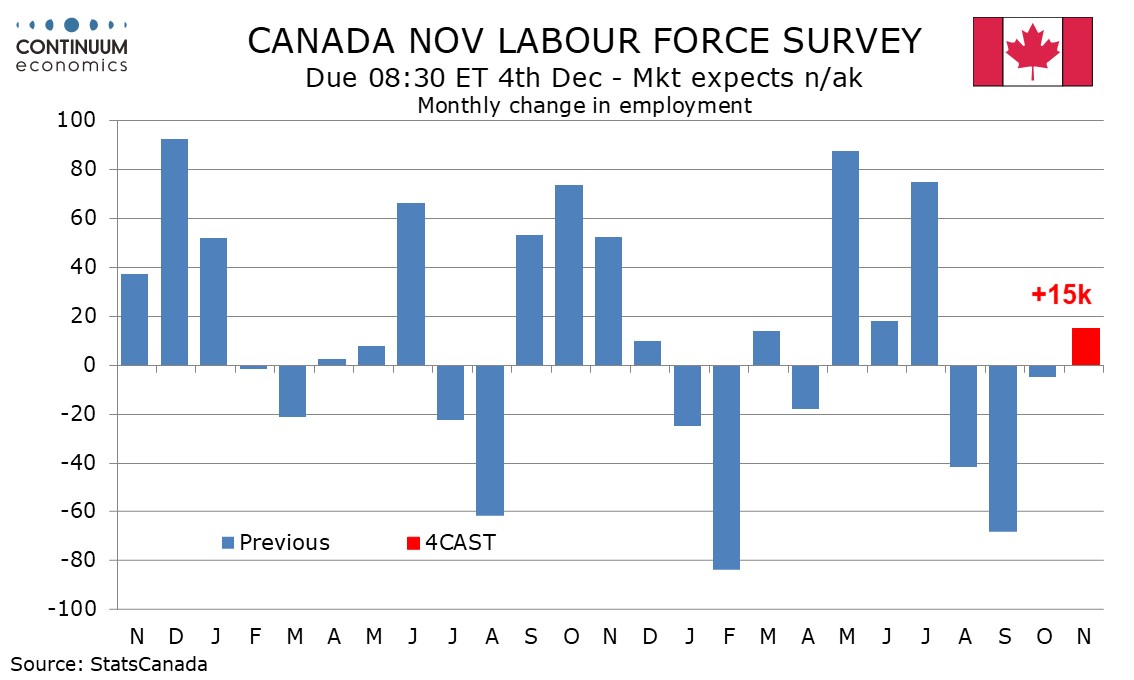
Canada’s releases some significant data which could have an influence on the Bank of Canada’s December 9 rates decision. On Monday we expect a slower 1.3% annualized increase in Q3 GDP but with domestic demand healthy at 2.3%. We expect September GDP to decline by 0.1%. On Friday we expect a 20k increase in November employment to follow three straight declines, with a fall in unemployment to 6.6% from 6.7%. Q3 productivity data is due on Thursday.
UK
A quiet week for UK data with only secondary releases expected. Mortgage approvals and consumer credit reports (both for October) might be of interest given higher monetary policy rates. The BoE’s Decision Maker Panel (DMP) survey is out on Friday with fresh estimates of inflation expectations. This monthly survey also has questions on how businesses are reacting to the oil shock.
BoE’s Sarah Breeden speaks at the Society of Professional Economists annual conference - text published at 1pm
Eurozone
November’s flash estimate of inflation is the highlight next week. October’s annual rate increased to 4% and a similar figure is expected for November. Core is also expected to remain around the 2.6% recorded in October. Germany’s regional CPI data will be released ahead of the Eurozone CPI number on Monday.
Japan
Japan sees its usual run of month-end data, including industrial production, and labour market data. BoJ governor Ueda is also due to speak, with the market around ¾ priced towards A Dec hike.
AU and NZ
Data highlight is Australia Q3 GDP, with expectations centred on around 0.5% from 0.4%, to keep the trend steady around 2.1%y/y.