UK Q3 GDP Preview - Strong Growth Expected in Q3 But Thereafter?
Despite higher energy costs, growing uncertainty and tighter financial conditions, the UK economy likely continued to grow rapidly in Q3. We expect quarter on quarter growth to have increased by 0.7%, in line with estimates produced by the BoE in last week’s Monetary Policy Report (see Figure 1). The recent PMI releases for Q3 showed a stabilisation in the manufacturing sector and a recovery in Services with the latter bouncing back into expansion after contracting in May and June. Even if monthly GDP (released alongside the quarterly report) shows no growth in September the quarterly Q3 figure should be 0.7%. Any upside to September growth will imply a potentially larger figure for Q3 GDP growth.
The UK economy has shown tremendous resilience in the face of rising inflation and energy shocks, increased uncertainty, fiscal pressures and higher interest rates. That the economy has been able to weather these headwinds is due to stronger global growth, support from domestic AI-related activity and, according to the Bank of England, the drag from past monetary tightening over 2021-23 dissipating more quickly or to a greater extent than expected.
These three factors have so far offset the drag from higher energy prices and likely from fiscal consolidation and tighter financial conditions.
Heading into Q4, households’ consumption is likely to slow as higher inflation reduces households’ real incomes. Recall that Ofgem, the energy regulator, will significantly lift the price cap for January–March 2027 by roughly 16% to 28% for customers on the standard variable tariffs (SVT), bringing typical annual bills to roughly £1,999–£2,182. Ofgem had already lifted the energy price cap by 4% (an increase of £60 per year) from October to 31 December 2026. And that will come on top of the recent interest hike (with another 25bp to follow in February?) making the cost of debt servicing even more expensive.
Credit card defaults in the UK increased over the three months leading to August and have now risen for six consecutive quarters - the longest stretch of consecutive increases since the 2008 financial crisis, according to BoE data.
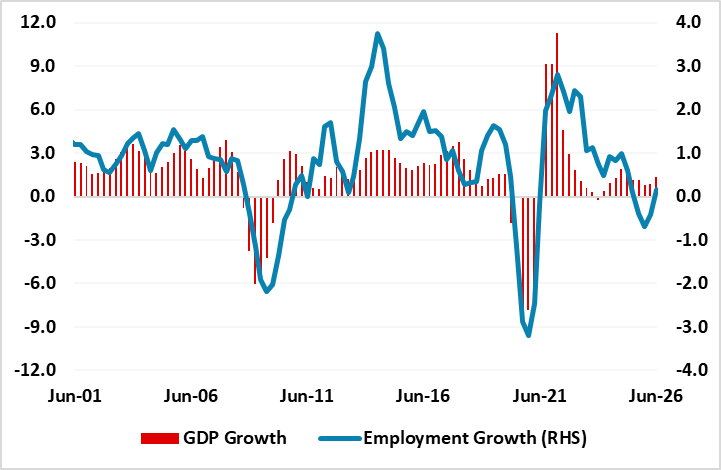
Positively, the contraction in the labour market appears to be stabilising (Figure 2) but that is not the same as saying the labour market is vibrant with wage growth still relative subdued at around 3.5%. A stabilising labour market, however welcome, will only likely provide limited relief to UK households because high inflation and slow real wage growth continue to outweigh modest improvements in hiring.
If Q3 is as strong as expected the focus will then turn to Q4 and that is likely be weak (with estimates of around 0.2% q/q at present). If that is realised we would expect to see growth of around 1.2%-1.4% for this year as a whole.
Figure 1: Bank of England Q3 and Q4 GDP Growth Forecasts (%Q/Q)
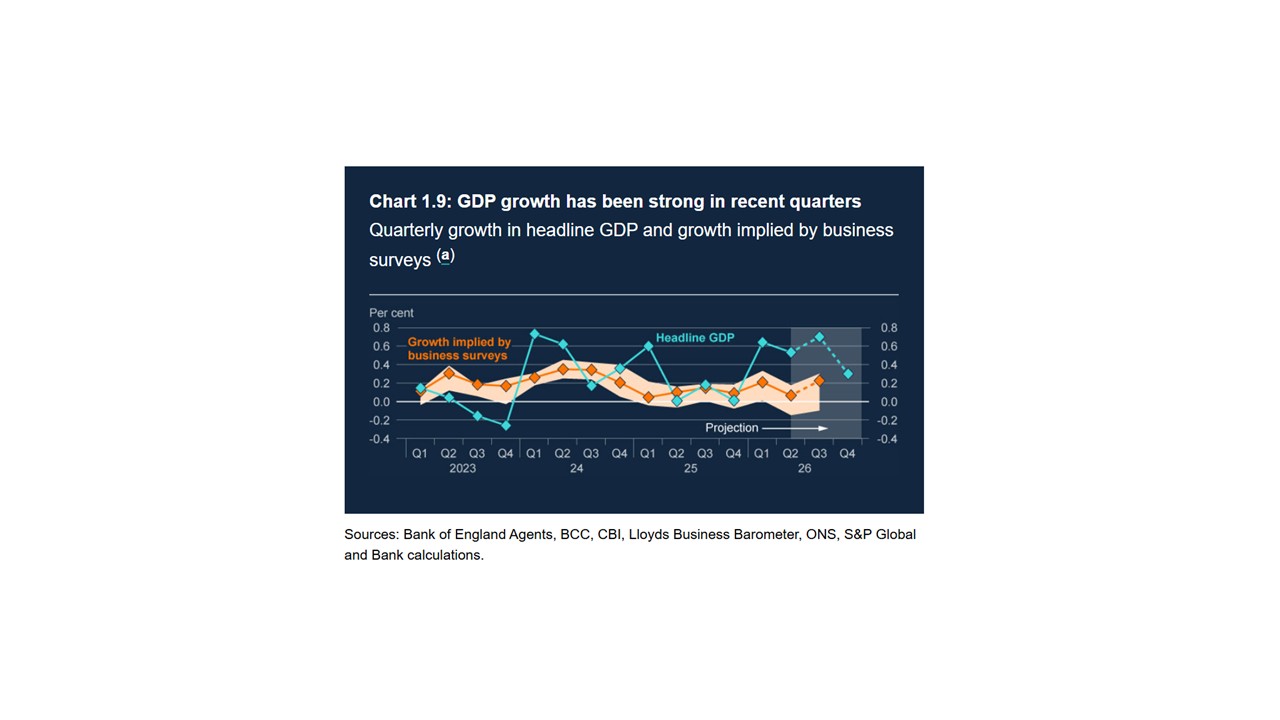
Figure 2: UK Jobs Market Bottoming Out as the Economy Grows (%Y/Y)
Source: Datastream/CE