Canada Q1 GDP details weak though preliminary estimate for April suggests a bounce in Q2
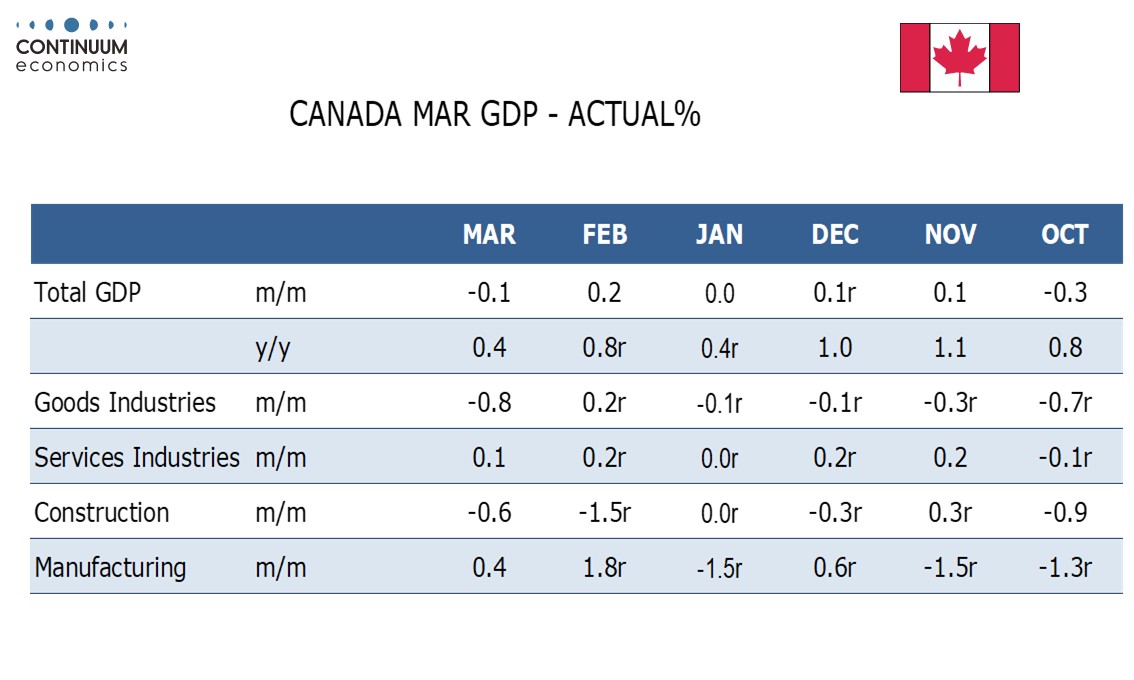
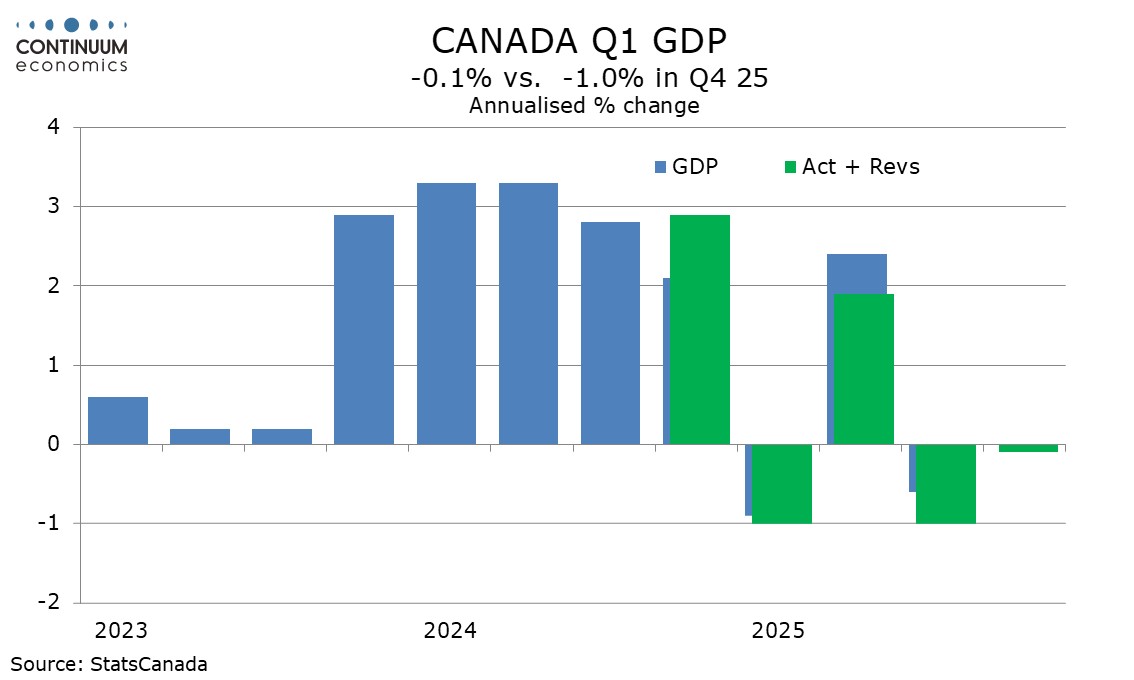
Canada’s Q1 GDP outcome of -0.1% annualized was significantly weaker than the 1.5% expected by the Bank of Canada and combined with surprisingly soft core CPI data for further damages the case for a BoC tightening in response to higher energy prices. Monthly data at -0.1% for March also disappointed, but the preliminary estimate for April, up by 0.4%, suggests a bounce in Q2.
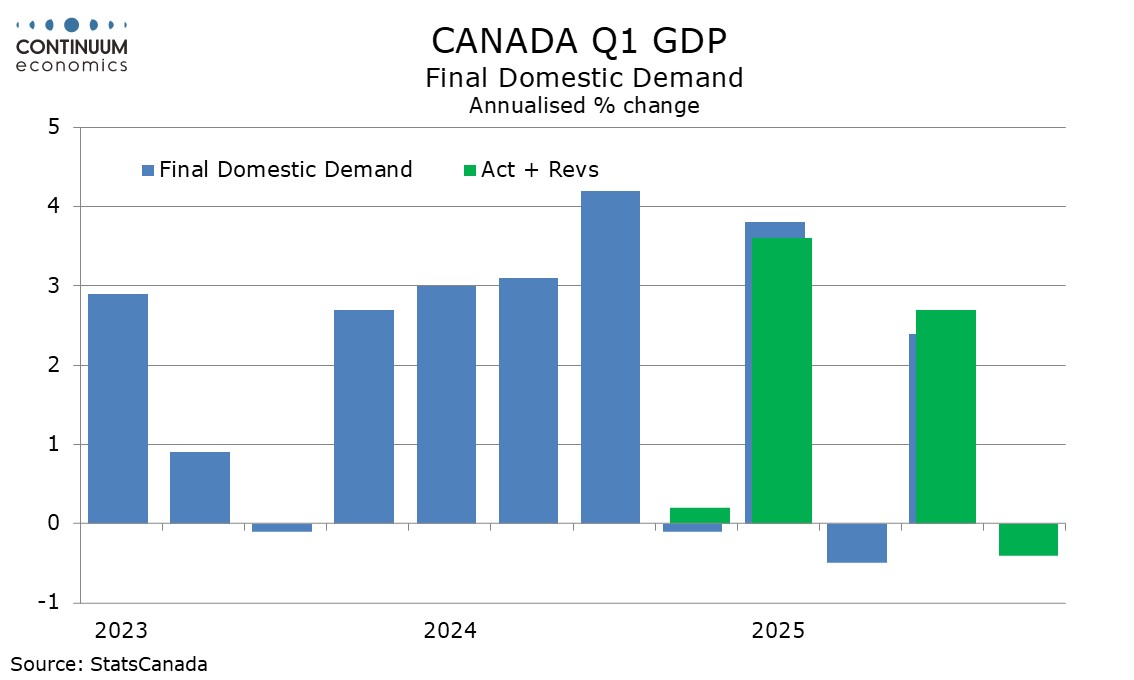
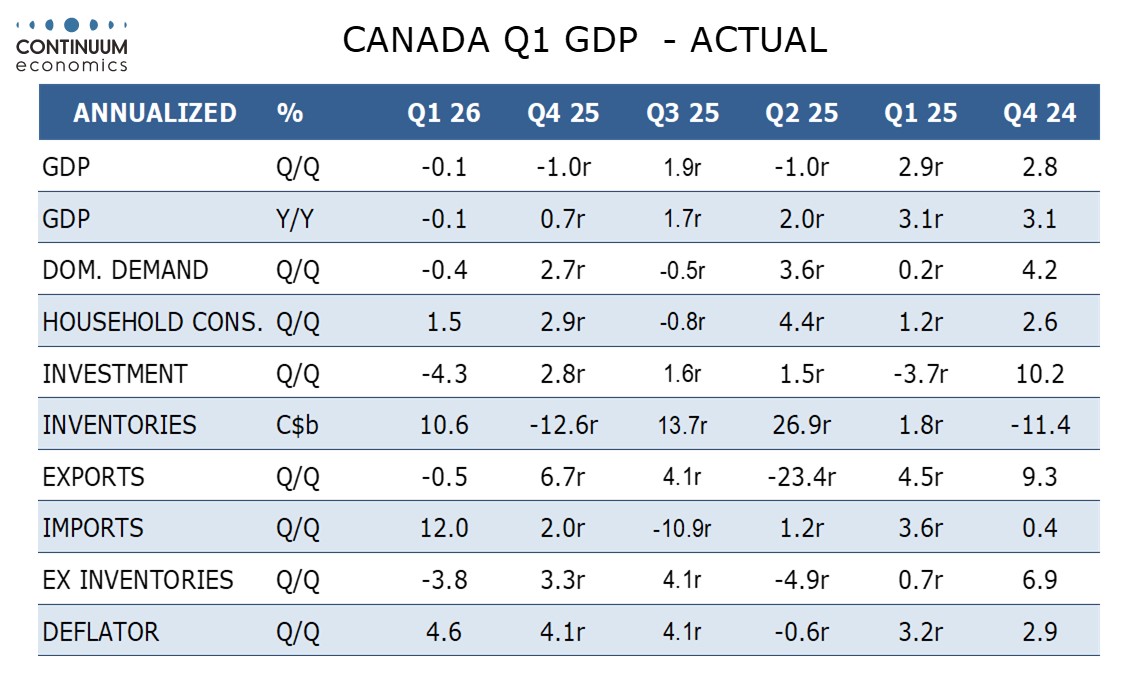
The marginal decline in Q1 follows a 1.0% decline in Q4 and can this be labelled a technical recession, which will be blamed on US tariffs. Details were disappointing with domestic demand down by 0.4% annualized, significantly weaker than we had expected. Net exports were weak as we expected, taking 3.6% off GDP, though offset by a 3.7% positive contribution from inventories correcting from two straight negatives, which reduces the potential for inventories to boost Q2 GDP. Exports fell by a modest 0.5% while imports surged by 12.0%, a lot of which appears to have gone into inventories.
Consumer spending continues to grow, at a 1.5% pace, but overall consumption was slower at 0.7% with negatives from non-profit institutions and government. Gross fixed capital formation was very weak at -4.3%. There was weakness in the business sector data at -3.0% but government was weaker still at -9.6%, in a correction from three straight strong gains. Business investment showed strength in intellectual property outweighed by weakness elsewhere. Government was an important source of support to GDP in the last three quarters of 2025 but this may be fading entering 2026.
The GDP deflator was firm at 1.1% (4.6% annualized) taking yr/yr growth to a four-quarter high of 3.0%, though this was led by export prices. The deflator for household consumption rose by 0.6% and only 0.2% ex food and energy (not annualized).
The 0.1% decline in March GDP was weaker than a flat preliminary estimate and was close to -0.15% before rounding. February was unrevised at 0.2% but January was revised to unchanged from a 0.1% increase, also contributing to the quarterly weakness. Goods fell by 0.8% led by a 2.1% fall in utilities while services rose by a modest 0.1%.
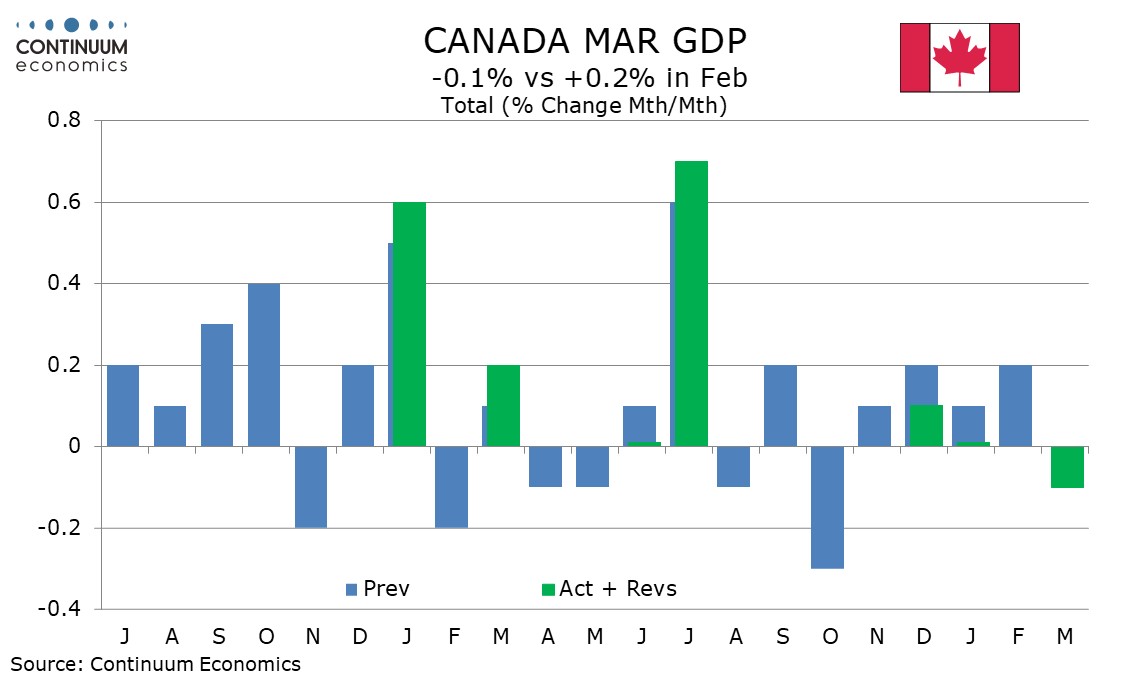
More interesting that the March detail is an impressively strong preliminary April estimate for a 0.4% increase. Increases are seen in in mining and quarrying and most notably oil and gas extraction, as well as manufacturing and transportation and warehousing. This suggests that higher oil prices will give Canadian GDP some support by lifting the energy sector.