Trump: Tariffs 2.0
• Replacing section 122 at 10% with section 301 at 10-12.5% is unlikely to have much lasting economic impact in itself. However, the Trump administration are also undertaking section 301 investigation against 16 countries on excess production, with the report and new tariffs expected in August or September, while also threatening more tariffs on China and Canada. By end 2026, effective tariffs are likely to be higher than July 23, which could add something to inflation again. Combined with the closure of the Straits of Hormuz and higher energy prices, this increases pressure on the Fed at the key September 16 FOMC meeting.
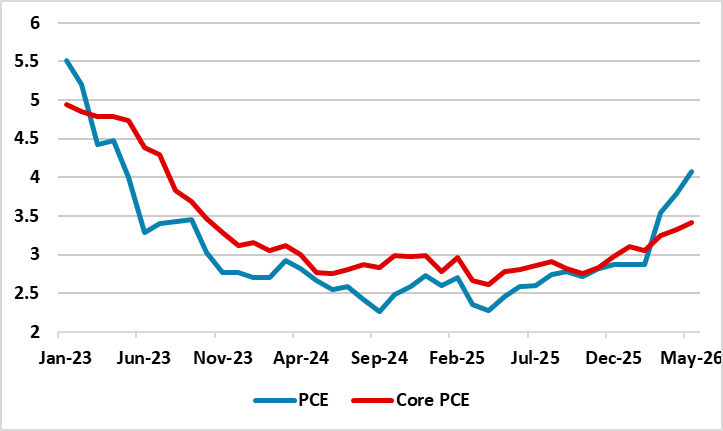
Figure 1: U.S. Core and Headline PCE (%)
Source: Datastream/Continuum Economics
With the 10% U.S.’s section 122 tariffs having lapsed on July 24, the Trump administration has announced new tariffs largely under the section 301 procedure. Key point to note include
• 60 countries 301 tariffs and Canada 322. USTR Greer announcement (here) indicated new measures across three groups of countries based on forced labor accusations. Some at 10%, others at 12.5% (including China) and a third group 10-12.5% but only on a range of goods (EU/Japan/Taiwan/S Korea/Switzerland). Certainly with the last group of countries this is likely to be pressure to codify existing trade deal framework into actual trade deals, with these countries tariff rates capped in the meantime. Additionally, exemptions include oil and gas, fertilizer and certain food items among 471 products that are exempt. However, despite DM countries already complaining that their labor laws are better than the U.S., the legal standing of 301 is unlikely to be successfully challenged in the courts and these tariffs will likely be in place for many years. Canada is due to see tariffs increase to 50% on August 19 under the different section 338, but lawyers expect this to be legally challenged.
• Economic impact and more 301 tariffs. Replacing section 122 at 10% with section 301 at 10-12.5% but with exemptions at first blush is unlikely to have much lasting economic impact. However, the Trump administration are also undertaking section 301 investigation against 16 countries on excess production, with the report and new tariffs expected in August or September. The Trump Administration has also been clear that it wants to rebuild tariffs against China to 20%. Finally, USMCA negotiations with Canada and Mexico are underway and Trump will likely increase pressure to get a renegotiated deal. By end 2026, effective tariffs are likely to be higher than July 23, which could add something to inflation again. The Dallas Fed has found that tariffs have lifted PCE inflation (here) and see Figure 1, while the frequency of change for businesses and consumers can create extra inflation uncertainty. Even so, tariffs will be secondary to energy prices caused by the renewed closure of the Straits of Hormuz. The past 2 weeks have been an effective breakdown of the MOU with Iran, but we still feel that Trump’s instinct is to get U.S. gasoline prices down and this increases the odds of a renewed ceasefire. The problem with tariffs and the Iran war is that they have caused a temporary boost to inflation that could feed into 2nd round effects. 5yr ahead U.S. household inflation is off the April 2025 reciprocal tariff peak (Figure 2), but still remains elevated compared to the pre-2025 period. The July 29 FOMC meeting (preview here) is unlikely to see a signal of a September hike due to Warsh bias against forward guidance, but a 25bps is nearly discounted for the September 16 FOMC meeting. Data will still be crucial to the actual September Fed decision, starting with next week GDP figures.
Figure 2: 5yr Ahead U.S. Household Inflation Expectations (%) 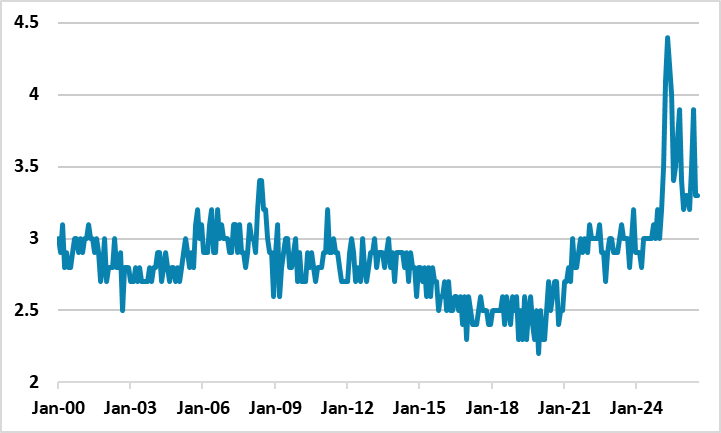 Source: UoM