FOMC Preview for October 28: Tightening to be debated but delayed
The FOMC meets on October 28 and a strong case for a second straight tightening can be made and will certainly be debated at the meeting. However to appears more likely that the Fed will leave rates unchanged at 3.75-4.0%. It is likely that December’s meeting will see a tightening, but Chairman Warsh, given his opposition to forward guidance, is unlikely to give a clear signal for December.
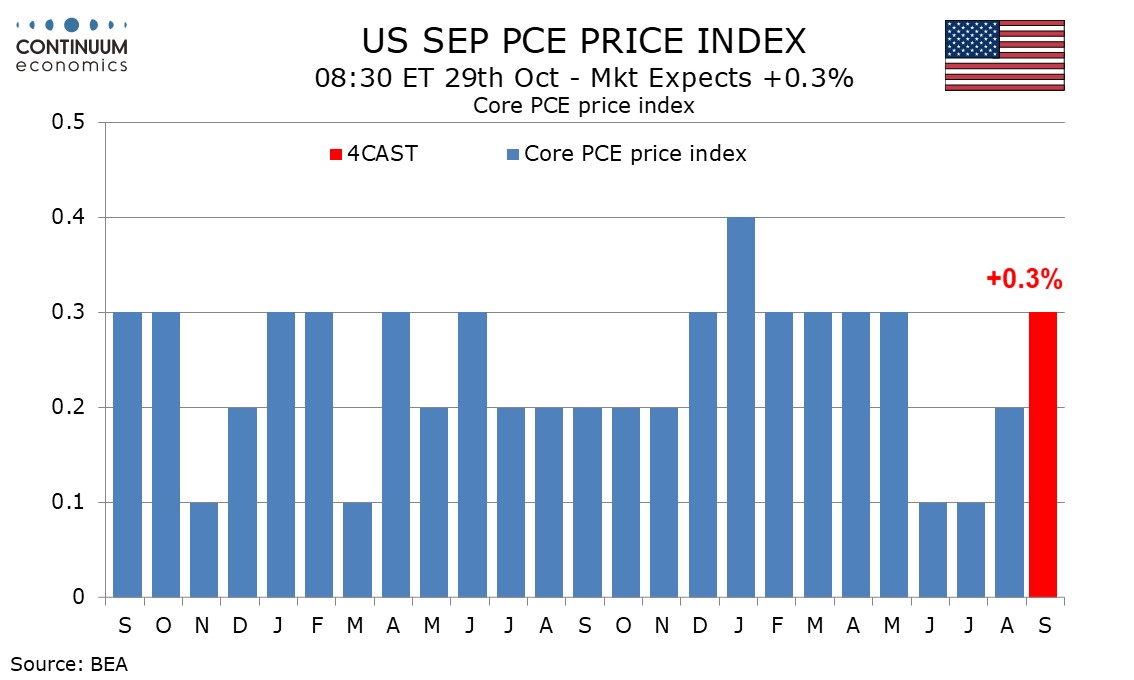
The case for tightening picked up after September’s CPI increased by 0.6%, 0.3% ex food and energy, with both slightly firmer than that before rounding. It looks likely that September’s core PCE price index will increase by 0.3%, after three straight months of 0.2% or less, lifting yr/yr growth to 3.1% from 3.0%. Softer data in June, July and August provided some hopes that inflation might be moving back towards target, following gains of 0.3% or above in the six months to May. The tariff impact may be fading but feed through from energy is a growing risk. Most significantly, the Fed is increasingly accepting that the boost to demand from AI investment is lifting inflationary pressures, with any restraint from productivity gains an issue for the future. Despite a slower payroll increase in September the labor market remains stable and close to full employment. Q3 GDP due the day after the meeting is expected to be firm, at least outside a deterioration in net exports due in large measure to imports that are fueling the boom in AI investment, and emerging signs of weakness in the housing sector.
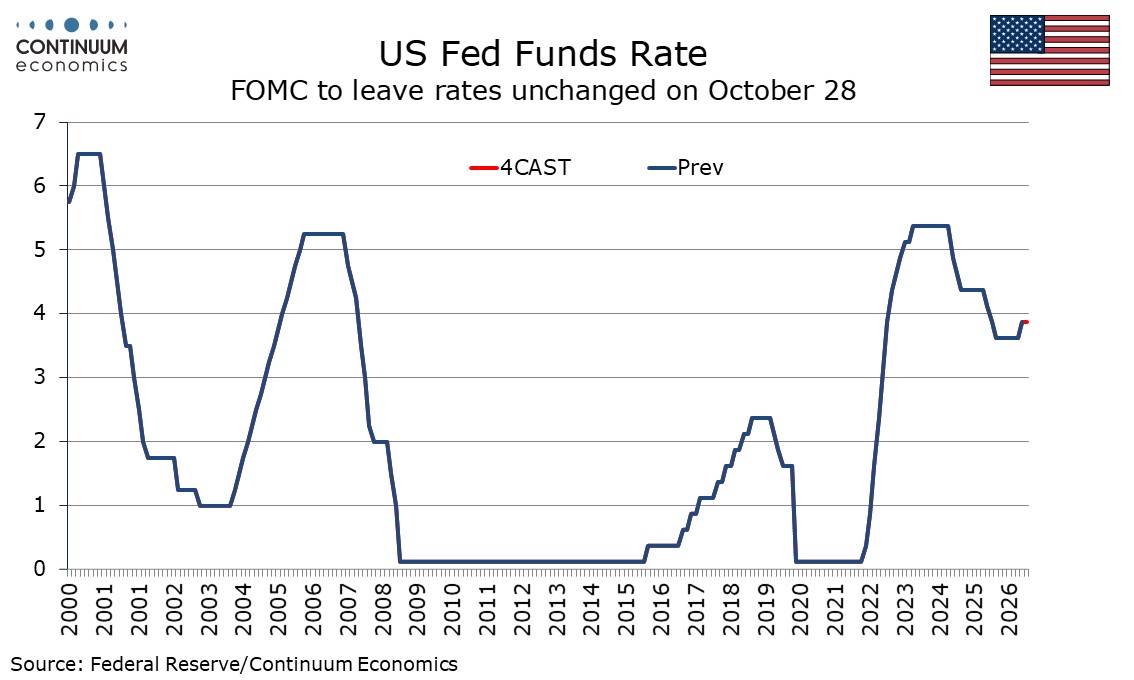
Still, it can be argued that the September tightening came too late to impact the disappointing September CPI, suggesting a further tightening at the subsequent meeting might be a little too soon. The Fed may want to avoid getting into a position where each rates decision relies heavily on the preceding CPI release. However, it could also be argued that if the Fed is confident that further tightening will be needed, then they should act at this meeting, particularly given Warsh’s desire to avoid forward guidance. Still, Warsh may feel some pressure to delay given the approach of the midterm elections on November 3, and will note that the markets are not currently suggesting that a pause would damage Fed credibility. A pause in September in contrast could have done so.
Under Warsh, FOMC statements have been brief, with September’s statement saying no more on inflation that it remains elevated. It is possible that they could expand on the reasons for elevated inflation, explicitly noting the increasing role of AI-fueled demand. Such an addition would hint at a future tightening, and some may desire such an addition, but it may be too much like forward guidance for Warsh. His press conference will be challenging if he tries too hard to avoid forward guidance. His message is likely to be that the FOMC chose to wait for further information before deciding on another move. If the FOMC does leave rates on hold, there are likely to be some dissenting votes, but probably no more so than in July, when three district presidents dissented for tightening, Cleveland Fed’s Hammack, Minneapolis Fed’s Kashkari, and Dallas Fed’s Logan. We would be surprised if Hammack and Logan do not dissent a decision to pause, but Kashkari is a closer call. The Fed dots and economic forecasts, having been updated in September, will next be updated in December.