FX Weekly Strategy: Asia, Nov 9-13
Focus remains on AI-risk. Nasdaq attempts to bounce but hasn't broken weak structure yet
US CPI, a relatively sedate month expected. Only partial offset to payrolls, though mmkt /bonds still more impulsively driven by risk
Even if some reactive consolidation, hard to pivot from defensive view on FX risk positioning overall
In a more sedate environment, it would be US CPI that would be the undisputed pivotal factor for the week ahead and the main talking point. On that front, the recent history does actually support a relatively benign neutral bias into the release. Data surprises here along seasonal patterns, along with some co-dependency with headline inflation, both suggest that this is a 'less risky’ month for upside surprises on core than the previous two at least, with a more balanced and most-likely-consensus tendency.
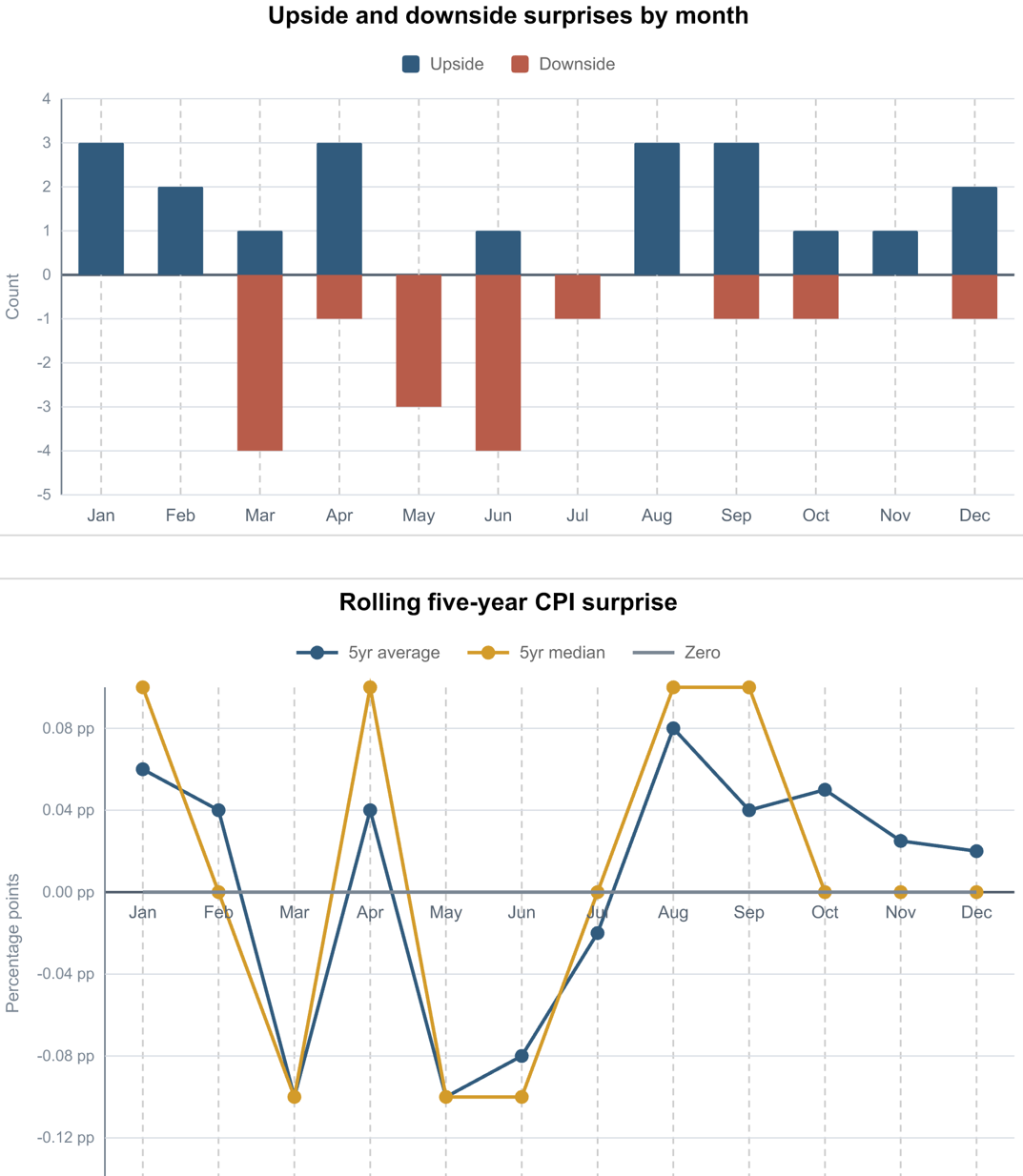
If data does indeed come in unremarkably, that could draw a little of the sting from las week’s payrolls, although the all-round firm data there, extending into earnings, has reinvigorated Dec hike bets.
The reality though is that at present it is the price action in AI/tech risk and oil that is far more in the driving seat for any more radical shifts in money market pricing and the level of demand for US Treasuries. These will remain the critical dual focal points into the week ahead. Even with the payrolls in fact, while hard to say and not one to over-extrapolate, the 70k increase in professional and business compared to the recent flat trend could show some of the strength as of last month was coming from positive spillover into the sector from AI-related needs. The wider net positive impact through capex and wealth effects on consumption in recent quarters are also clear and as with the noughties, the economy does have a lot of leverage off sharp financial action in the critical tech sector.
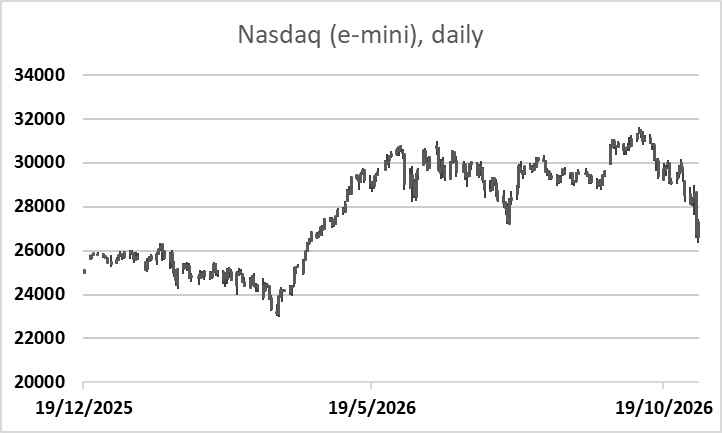
Attempt to slightly recover into the end of last week is so far not sufficiently convincing, although it might be enough to extend a session-scale pullback. The Nasdaq low did test the top of the range into the start of the year and as of writing is attempting to regain the end-July range break, that yet to see if that holds. It hasn’t though made much impression on the downtrend, so it still falls within corrective action after some very wide bars. Fuller pullback into that lower 2400-2600~ band and so wiping out the YTD gains has to remain the risk once covering completes and finds supply, unless price action becomes more convincing.
Across major FX, impact is proving quite unstable across different channels on the dollar side – weighing in periods on the erosion of US exceptionalism and related hot flows, cushioning at other times – especially when the baton swings over to Asia – when 'what alternative' haven support comes in.
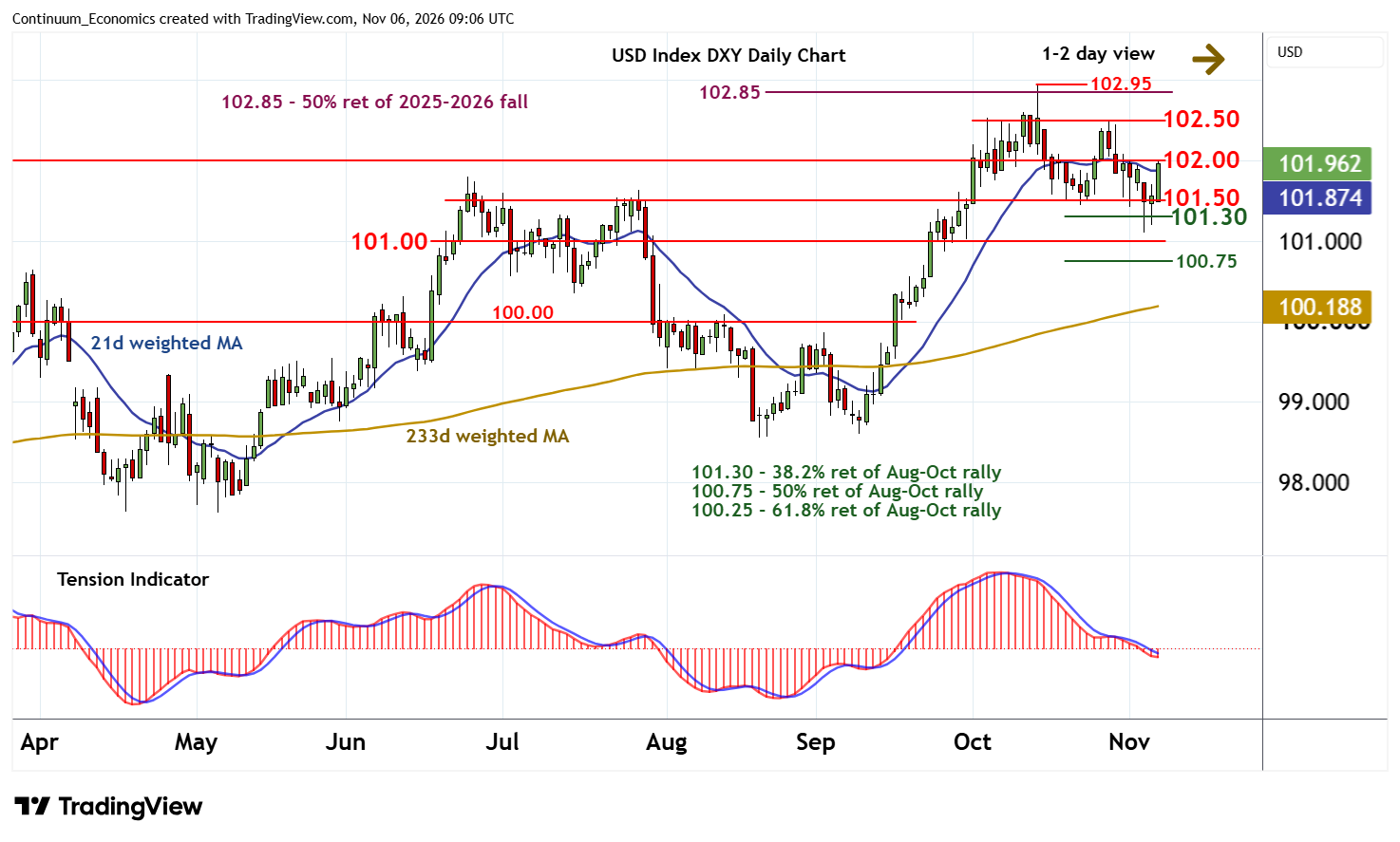
DXY managed a decent bounce from 101 support and is currently consolidating the 101-102 band.
Even with the Friday squeeze as payrolls lifted yields, the likes of JPY may be the more consistent performer overall in the event that the recent action extends for another deeper leg down this week.
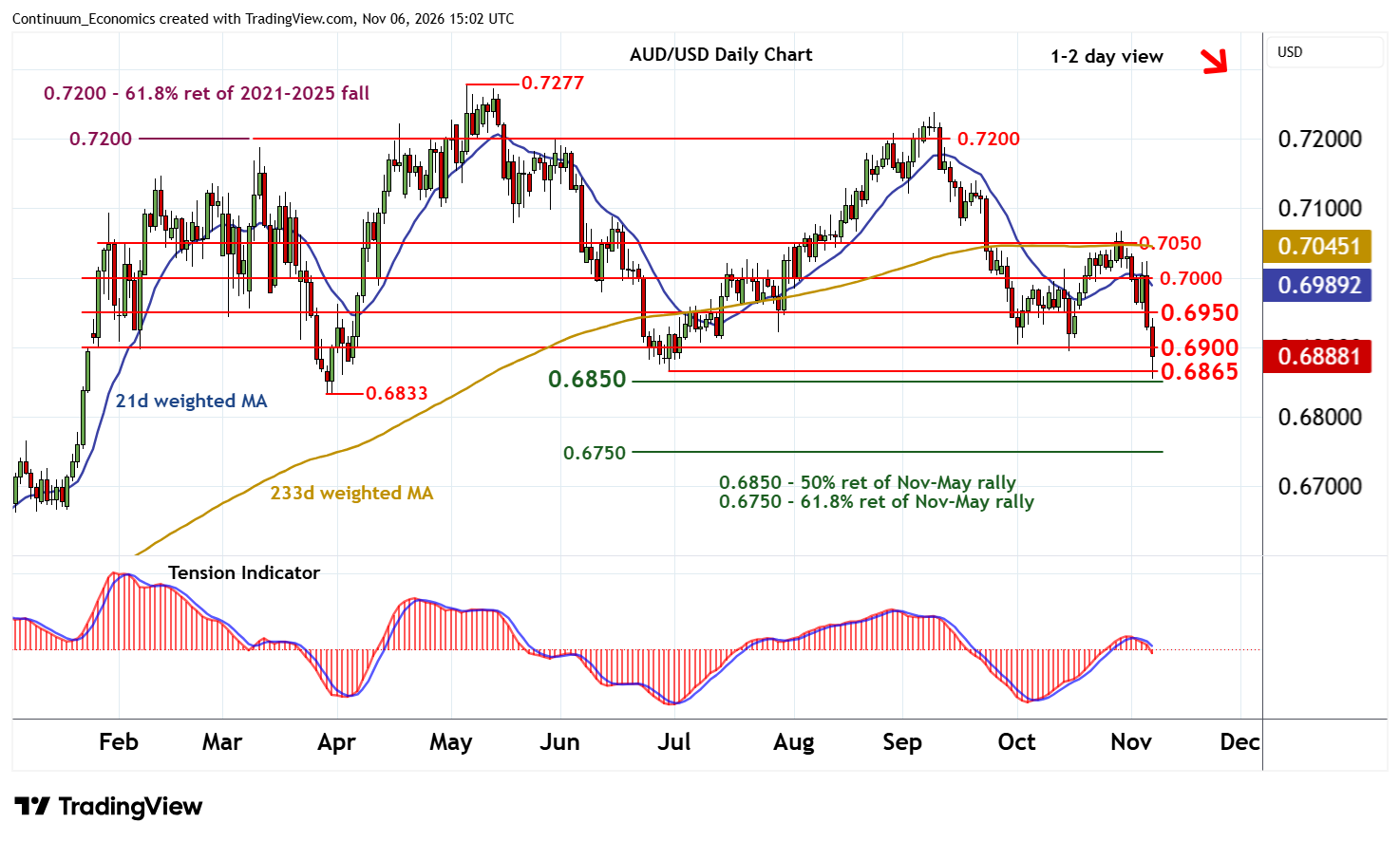
High beta counters (AUD, NZD and also SEK) still in more stereotypical mode too when the risk-off action is more impulsive, and current risk-yen spec positioning overall is still proving well placed.
NOK remains quite leveraged looking having become heavily backed and extended during the peak of the post-election geopolitical escalation concerns and still seems exposed to further profit-taking and long liquidation during periods of both generalised risk-off and oil slippage.
Week Ahead
USA
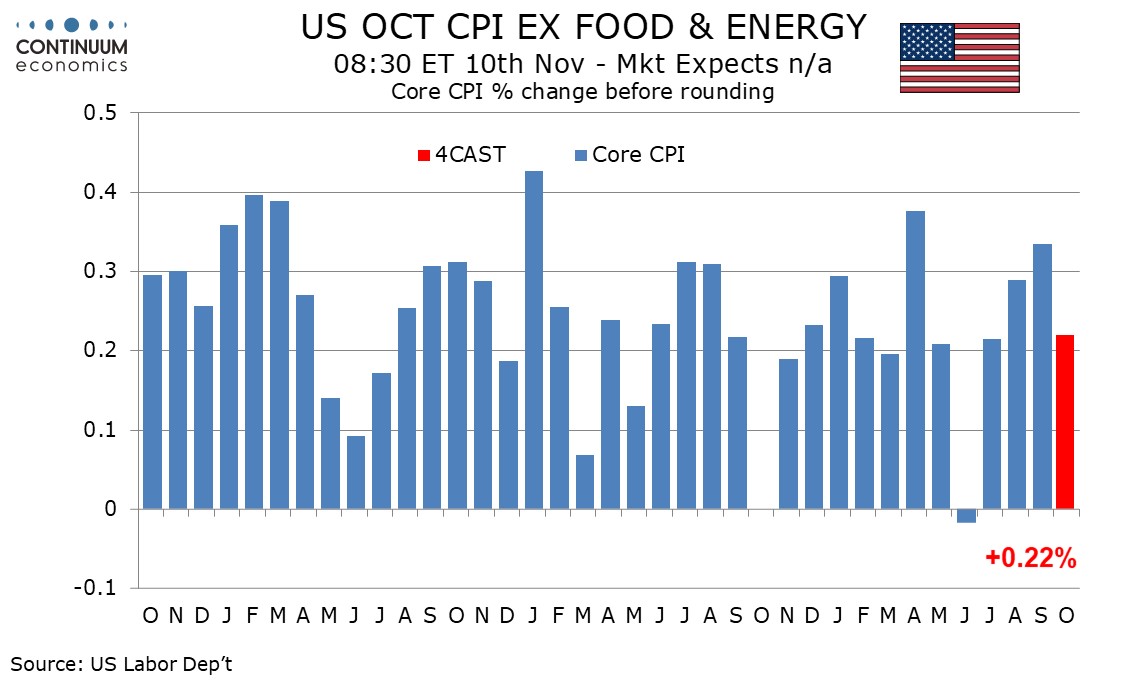
Data focus will be on inflation, with October CPI on Tuesday and October PPI on Friday. For CPI we expect an acceptably subdued outcome, up 0.2% both overall and ex food and energy, but for PPI we expect quite a firm month, up 0.4% overall and 0.3% ex food and energy. On Thursday we expect October existing home sales to fall by 3.3% to 3.86m. Weekly initial claims are also due. Fed speakers are out on mass, including the likes of Williams, so could give quite a broad feel for where the board currently stand.
CANADA
Canada releases September building permits on Thursday. Friday sees September manufacturing and wholesale sales, for which preliminary estimates were gains of 0.1% and 0.5% respectively.
UK
Next week sees the release of preliminary Q3 GDP (12th Nov). Consensus estimates anticipate a quarter-on-quarter increase of 0.4% a figure that can also be gleaned from the latest Bank of England projections. The Bank now expects growth for the whole of 2026 to be 1.6% (previous forecast was 1.1% in July) and 1.3% next year. The main driver of overall growth continues to be the services sector helped by stronger consumer activity and business service surveys. Manufacturing and production output remain subdued.
A handful of speeches next week might be of interest if the BoE feels it needs to give further guidance. Governor Bailey speaks on Monday followed by Lombardelli and Pill on Tuesday.
Eurozone
Eurostat will publish the second estimate of Q3 GDP. Recall that the bloc grew 0.4% q/q according to the initial estimate but some of that strength reflected Ireland’s volatile GDP numbers. Growth ex-Ireland was a more modest 0.2%
Japan
Alongside the household spending and income data, the October BoJ meeting sees the summary of opinions. This is unlikely to add much new however to the recent message and to a large extent may already be being, potentially, superseded by some of the volatile events across markets and geopolitics.
Australia
Last week saw the main events, and interest limited to some follow up commentary from the RBA. Action in Asia AI/tech currently a much larger focal point
New Zealand
The election offers the main domestic focal point, if secondary to the wider global risk tone. Polls have been very mixed and still suggest a very uncertain vote between Labour and the National party, with potentially an extended period of horse trading to determine the resulting coalition government.