Preview: Due July 30 - U.S. Q2 GDP - Strong domestic demand but weakness in net exports and inventories
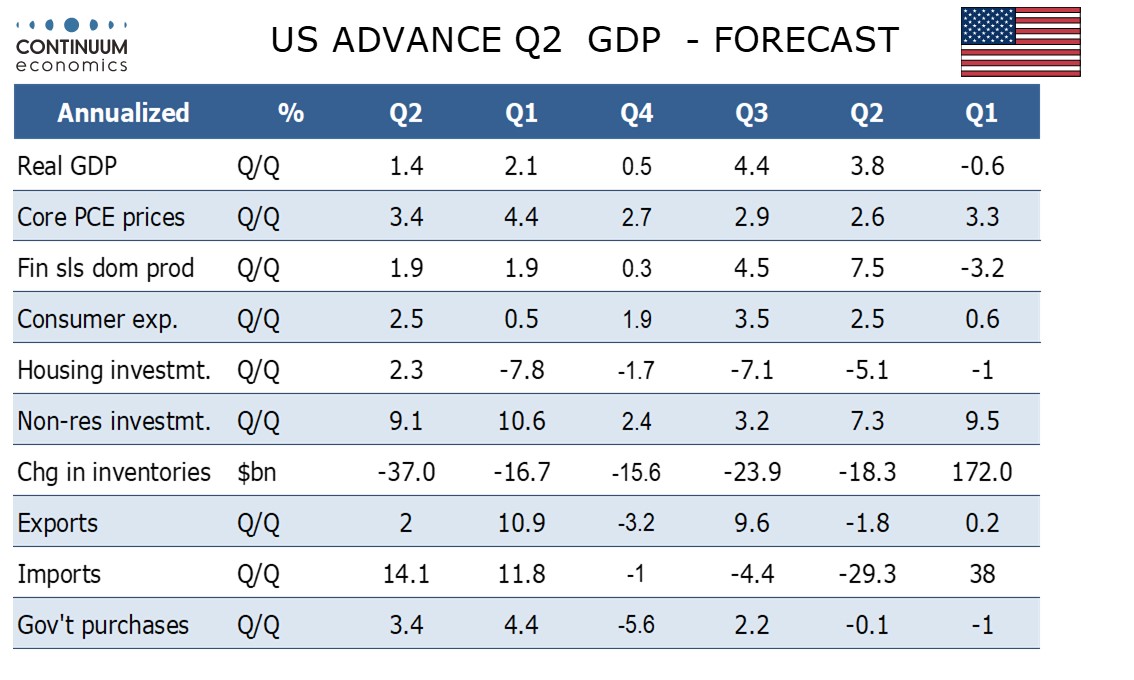
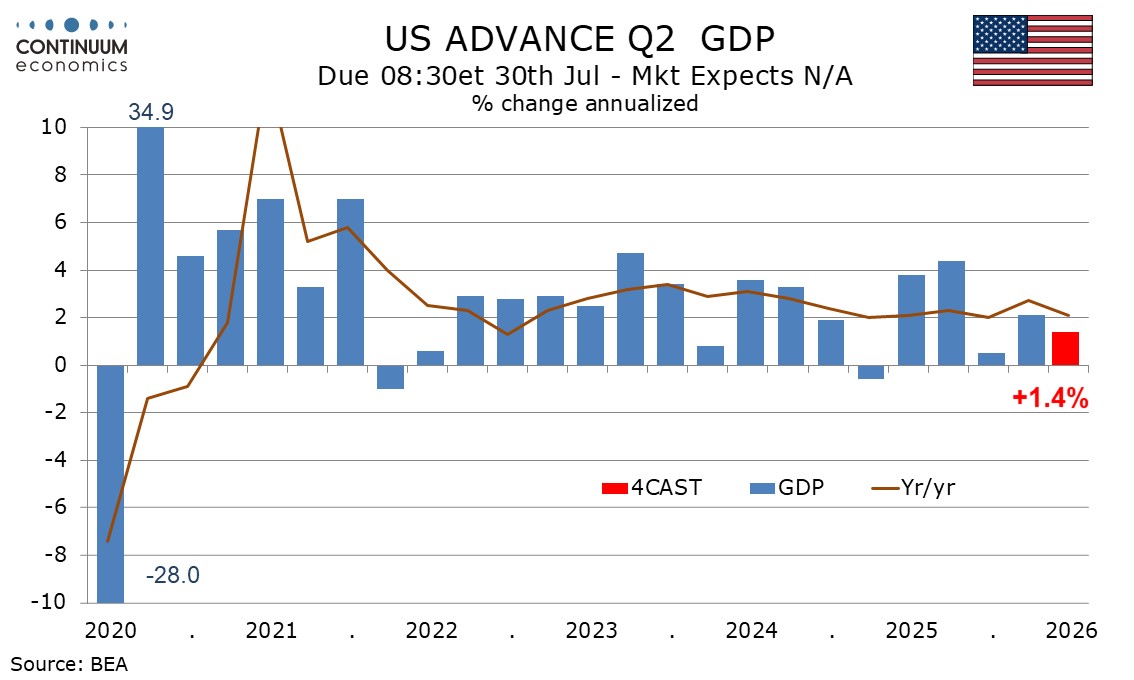
We expect a modest Q2 GDP increase of 1.4% annualized, though there is still uncertainty over June data for trade and inventories, which we expect to act as negatives in the quarter as a whole, while assuming some improvement in their June data.
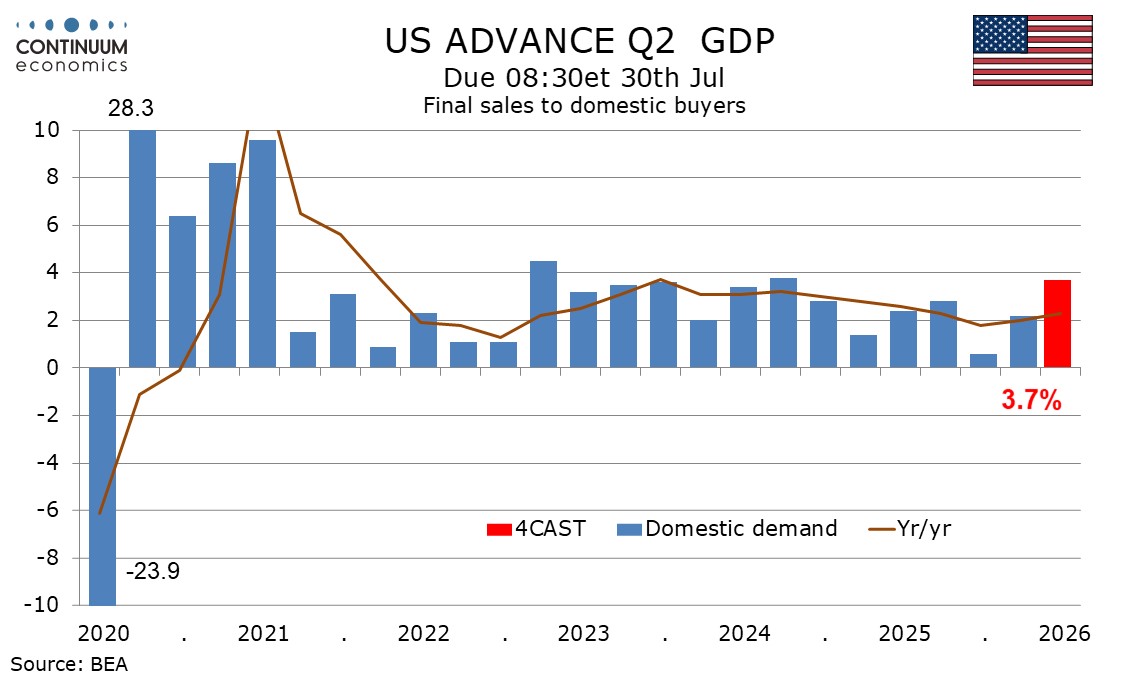
Domestic demand is likely to look strong in Q2, with a rise of 3.7% in final sales to domestic buyers (GDP less inventories and net exports), which would be the strongest increase since Q3 2024.
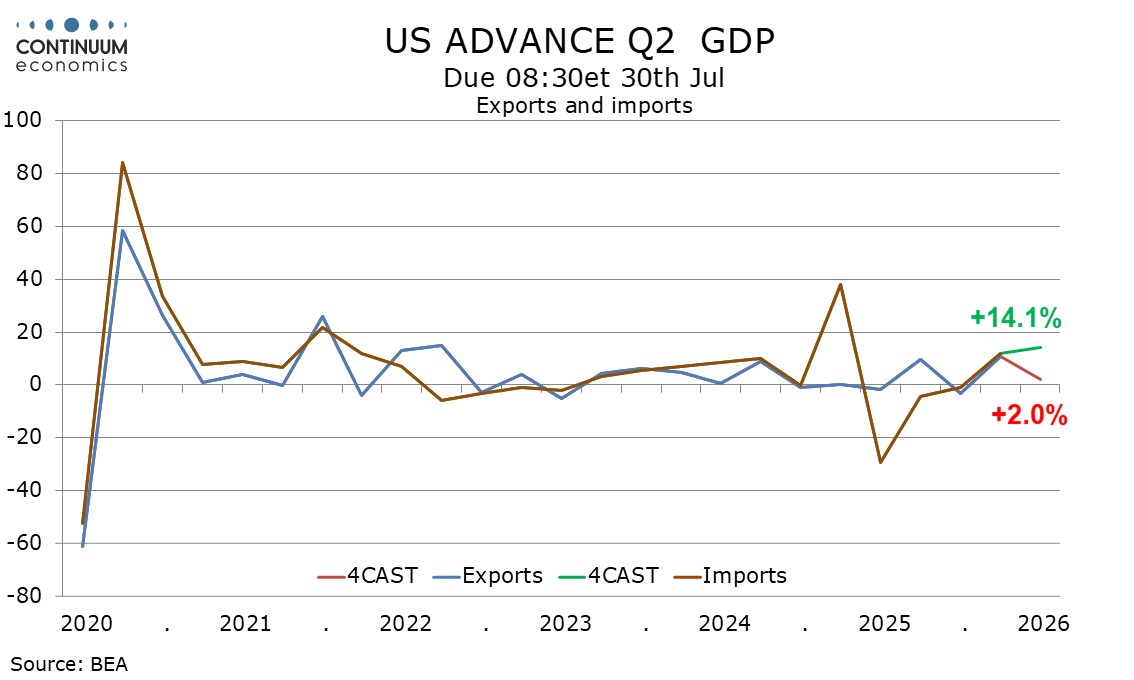
We expect net exports to take off 1.8% from Q2 GDP, assuming a June deficit wider than April’s but narrower than May’s, with exports up a modest 2.0% but imports surging by 14.1%. The Supreme Court ruling against many of Trump’s tariffs may be lifting imports.
We expect a negative contribution of 0.5% from inventories, with a steeper pace of deterioration than in Q1, in part because of supply disruptions related to the Middle East conflict. We expect a 1.9% increase in final sales (GDP less inventories), matching Q1’s outcome.
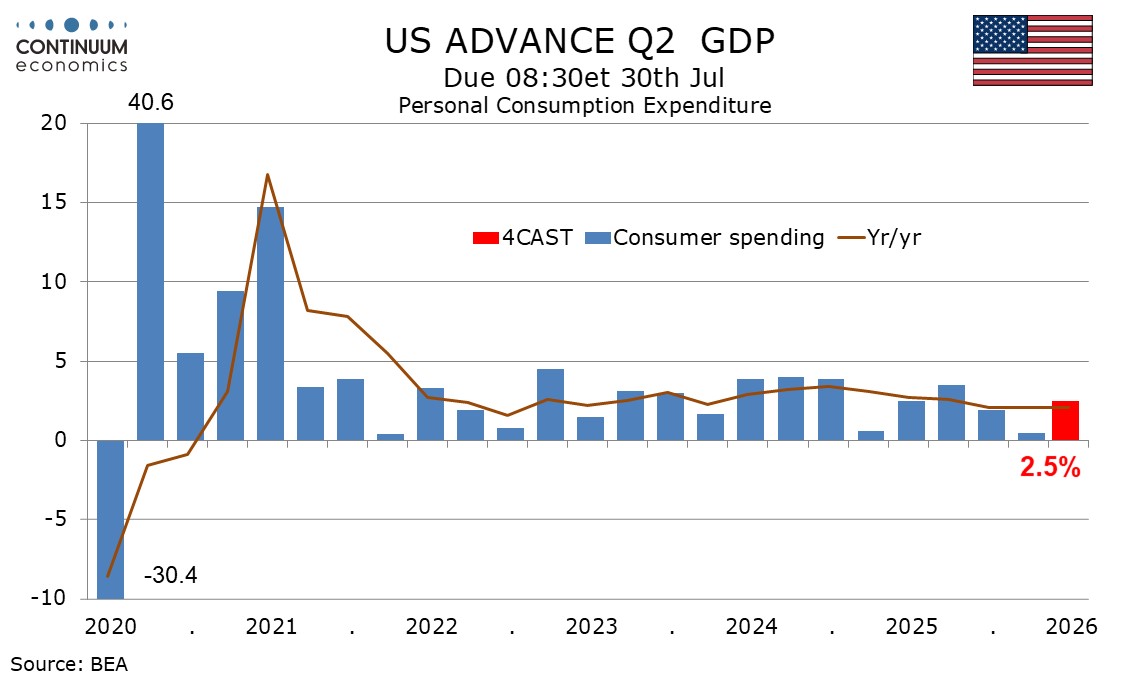
Consumer spending looks resilient to weakness in real disposable income and we expect a 2.5% increase in the former despite a likely 1.8% decline in the latter as PCE prices increase by 5.2%. We expect the consumer gain to be led by a 4.7% rise in retail, with services subdued at 1.4%.
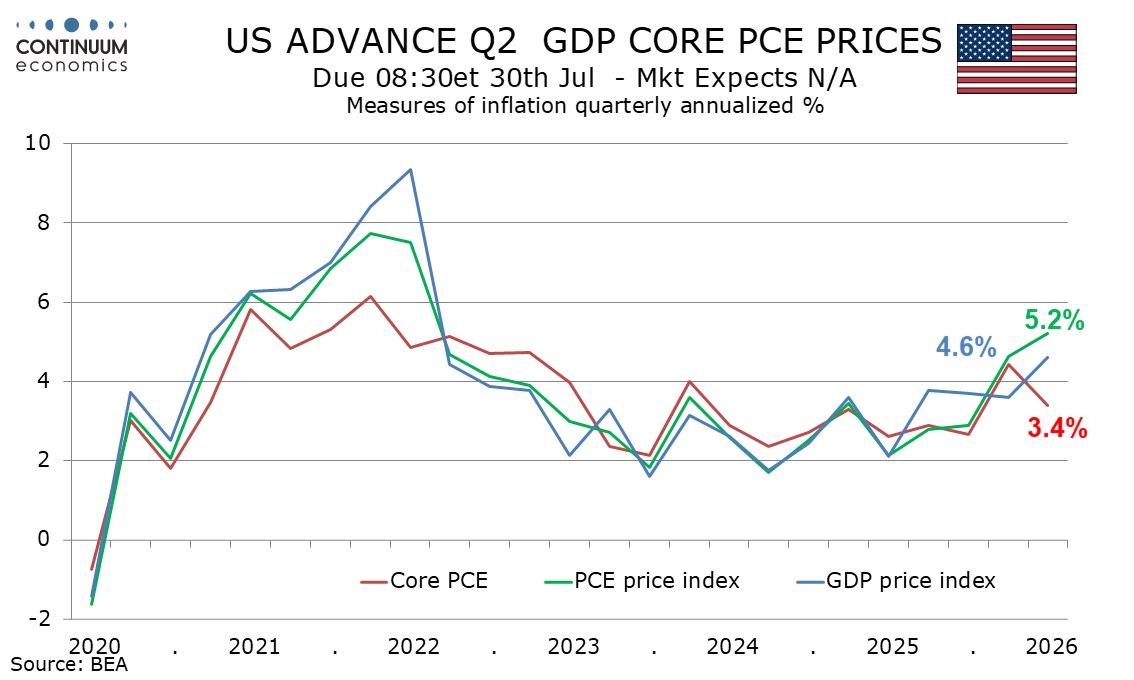
We expect a 3.4% increase in core PCE prices, assuming a 0.1% monthly increase in June, still too high but down from 4.6% in Q1. We expect a 4.6% rise in the overall GDP price index. Support will come from export prices rising even faster than import prices.
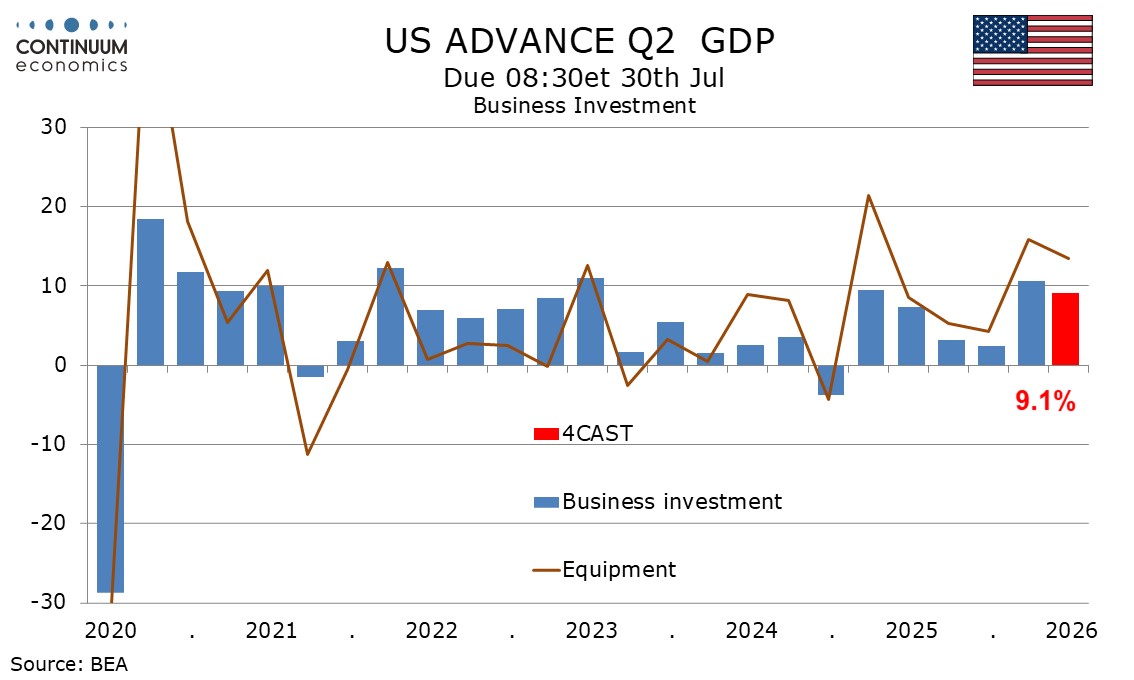
Business investment is likely to remain firm in Q2, led by AI, though our 9.1% forecast is down from 10.6% in Q1, which followed moderate gains of 2.4% in Q3 and 3.2% in Q3 of 2025. Intellectual property and equipment will remain firm and structures weak, though the latter less so. We expect the first increase in housing investment since Q1 2024, albeit a modest one of 2.3%.
We expect a 3.4% increase in government with defense likely to be positive and the Q1 reversal of Q4’s shutdown impact probably not fully done. State and local government construction also looks stronger in Q2. A 3.4% increase in overall government would follow a 4.6% increase in Q1 and complete the reversal of Q4’s 5.6% decline, though not quite at the Federal level.