FOMC - Further tightening likely if data holds up
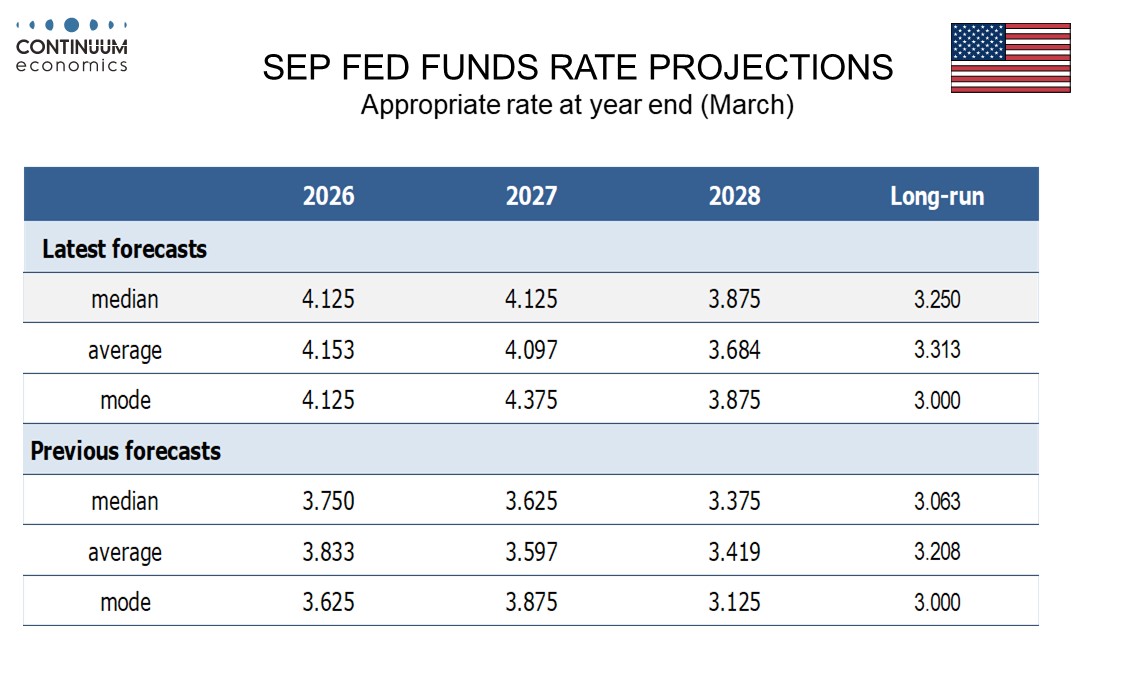
The Fed’s 25bps tightening was as we expected but a lack of any dovish dissenting votes was not. The Fed’s dots were more hawkish than we expected. While we have a somewhat more dovish view of the economy that the Fed, we have updated our Fed forecast, now expecting one more move this year, in December, rather than no more. This is consistent with the Fed dots. We still expect two easings in 2027, contrasting a median Fed dot for no moves, but from a higher level. We also now see them coming in Q3 and Q4 of 2027 rather than Q2 and Q3.
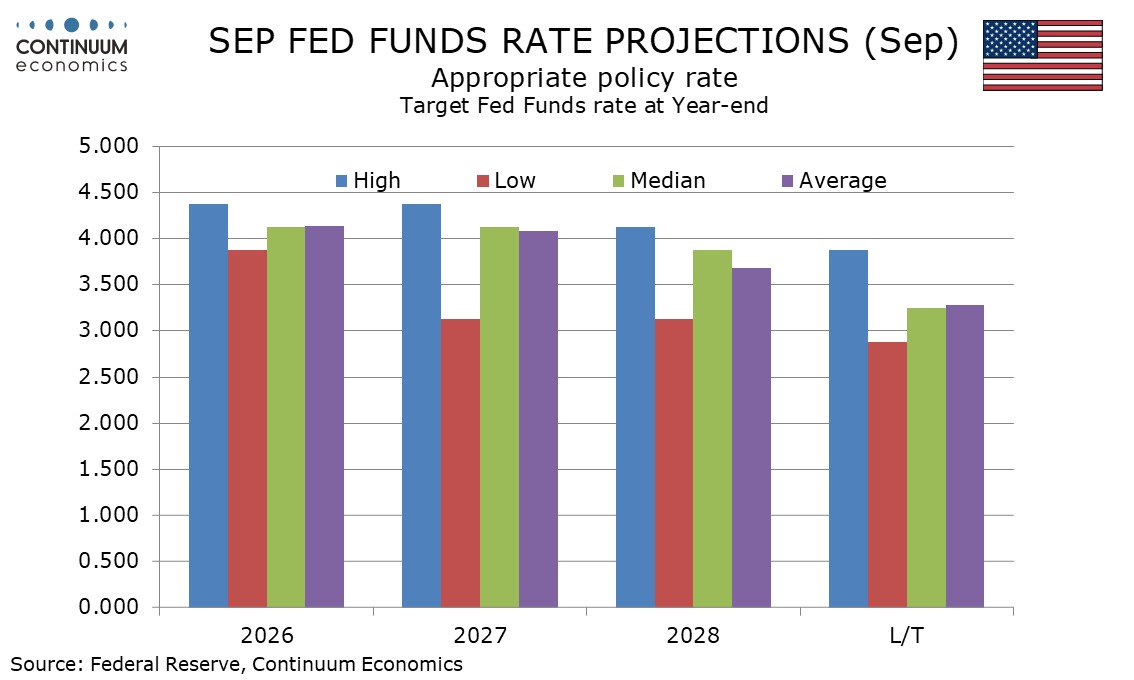
While Chairman Warsh does not contribute to the dot plot the latest dots show a significantly more hawkish stance than in June. The dots suggest one more tightening this year, and no easing in 2027. The dots to both 2026 and 2027 have a hawkish skew. Only two see no more tightening this year while four see two more tightenings. In 2027 only four see easing while eight expect a further tightening from the one more that is expected for this year. For 2028 only one easing is seen, which would put rates back to where the latest tightening has put them. However here the skew is negative, with eight seeing more easing than the median and only four seeing no move. A median of one further easing is seen in 2029 for which dots were produced for the first time, again with a negative skew. The long run view is moving higher, with eight above and eight below an updated median of 3.25%.
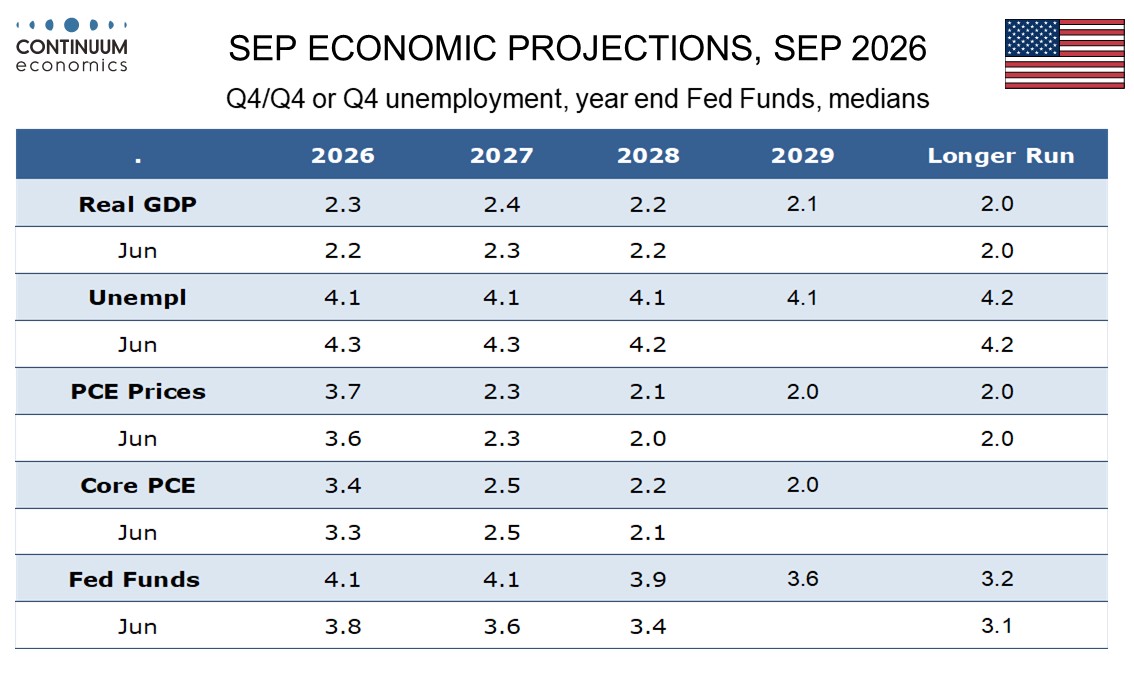
The changes to the Fed dots seem quite large compared with fairly modest changes to the Fed’s economic forecasts, with the exception of downgrades to the unemployment view, 2026 and 2027 now both seen at 4.1% rather than 4.3%. GDP views for both 2026 were both revised up by a marginal 0.1%. Core PCE prices were revised up by 0.1% in 2026 and 2028, with 2027 unrevised at 2.5%. The 2.0% target is not expected to be achieved until 2029. When asked on the lengthy time expected to reach target, Warsh stated the forecast was not his and stressed his commitment to the target.
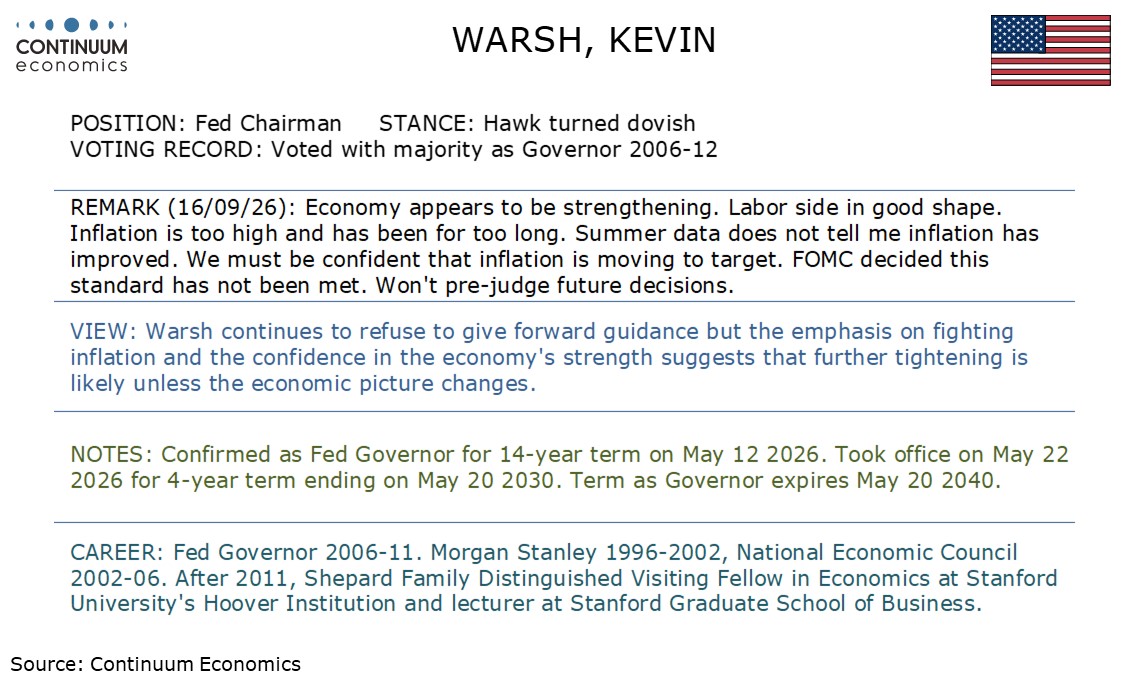
The statement justified the rate hike as likely to see the target delivered in a timelier manner. The most significant addition to the statement was to note that domestic spending has been resilient. While Warsh continues to downplay individual data points, the latest August retail sales report further emphasizes this resilience. The statement was also notable for a lack of dissenting votes, surprising some given dovish inter-meeting comments from some Fed officials, most notably Governor Waller. He suggested that the August CPI was crucial, and its 0.3% core rate may have been enough to convince him and others of the case for tightening. However, we did not see the August CPI gain as broad based, with the Cleveland Fed’s Median CPI up by a more moderate 0.2%.
Rising bond yields and energy prices are both likely to have influenced the decision, perhaps for many more so than the August CPI. Also significant is likely to be Warsh’s desire to establish credibility with the markets, which came under strain after his evasive July press conference, but was regained somewhat with his Jackson Hole speech which made a tightening almost obligatory for sustained credibility. The need to show Fed independence from President Trump is unspoken but real.
The dots were more hawkish than we expected and we still see a case for falling core inflation on slowing wage growth and tariffs having peaked, particularly if there is a deal to reopen the Strait of Hormuz. We also see risk that the resilience of consumer spending will not be sustainable given weakness in real disposable income. Business investment still looks strong, fueled by AI, and is likely to remain so, but even here downside risk is starting to be noted.
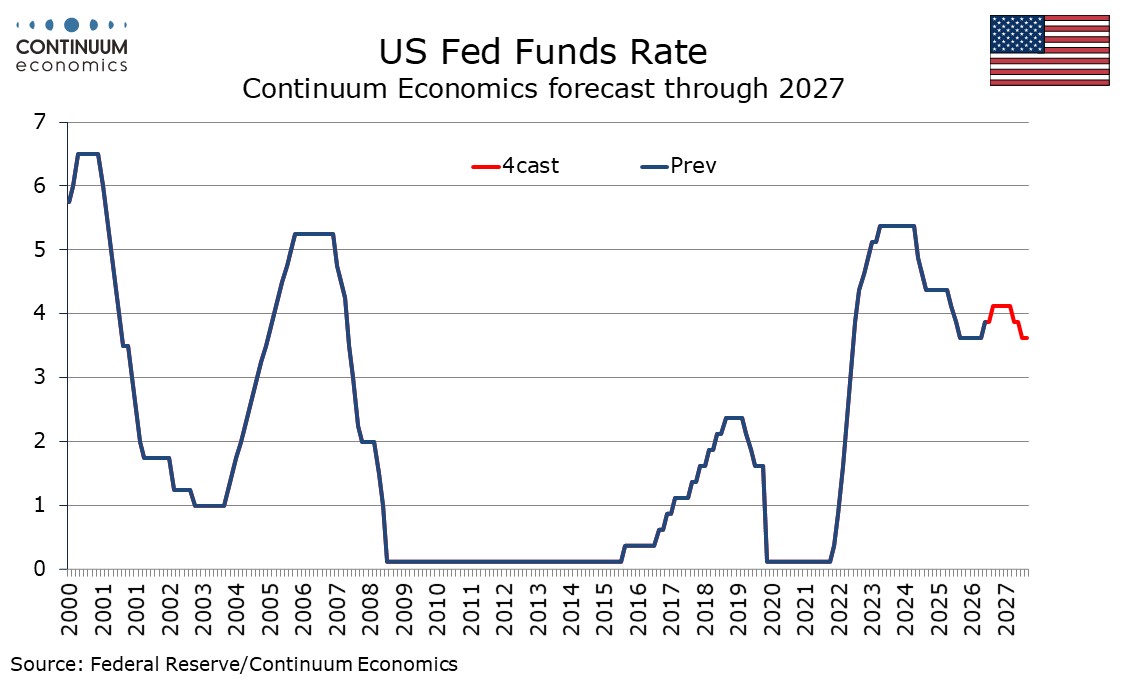
Slowing in data however will have to start soon to prevent a further rate hike this year. We expect that a move is more likely in December rather than October, as the latter would be immediately before the midterm election. Our somewhat dovish view on the economy could however allow easing in 2027 and if they move they are unlikely to do so only once. We look for two moves in 2027, though in the second half of the year, with one move in Q3 and one more in Q4. This would take the end 2027 Fed Fund target to 3.50-3.75%. Beyond that only moderate easing is to be expected, with the Fed’s estimate of the neutral rate moving up from 3.0%. We expect only one 25bps easing in 2028.