China Jun Activity Data Review: A Diverged Economy
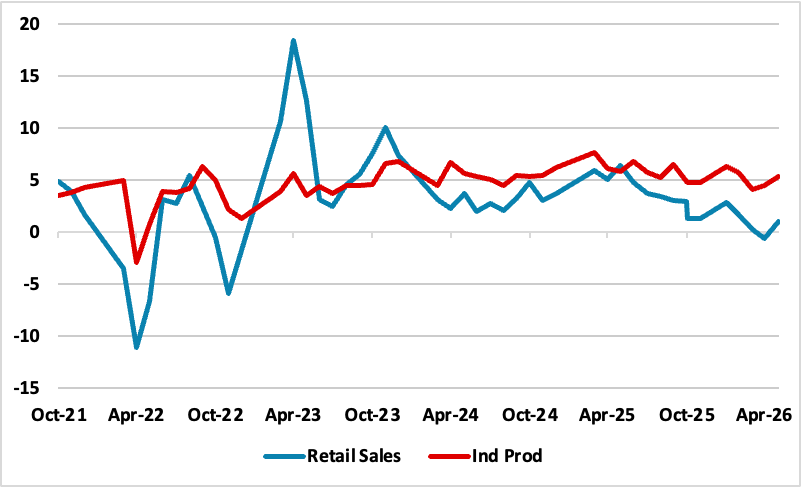
China’s June activity data displayed divergence of statistics, as AI and related infrastructure boost industrial production. Urban Fixed Asset Investment was still depressed, due to on-going failure of mainland developers, retail sales still remained modest , weighed down by the wealth effect from a declining housing market.
Figure 1: Retail Sales and Industrial Production
Source Datastream
In June 2026, China's industrial production grew by 5.3% year-on-year, retail sales increased by 1.0% year-on-year, and urban fixed-asset investment dropped by 5.7% year-on-year YTD for the first six months of the year. It resonates with our headline that industrial production grew, modest retail, and sluggish urban fixed asset investment.
As Artificial Intelligence (AI) boosts industrial production by transforming factories from automated machines into self-optimizing systems. It directly increases throughput, reduces downtime, and minimizes waste. In June 2026, China’s retail sales of consumer goods rose by 1.0% year-on-year, rebounding from a 0.6% contraction in May and defying market expectations of a 0.1% decline. Despite the rebound, we believe the prospects of retail sales in the next few months would be bumpy, as downward property prices brought about negative wealth effect, and also, despite the short rebound from 2026 May to 2026 June by 0.1%., the prospect is still lame and it is still a high level compared to data from the past two decades.
To sum up, as our title rightly suggested, the June activity data showed a diverged economy, with industrial production dancing with AI, urban fixed asset investment still recovering from prospect crisis, and retail sales modest with two draggers–––wealth effect from a declining property market and a sluggish employment market, especially the latter could be worsened by the AI technology replacing some labor.