U.S. July Retail Sales - Fall may reflect acceptance that elevated prices will last for some time
July retail sales have surprised significantly to the downside, -0.6% overall, -0.3% ex auto and even ex autos and gasoline negative at -0.2%. The data follows a surprisingly resilient Q2 from consumer spending contrasting weakness in real disposable income, and hints at a significant loss of momentum in Q3, though conclusions should be cautious on one month of data.
Q2 saw consumer spending rise by 3.2% annualized in real terms led by retail sales while real disposable income fell by 1.5%. In yr/yr terms consumer spending was up by 2.3% and real disposable income down by 0.1%. Consumer spending may have held up through Q2 on a belief that the spike in gasoline prices would be brief. While gasoline prices slipped in June and July, developments in the Middle East may have led consumers to think that prices will now remain elevated for some time.
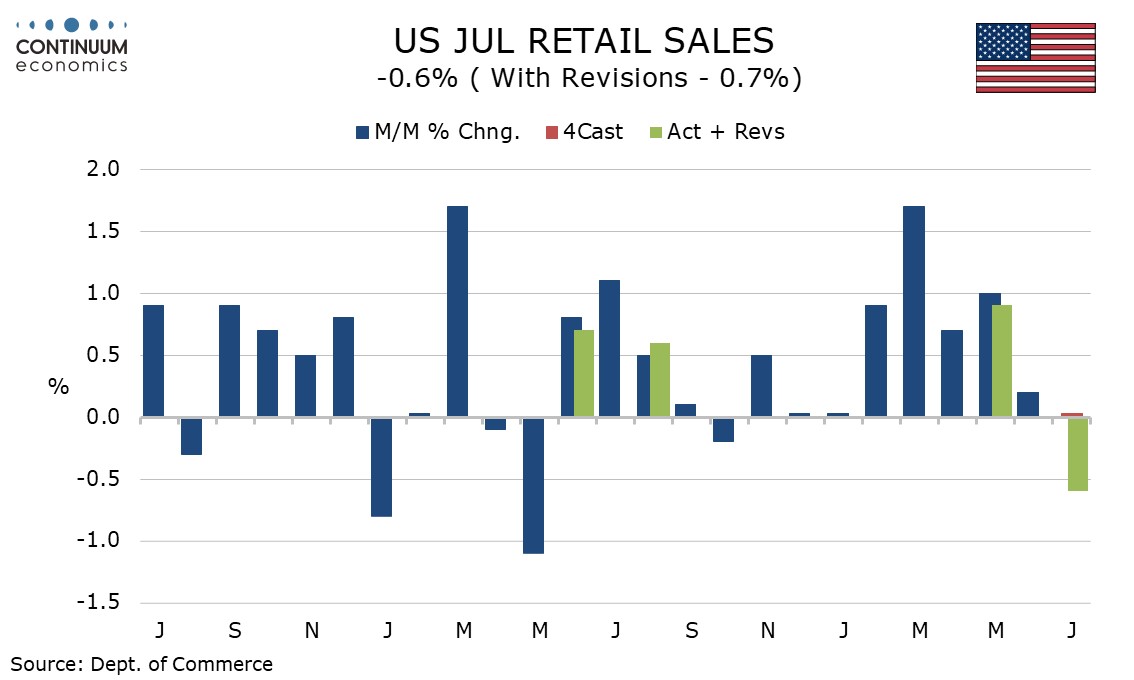
Net revisions were marginal at -0.1% in overall, ex auto and ex auto and gasoline sales, with the revision coming in May. The control group, which contributes to GDP, saw a 0.4% decline in July, reversing a 0.4% June increase that was revised from 0.5%.
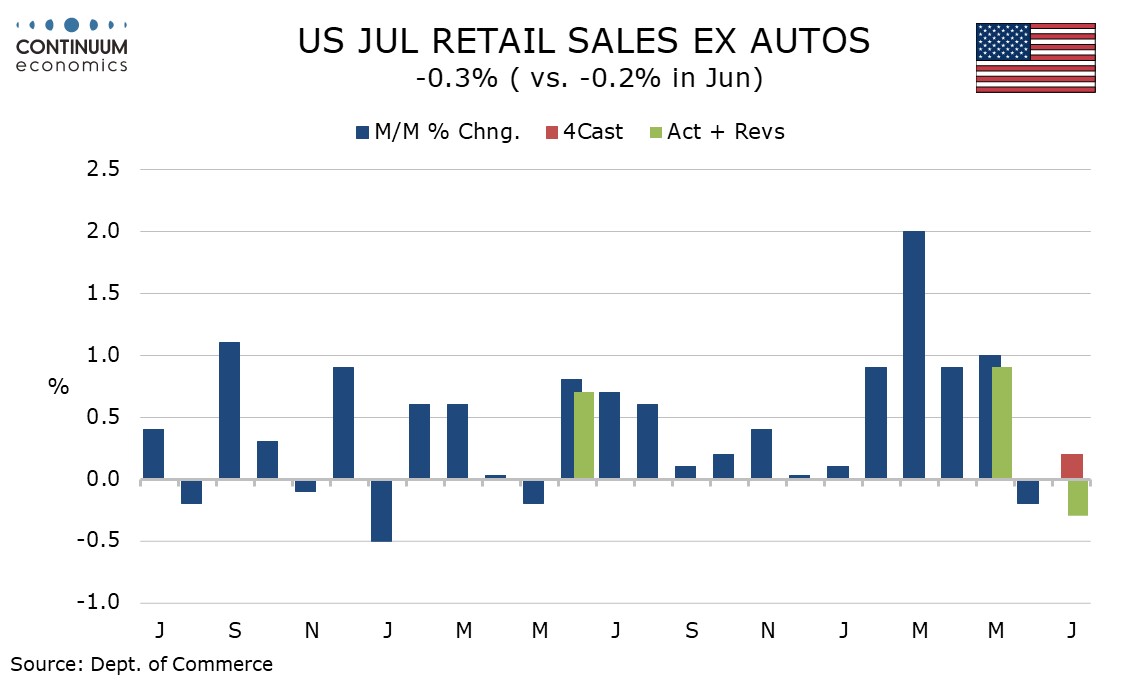
Auto sales slipped by 1.8% after gains of 2.4% in June and 1.0% in May. A 0.9% fall in gasoline sales is less than prices implied (hinting at fears of future gasoline price gains) but follows a 5.8% fall in June. Gasoline sales are still up 16.3% yr/yr. largely on prices.
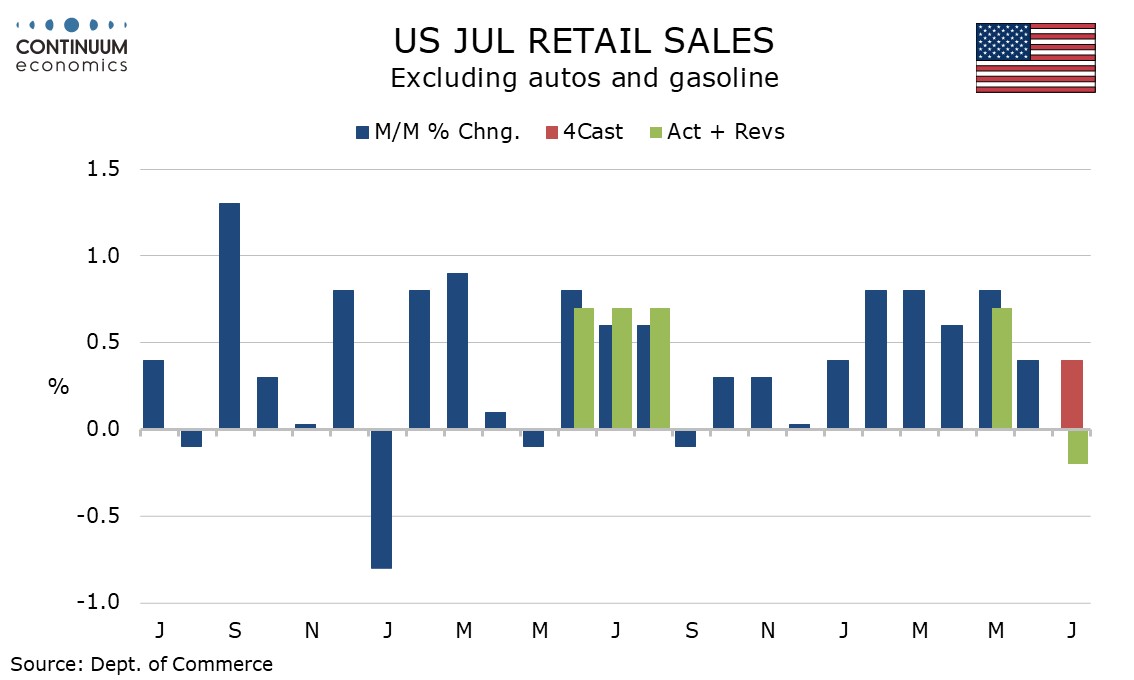
By far the biggest negative in the ex auto and gasoline data was nonstore retailers at -2.2%. This may reflect a curbing on discretionary spending. Electronics and appliances at -0.5% were the only other significant negative. Food was flat. Most other components showed modest gains but clothing saw a strong month at 1.9%.
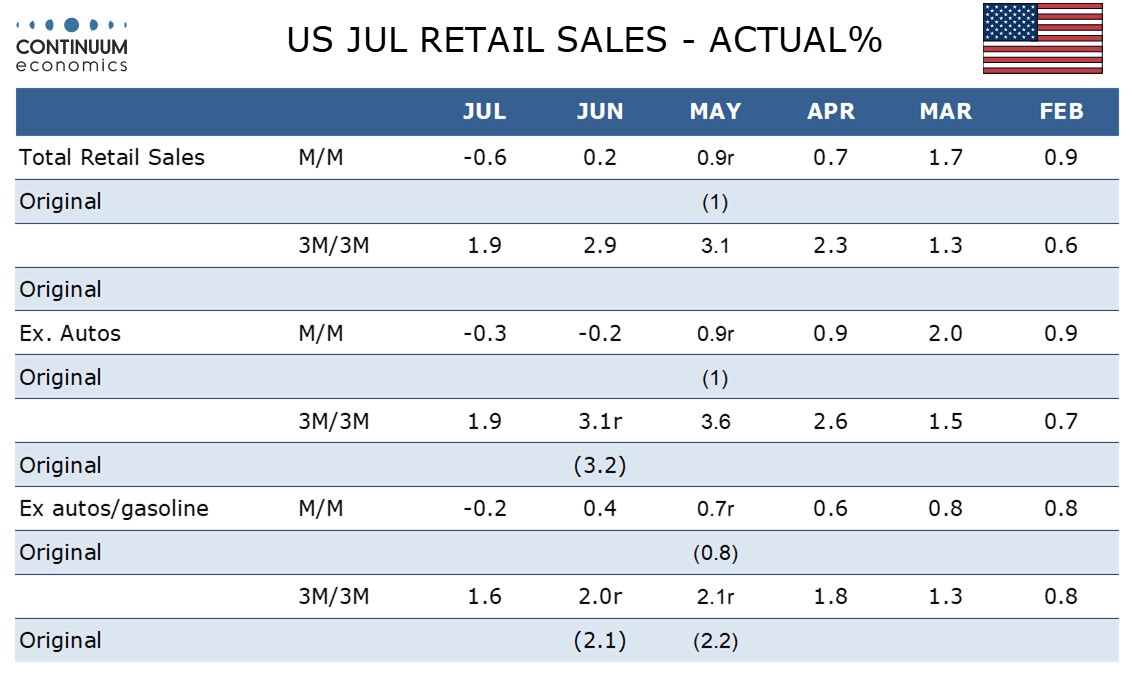
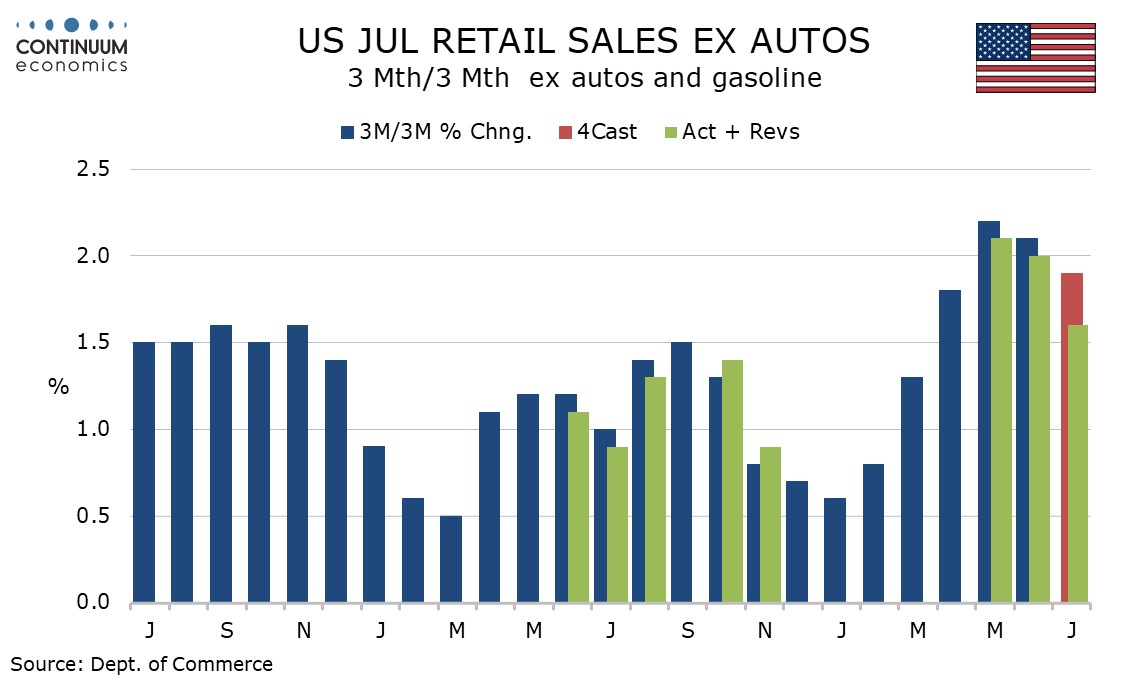
While the data does warn of a consumer slowdown in Q3, 3 month/3 month rates are still firm, overall and ex autos at 1.9%, and ex autos and gasoline at 1.6% (all not annualized), if all off recent highs. Ex autos and gasoline peaked at 2.1% in May, which was the highest since March 2023. While we see risk that the July slowing will be sustained, it could simply be a correction from a strong Q2.