Mexico: Fiscal Consolidation and Reducing Real Yields
· 10yr real yields in Mexico are currently high at 5%, given a moderate fiscal trajectory and some government action towards fiscal reform (though the judicial reforms have been criticized by global investors, the reality is no major political manipulation). 10yr nominal yields could come down to 8.25-8.50% in 2027, based on further progress on inflation and a moderate government debt/GDP trajectory. We see little prospect of a 2027 Banxico hike.
Figure 1: Mexico Budget Deficit Projections (% of GDP)
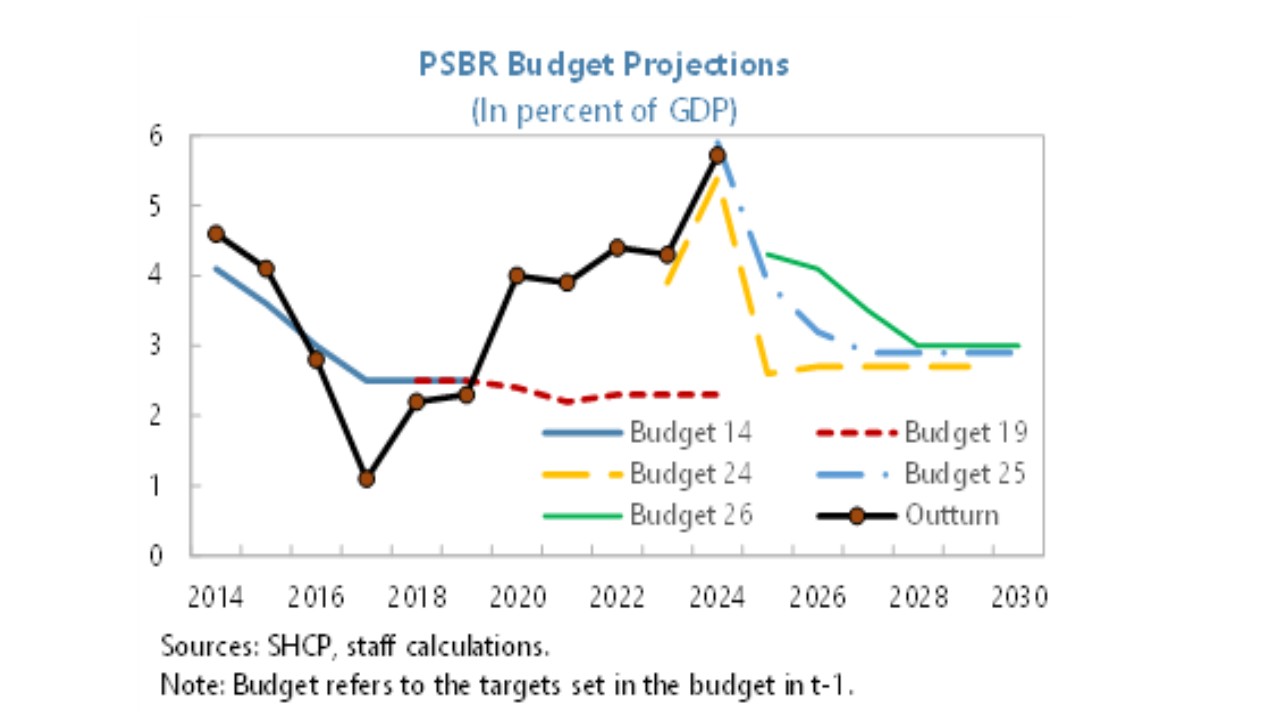
Source: IMF Article IV Oct 2025
Mexico gross government debt/GDP trajectory is better than most big EM countries, but fiscal worries remain with a concern that the IMF projection of a stabilization at 64% could be exceeded. Partially this is Mexico being hit by a succession of crisis (COVID 2020, Ukraine war 2022, Trump tariffs 2025), which has meant that the budget deficit has been blown off course by external events – the PSBR target has a number of exclusions. The IMF would like to see further fiscal consolidation in the coming years to increase confidence that Mexico can stabilise the government debt trajectory. This would be focused on improvements in tax administration and tax policy changes, as government expenditure to GDP at 29.5% is below the G20 EM of 32.7%. Financial markets and rating agencies also want to see ongoing strengthening the financial health and profitability of state-owned enterprises, especially Pemex.
The IMF has also recommended a strengthening of the medium-term fiscal framework to enhance credibility of fiscal plans, including a medium-term target level of government debt; a budget deficit target that is binding multi-year rather than the current year and an independent fiscal council. Such a combination could reduce sovereign debt nominal and real yields. However, the Mexican authorities do not appear to be planning such bold steps, but rather have been implementing incremental improvements in the fiscal consolidation process.
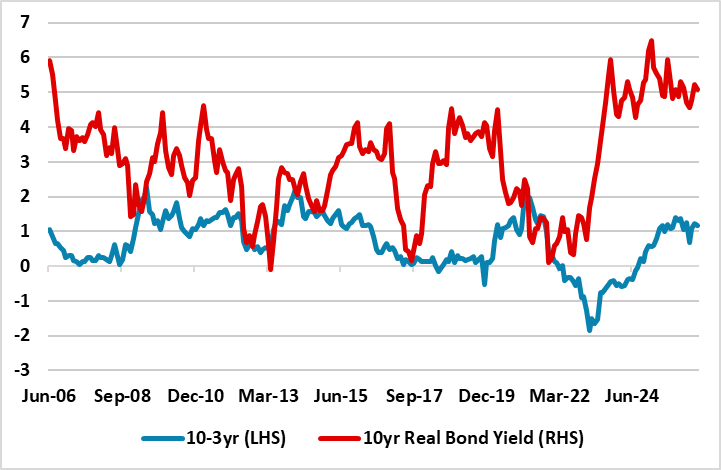
Even so, 10yr real yields in Mexico are currently high at 5% (Figure 2) given a moderate fiscal trajectory and some government action towards fiscal reform (though the judicial reforms have been criticized by global investors, the reality is no major political manipulation). The 2nd part of the story is market concerns that inflation could be difficult to sustainably reduce to 3% and that Banxico policy rates in coming years could have to be higher than the current 6.5%. This could be a reflection of the 2022 inflation spike, despite Banxico continuing to project that inflation could hit target by Q2 2027. It could also be worry that Fed tightening could cause higher Banxico policy rates and yields across the curve. However, MXN strength suggest that a further small narrowing of the policy rate spread could occur in the scenario that the Fed have a 50bps mini cycle without a major hit to the MXN. When Mexico CPI inflation was 3% and marginally below in 2015-16, 10yr real yields declined to 2-4%. It could be that the USMCA negotiations are also causing an extra real yield risk premia at the moment, but we maintain a view that an addendum will be agreed and added to the existing USMCA deal by early 2027. 10yr nominal yields could come down to 8.25-8.50% in 2027, based on further progress on inflation and a moderate government debt/GDP trajectory.
Figure 2: 10yr-3yr Government Bond Spread v 10yr Real Yields (%)
Source: Datastream/Continuum Economics