Turkiye Inflation Preview: CPI is Expected to Slightly Increase in June
Bottom line: After standing at 32.6% annually in May, we expect consumer price index (CPI) will slightly surge to around 32.8%-33.0% y/y in June due to secondary impacts of the energy price shocks stemming from Middle East tensions. June print will be announced by Turkish Statistical Institute (TUIK) on July 3.
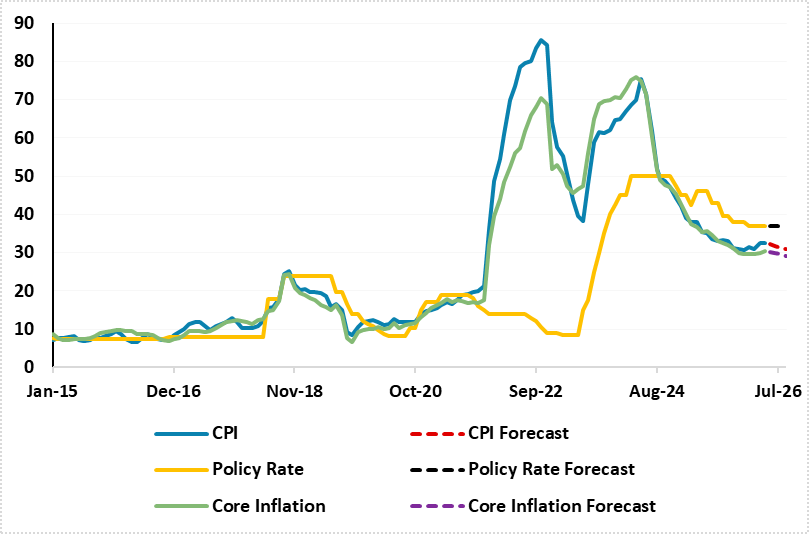
Figure 1: CPI, Core Inflation (YoY, % Change) and Policy Rate (%), January 2015 – September 2026
Source: Continuum Economics
Annual inflation in Turkiye slightly edged up to 32.6% in May due to rising housing, transportation and energy prices stemming from Middle East tensions. (Note: According to TUIK’s announcement on June 5, education prices recorded the highest annual increase with 50.1% YoY followed by housing prices were up by 45.6%. Annual food and non-alcoholic beverages prices also soared by 34.9%).
We assess geopolitical risks, supply‑side constraints and stickiness in services prices continued to exert pressure on the inflation outlook causing disinflation process to go slow and uneven, particularly in Q2.
We envisage the recent resolution to the Iran conflict will provide significant economic relief to Turkiye, primarily by easing heavy energy-import bill and relieving fertilizer costs (and food inflation). Under a baseline scenario where global oil prices soften toward the USD 70–90 per barrel range, we assess the domestic inflation will start to cool off moderately late Q3/Q4, but gradually.
We now expect consumer price index (CPI) will slightly surge to 32.8%-33.0% y/y in June due to secondary impacts of the energy price shocks stemming from Middle East tensions. (Note: June print will be announced by TUIK on July 3).
Under current circumstances, we continue to envisage global uncertainties, deteriorated pricing behaviour and energy prices will likely lead to average headline inflation to stand at 31.3% in 2026. Our forecast for average CPI is at 25.6% in 2027 as we think inflation will continue to remain sticky, requiring tight monetary conditions for longer.