FX Weekly Strategy: Asia, Nov 16-20
Dollar emerges on top, but at these levels, complications remain - especially over yen crosses amid uncertain intervention
Medium-term dollar up channel remains live; positioning is a consideration now, as euro shorts may approach 2015 highs
Stepping back from current and YTD action, already worth also pondering book closes and FX reserve rebalancing...
One of the big dilemmas coming out of last week’s significant data, and the resulting first round price action, is how to tactically handle yen crosses going forward from here. There are a number of overlapping strands to that puzzle.
The natural inclination is to be reverting back to early summer mode (when the yen drivers were undergoing a sea-change but sentiment was still yield focused). That is, go back to playing CHF/JPY shorts as trend-resumption. After a complex correction back to the late July spike down, this resumption has been the initial impulse indeed. Current pullback has 190~ then the 187s lows below, if we remain in the mode of yield-driven dollar, but running into level and speed bump restraint on the yen leg.
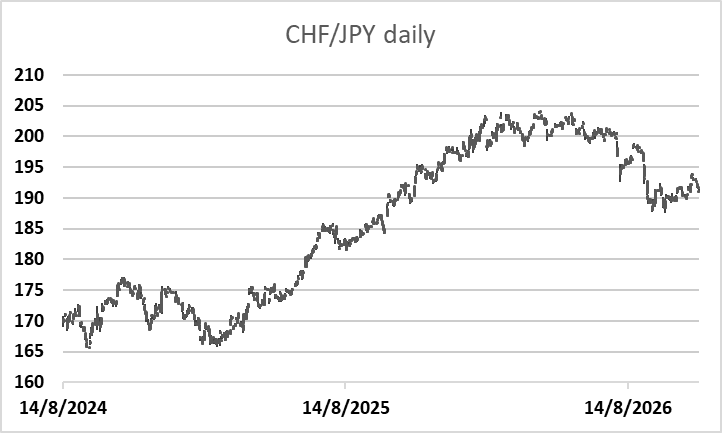
There are a few hesitations, logical and appealing though the approach is. Positioning already had the market fairly long yen - rare among other dollar pairs - while still moderately short Swiss. And it is easy to forget some of the recent history driving the Swiss carry-trim correction – France hasn’t gone away and up until recently traded ‘high beta’ particularly when yields were under upward pressure.
Tech corrective risks also haven’t vanished either, even though the Nasdaq has managed to hold a test of the early summer lows and bounce, even with Nvidia issues. Copper slippage, more reflected in AUD alongside yield influence, echoes that. Add to that, USD/CHF had quite an easy run higher after the US data but is now itself running into much more significant and stronger resistance at 0.84 (to then 0.8475). So while currently working well, it’s not without its embedded risk-reward issues.
On top of all that is the big question: if and when there is intervention ahead, then intervention by whom and on what. Whether its Japan on USD/JPY or Japan-US on EUR/JPY makes a big difference to the wider USD-EUR-yen-cross complex - even while giving some background confidence to the medium-term and portfolio/hedging driven major/yen supply that has been evident in recent months.
Lots then to try and weigh up, and maybe react to as much as try to anticipate. It would be natural to be seeing some current indecision kick in before some resolution on the next legs.
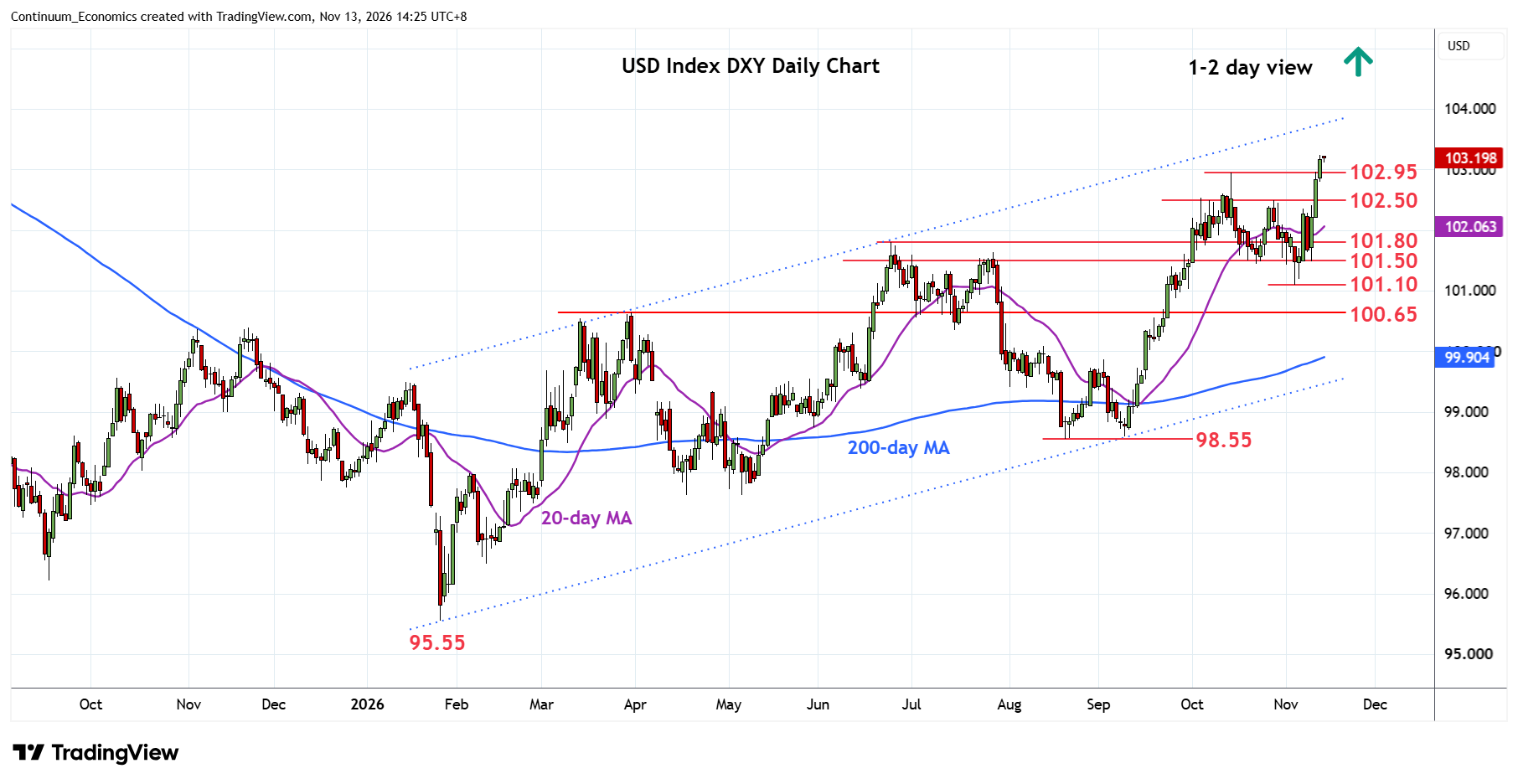
For the dollar more widely, 103.50 is still the next higher resistance on the index overall now, above the current .20s highs, and maybe needs the market to get into the mood to test the MoF on USD/JPY if the overall index is going to start motoring further at speed from here, given component weights. The broad, if relatively slow moving, YTD uptrend remains sound through all the swings in events and market focus points, and in that sense outside of trading moves, the medium-term burden of proof still against bears.
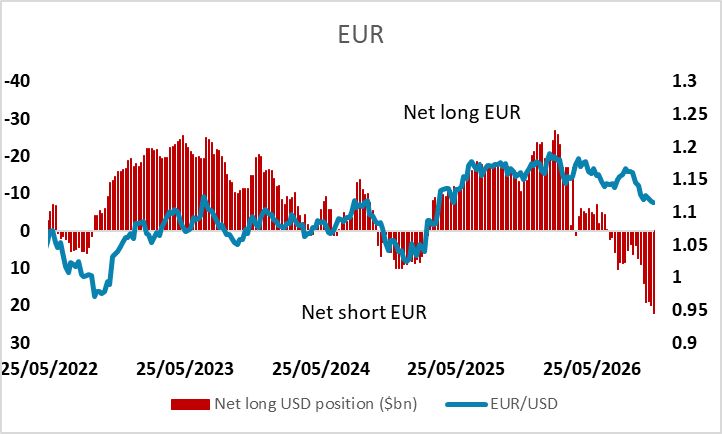
Given the recent extension out of CPI, the remaining source of cautious is perhaps positioning, although positioning in the money and will trend and momentum in its favour is always less challenging, and it becomes more a matter of looking out for profit-taking an a depletion of fresh buyers. Out of last week, it could well be the case that IMM data will show euro shorts now very close to their 2015 extreme peaks hat did mark exhaustion and turn then. Still something to be very much alive to for in coming weeks then and into the profit-locking book-close, both the November fund one, and the calendar one.
On the latter, also keep in mind reserve rebalancing especially when many FX reserve holders remain minded to trim rather than passively add to dollar weights. That can often see later Q4, December especially end up trading counter-trend to the YTD net change.
Week Ahead
Globally, the APEC meeting in China is perhaps of background interest, mainly regarding any side-line talks on Ukraine and Iran between the main players.
USA
While there is some significant data due, US focus is likely to be on the Fed, in particular minutes from the October 28 meeting due on Wednesday, which will be closely watched for any hawkish signals. Fed speakers include Barkin on Monday, Musalem, Hammack and Williams on Tuesday, Williams again on Wednesday, and Goolsbee and Paulson on Thursday.
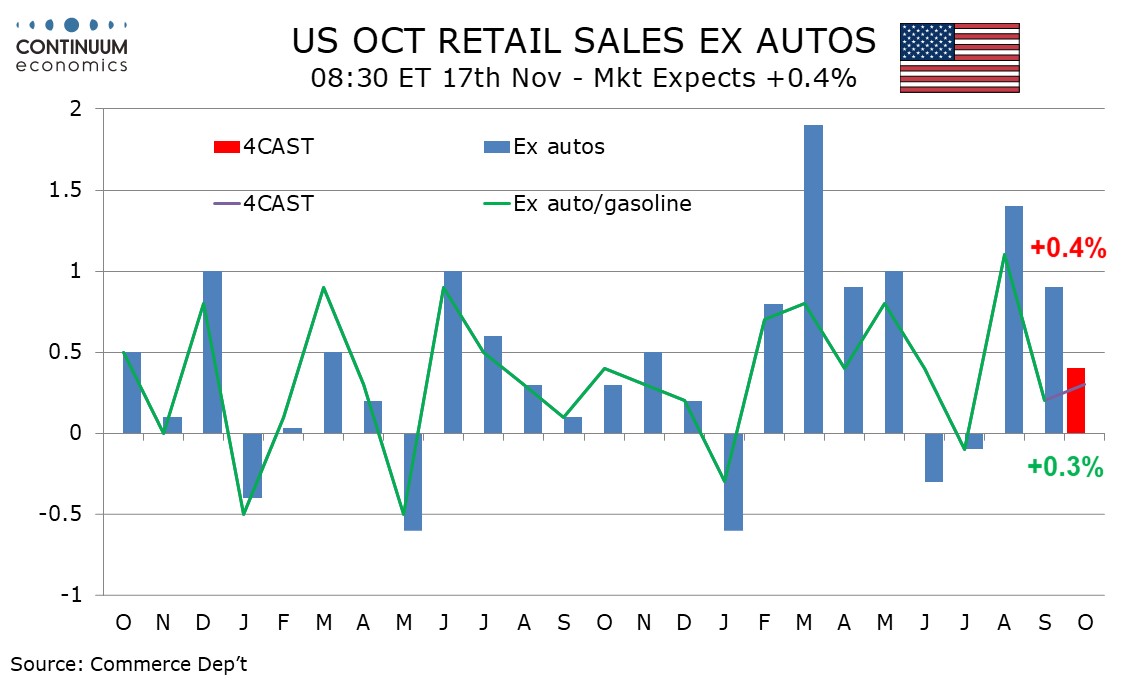
The most significant data release is likely to be October retail sales on Tuesday, where we expect moderate gains of 0.2% overall, 0.4% ex autos and 0.3% ex autos and gasoline. Also on Tuesday we expect a 0.1% decline in October industrial production, but with a 0.4% increase in manufacturing. November manufacturing surveys are due from the Empire State on Monday and the Philly Fed on Thursday.
Tuesday sees November’s NAHB homebuilders survey. In Wednesday we expect October housing starts to rise by 1.6% to 1240k but permits to fall by 2.1% to 1370k. October pending home sales follow. Initial claims on Thursday will cover the survey week for November’s non-farm payroll. Also scheduled are October import prices and September business inventories on Tuesday, and the final November Michigan CSI on Friday.
CANADA
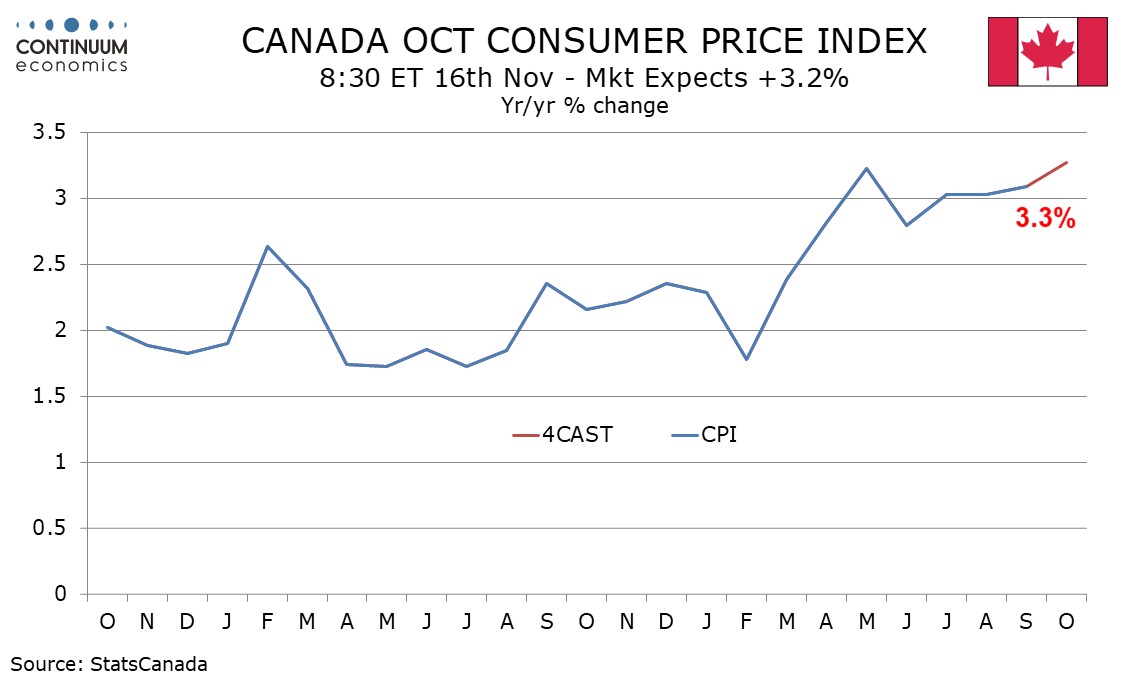
Canada’s key release is October CPI on Monday. We expect an increase to 3.3% yr/yr from 3.1% with a marginal pick-up in one of the Bank of Canada’s three core rates (CPI-Median) too. October’s IPPI and RMPI are due in Thursday, September retail sales are due on Friday. The preliminary estimate made with August’s report was for a rise of 0.7%.
UK
Markets will get a chance to see whether second round effects are materialising in next week’s labour market and inflation data. Average earnings ex-bonus payments rose to 3.7% y/y in the 3 months to August and a similar figure is expected for September while CPI is likely to continue its upward near term trajectory before peaking early next year. The market expects CPI to rise to around 3.8% in October from September’s 3.5% but it is the core rate that will also receive attention for any signs of broadening inflationary pressures.
EUROZONE
Mostly second tier releases next week though the ECB Negotiated Wage Growth index for Q3 and the Consumer sentiment report for November (both out on Friday) might be of interest. Eurozone industrial production for September is out on Monday though the numbers are expected to continue to highlight ongoing weakness in the sector.
JAPAN
Japan sees Q3 GDP, seen at around 0.3% annualised, some slowing from recent pace, driven mainly as elsewhere by strong investment and with consumption remaining weak, attesting to the unbalanced growth and inflation picture that is seeing some disagreement on the BoJ, albeit with the majority focusing on the price pressures. Echoes of other majors in this cycle of course.
National CPI data should largely echo the Tokyo data with core lifting clear of target (2.3 from 2.1%).
AU and NZ
Main data release is Australia’s Oct employment report, central to the RBA’s current ‘no easy choices’ stance but also behind its reasoning that it may have tightened policy enough depending on data. Last month’s steep drop was driven by part-time but the trend has indicated a weak labour market. A report that echoes that would support the pause to assess.
Also due are RBA Minutes, to expand further on its current risk-balance assessment and polcy bias, as well as RBA’s Bullock to speak.
New Zealand interest mainly limited to appearances from the RBNZ (Breman, Conway, Silk).