FOMC - Warsh leaves markets confused
That this FOMC meeting showed a 9-3 vote for unchanged policy, with the dissents being for tightening, shows there was a case for tightening and a case for steady policy. However, the press conference from Chairman Warsh gave little insight on the nature of the debate, talking a lot about how the Fed is asking important questions, without giving any clear signal on what the answers are. We have not yet heard enough to change our steady policy view and call a tightening this year.
Early in the press conference he noted higher market yields, which saw some correction from the dovish reaction to the decision to leave rates unchanged, as well as starting strongly his commitment to the 2% inflation target. However attempts to get Warsh to hint that higher market yields suggested a case for higher rates were not successful, and the dovish initial reaction to the decision was sustained at the front end, with a steeping of the yield curve that hints at questions on Fed credibility.
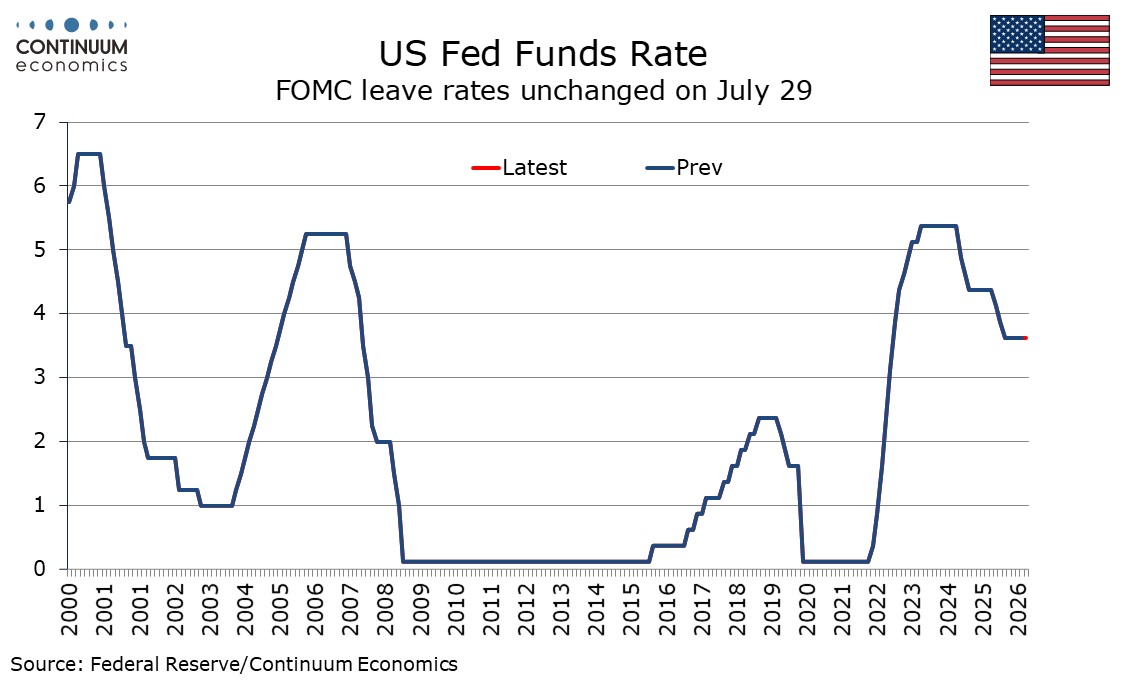
The dissents were confined to three district Fed presidents Cleveland Fed’s Hammack, Dallas Fed’s Logan and Minneapolis Fed’s Kashkari. None of these were a major surprise though we had expected only the first two. A dissent from a permanent voter would have carried more significance. Apart from three rather than zero dissenters, the statement was little changed from June’s, suggesting the economy is still seen as in a similar position. Warsh downplayed the importance of a softer than expected June CPI, stating it is trend rather than single data points that matter.
Warsh’s avoidance of forward guidance is carrying the risk of avoiding what will guide his decisions. There can be little doubt that the labor market looks close to Fed objectives but inflation is too high, with clear risks from the unresolved situation in the Middle East, tariffs, and continued momentum in core inflation. There is a lot to see before the next FOMC meeting in September, including two non-farm payrolls and two CPIs, though Warsh seems to be downgrading the significance of such releases without making it clear what is rising in significance.
Our view has been for steady policy through 2026 and 50bps of easing in 2027. That is likely to require some slowing in the economy, which is a risk given consumer spending outpacing real disposable income, and some loss of momentum in core inflation, which is reasonable even if the upward pressure from energy and tariffs simply stabilizes without reversing. Trump’s latest tariffs are maintaining the impact of the tariffs the Supreme Court ruled against rather than adding to the damage, but should oil move to fresh highs that would be a more serious concern.
Still, Warsh does not seem like a man in a hurry, and the dissent is still confined to district Fed presidents. While the debate through this year is likely to be between tightening and steady policy, we have not seen enough at this point to switch our view to the former from the latter.