FX Weekly Strategy: Asia, 19-23 October
US bonds and USD became overstretched, looking to rebalance n/t
Quiet week though event risks coming onto the horizon
Big picture cross-asset themes across bonds-equities-dollar relationships remain a background focus
Last week was notable not so much for the news itself as for the ‘contrarian’ reaction to it, with bonds and the dollar buying and selling the fact respectively out of the above-consensus core CPI print and subsequent high PPI data.
Before drawing sweeping big picture conclusions, it is worth acknowledging the more mundane context. First, that even with the uncomfortable inflation data, it ultimately didn’t change the Fed’s apparent position of ‘hike(s) likely, but no urgency’. After the spike then, pricing reverted back to the low Oct odds versus Dec priced in seen prior. Warsh didn't seem minded to correct that, while sticking to low forward guidance. Second, it arrived against a backdrop in recent weeks of very rapid moves that maxed out a bearish Fed trajectory, leaving the dollar rather overbought and bonds oversold in the process. Shifting to exhaustion and profit-taking on a failed follow through is pretty typical against that backdrop then.
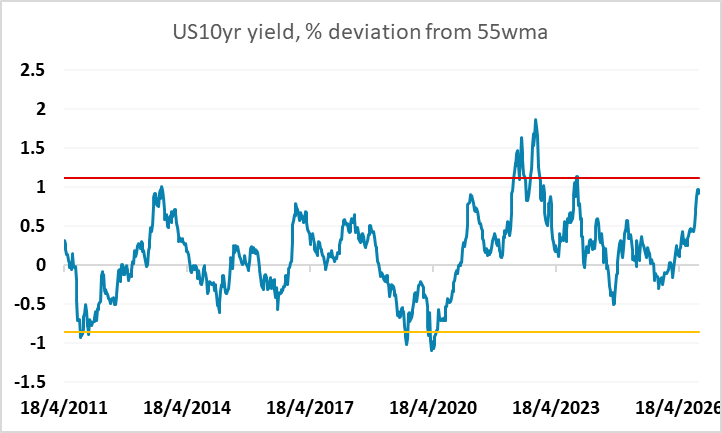
What is still true however is that on the bond side, the market rapid re-set does look to have taken yields into an area of medium-term buying interest, with much better risk-reward renewed here, both in terms of location and in terms of hedge characteristics. Buying recommendations at 5.25%+ are becoming more widespread and programmatic dip-buying does appear to be kicking in on weakness.
These provisos given, it is still fair to see the price action as echoing a couple of prominent bigger picture market themes and bringing them back to the fore.
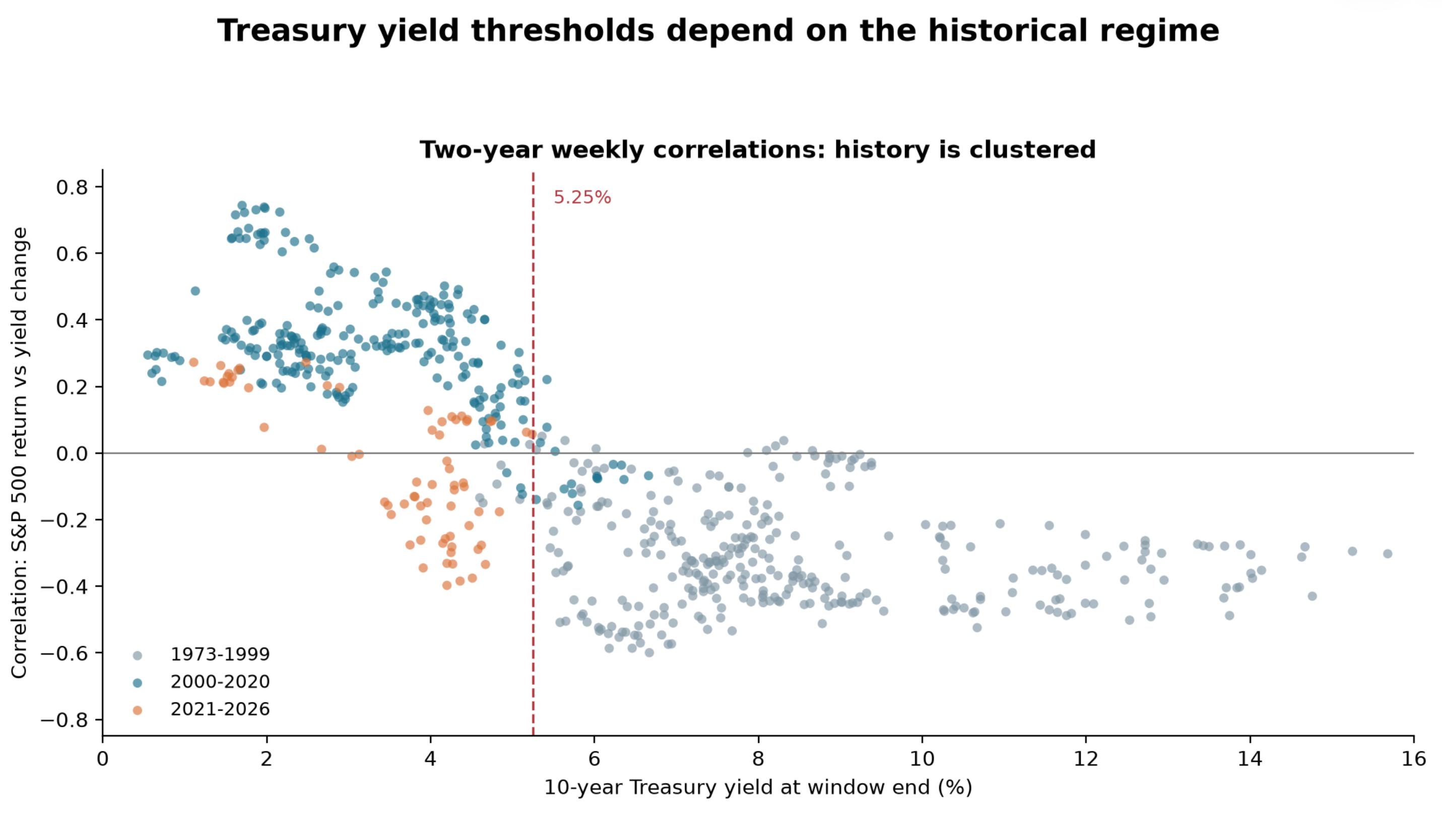
First, is the ongoing active debate about whether the market has run close to the ‘uncle point’ on yields at which AI/geopolitical spillover proves self-undermining for bonds and the dollar, by virtue of its ripple effect onto risk and the wider economy demand-base.
Much of this unresolved discussion revolves on whether to give prominence to the unprecedented surge in forward earnings (unseen outside of immediate post-recession periods). From this angle, higher yields to date leave excess returns strong and so do not impinge on the upswing nor prove unsustainable.
The counter argument is that, outside of the narrow structural drivers, it’s still possible to reach yield levels that are critical for small businesses, the consumer, and housing – the mundane core demand for the majority of the day to day economy outside of the secular transformations. This is the AI-crowding thesis at which speed limit and self-correcting mechanisms can still dominate.
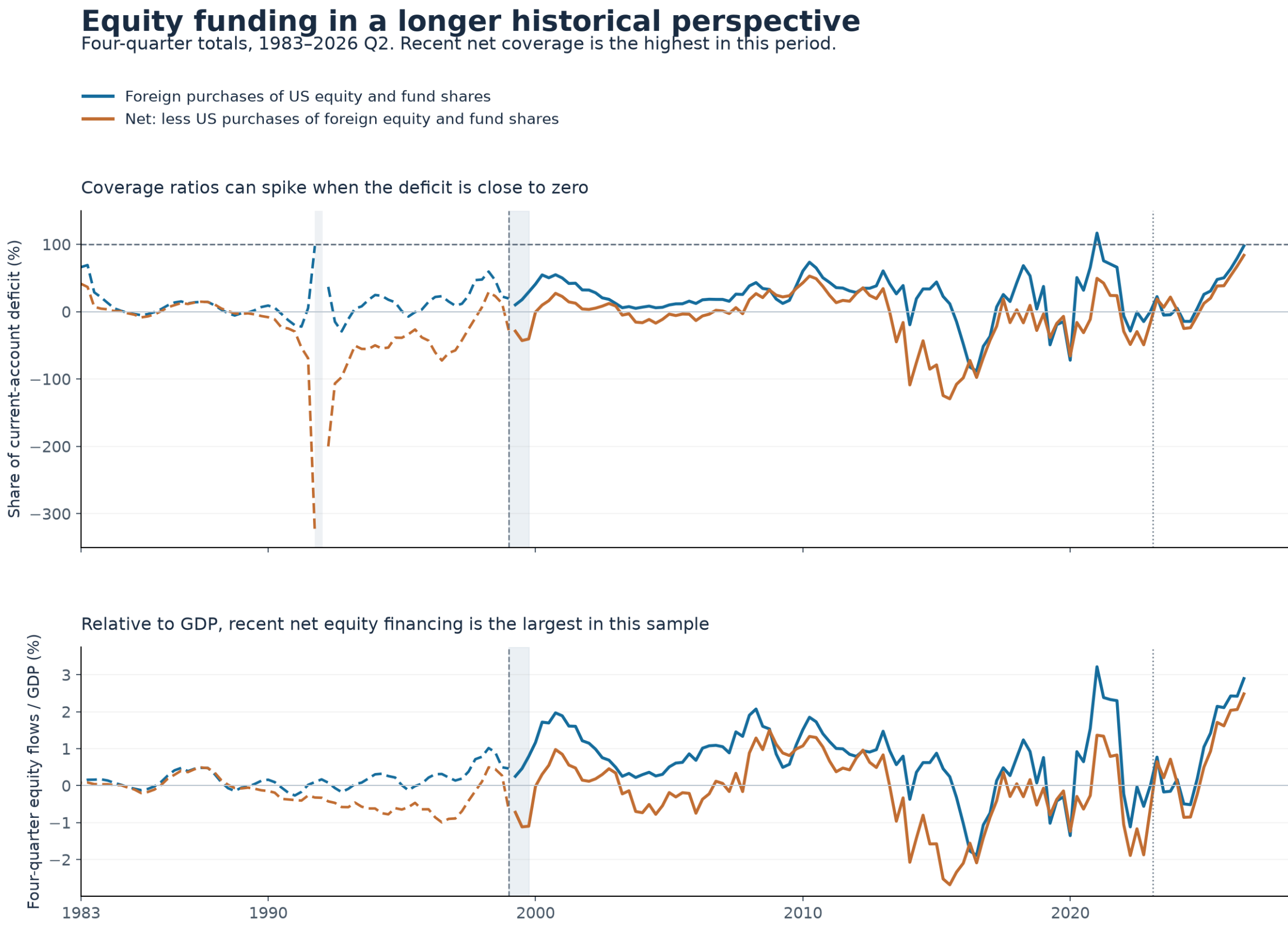
The second big picture debate centres on the ongoing relationship between equity risk and the dollar going forward. AI risk and dollar dip last week went hand in hand and while partly incidental it brings back into focus the nature of the FX relationship going forward.
Some in particular highlight that the US current account coverage from net foreign inflows into US equities has been running uniquely high levels. That does, in theory, raise the risk that any jolts to ‘US-exceptionalism’, and the key equities that express that, translate to dollar pressure rather than stereotypical risk-off safety support. That in turn may encourage greater dollar hedging interest on holdings, if naked exposure becomes seen more of a risk amplifier than a traditional risk hedge. There are many ifs and buts to the concept, but with a lot of tightening priced in, there is some plausibility to the idea working through a number of channels (outflows, dollar hedging and correlation to US yield spreads).
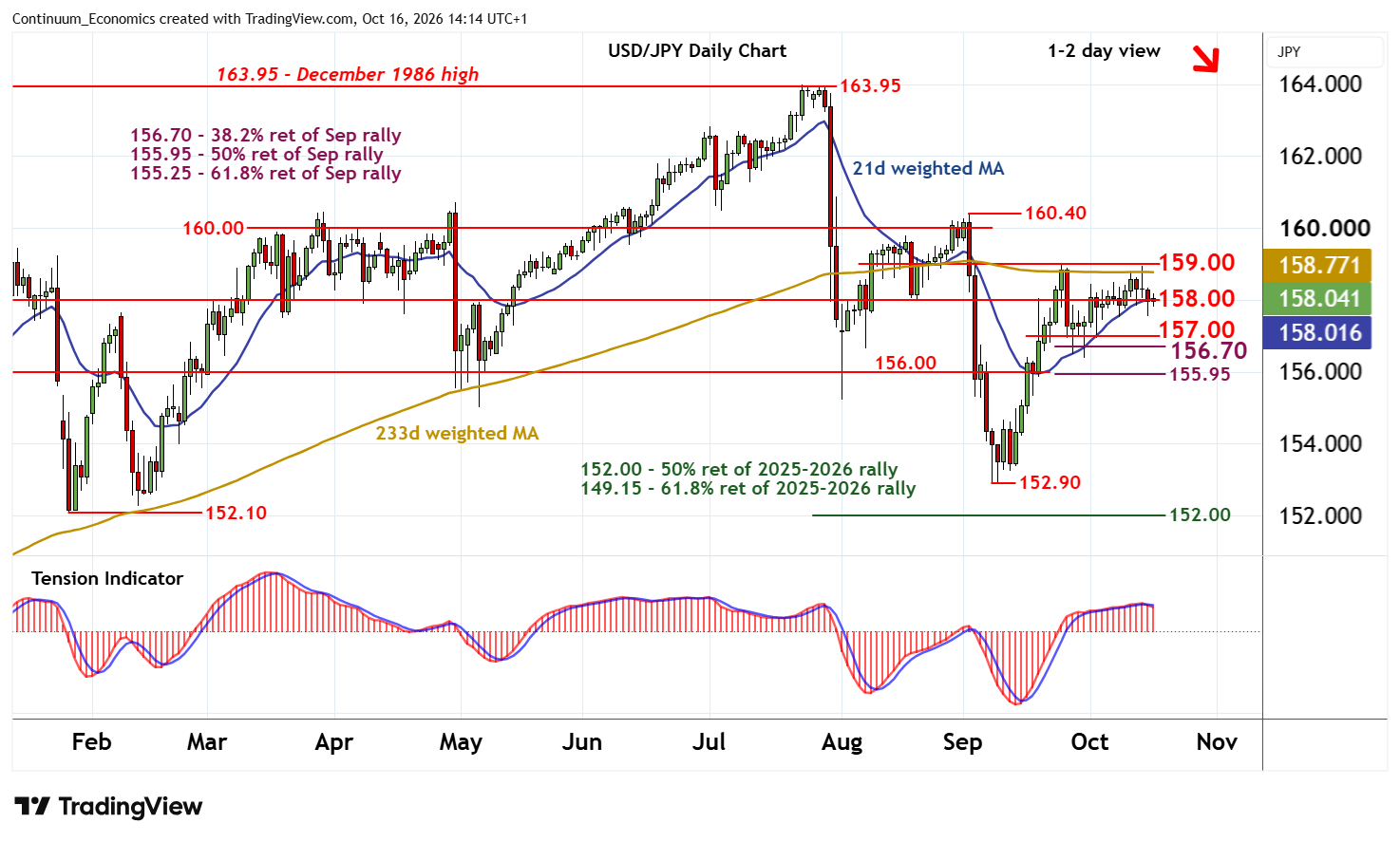
For now, these remain two big themes and cross market dynamics to watch and build into scenarios rather than necessary trade on, but still relevant going forward. The JPY through all this has also been showing better signs of reverting to old safety form, and both sentiment and flows do look to be reinforcing the dominance of supply into bounces (towards 159/160) with medium-term downward pressure.
Turning to the week ahead, it’s a relatively light one and nothing that is likely to move the dial on current thinking. UK data, especially CPI, will likely leave expectations for a Nov hike in place (now our expectation). But recent BoE speakers (even hawks) have gone out of their way to suggest that a hike would not be endorsing the amount and pace of tightening the market has priced in, something which is viewed with some scepticism.
EUR/GBP has been running into the target area of 0.8425-00 where firmer support should kick in, while 0.8450 resistance needs to be regained to suggest euro short covering is gaining some nearby ascendancy. The UK does have its budget approaching on the 28th, ahead of which some longs might start to take some tactical profits even if ultimately the better fiscal risk sentiment for the UK is expected to survive. Suggestions of a UK bank tax have weighed on specific counters but not yet negatively affected FX sentiment.
Euro specific sentiment should continue to key more off intra-euro developments, particularly France, more than the data. OAT spreads are tending to be ‘high beta’ at present (rather like gilts when they were centre of the market’s radar) - selling off in weak global fixed income periods and stabilising when the upside pressure on global yields relent. At present the market looks to be in a relatively low volume stall mode, with neither follow through selling from here or active dip buying interest.
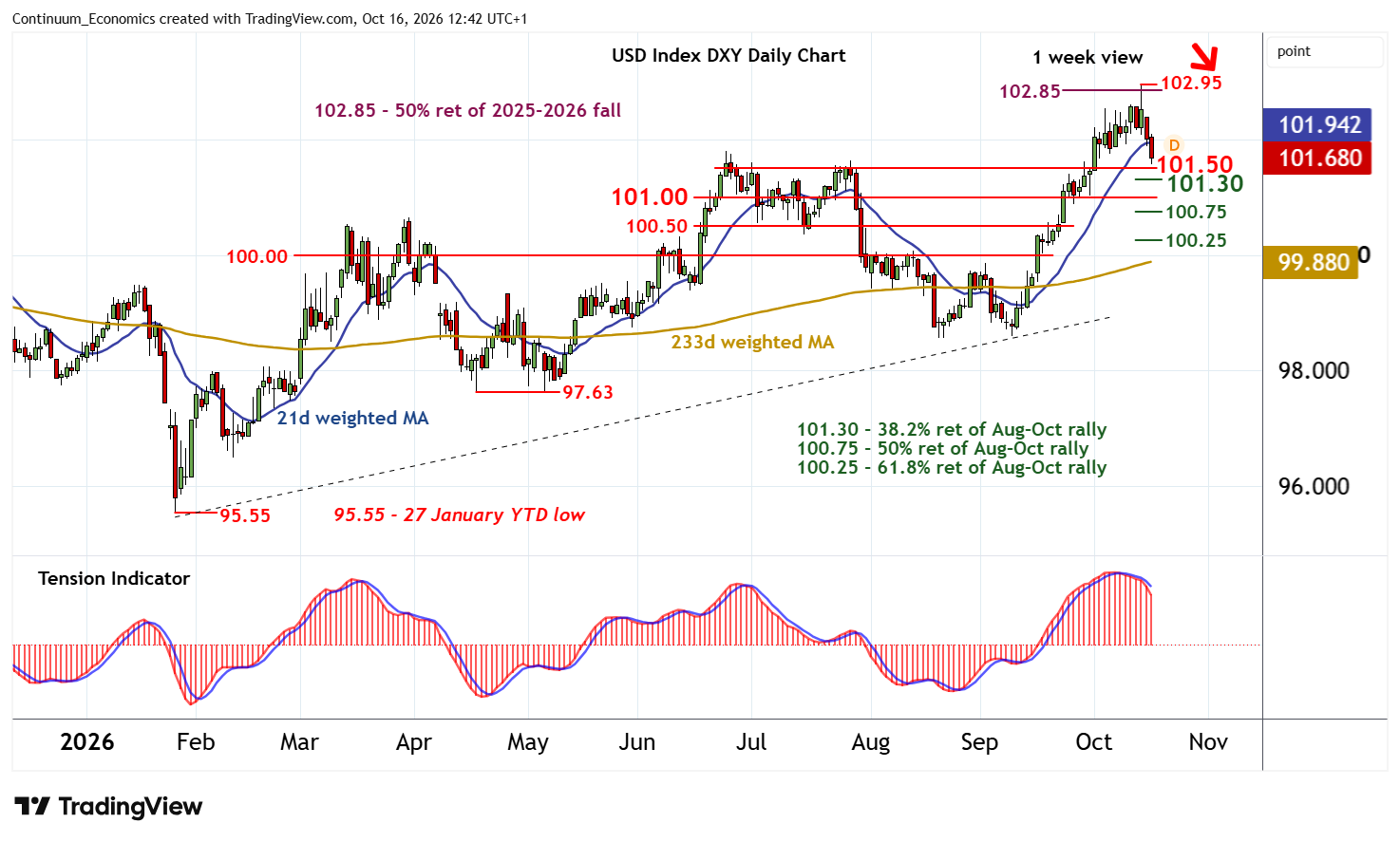
Main driver is likely to remain extent of remaining technical dollar short-covering and profit-taking across all the major pairs before positioning sufficiently rebalances. Moving average break of the DXY tended to reinforce the s/t technical damage and switch the short-term trading focus. Below 101.50 extends to 101.30 fib and 101-100.75. Action still represents a corrective pullback within the wider YTD up channel though at this stage.
US midterms are also moving into the more immediate event-risk horizon too and could start to influence some wider options positioning to guard against grey swan risks. You do start to see some wider out of the money positions (152-146 USD/JPY) but volatility generally remains quite low and euro retreating out of the fast initial move and spike on the French blow out.
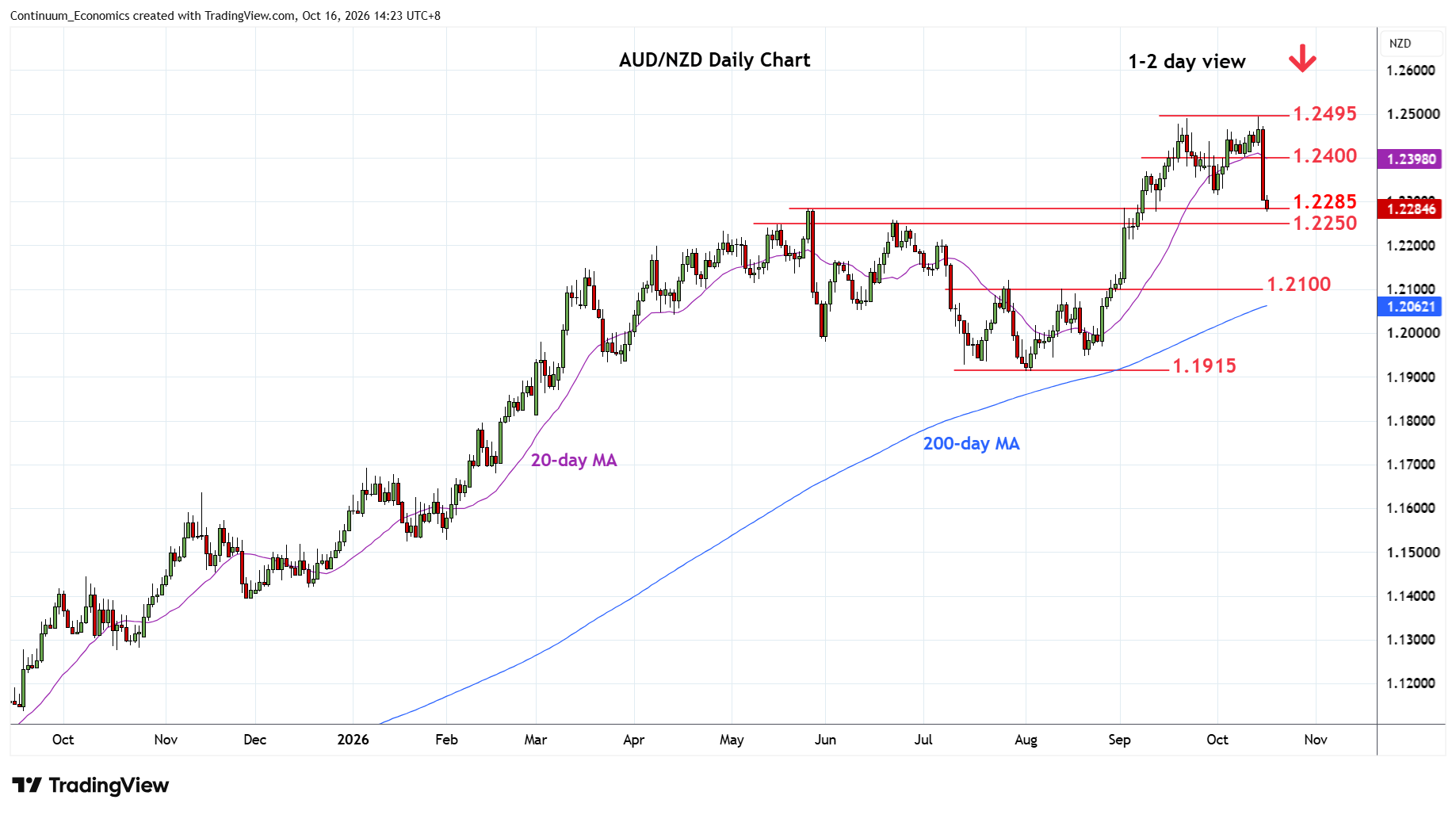
Otherwise, AUD/NZD remains interesting on the charts after the double top, and selloff out of the AUD employment miss. NZ CPI could be important into the next RBNZ meeting that is currently priced 80%+ towards a hike. 1.2285/50 is key support on the cross, ahead of a deeper retracement move of the Sep-Oct stretch.
USA
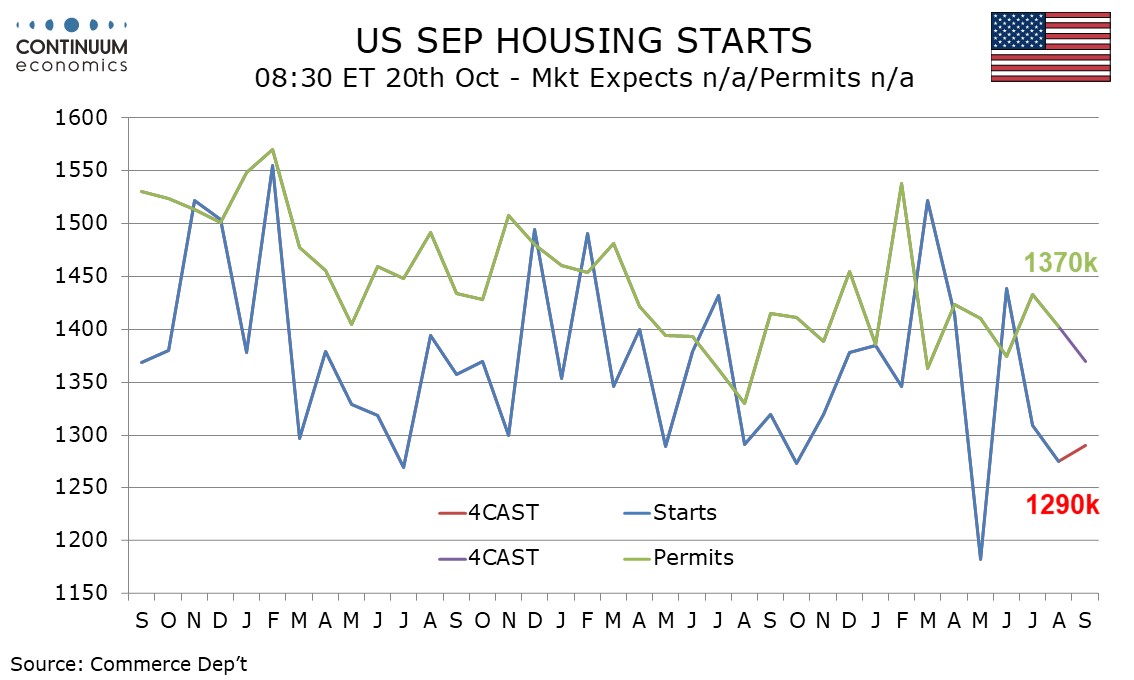
It is a very quiet week for the US calendar, with Fed speakers set to be quiet ahead of the October 28 rates decision. The data calendar is limited too. October’s NAHB homebuilders’ index is due on Monday. On Tuesday we expect September housing starts to rise by 1.2% to 1290k but permits to fall by 2.6% to 1370k. Thursday’s initial claims will cover the survey week for October’s non-farm payroll. September’s leading indicator follows. The most significant release of the week may be October’s S and P PMIs, which will be following very strong September data. The final October Michigan CSI is also due on Friday.
Earnings season also a background focus, with Meta, Tesla, and IBM on the tech side on Wednesday, the likes of GE, GM and Netflix on Tuesday.
CANADA
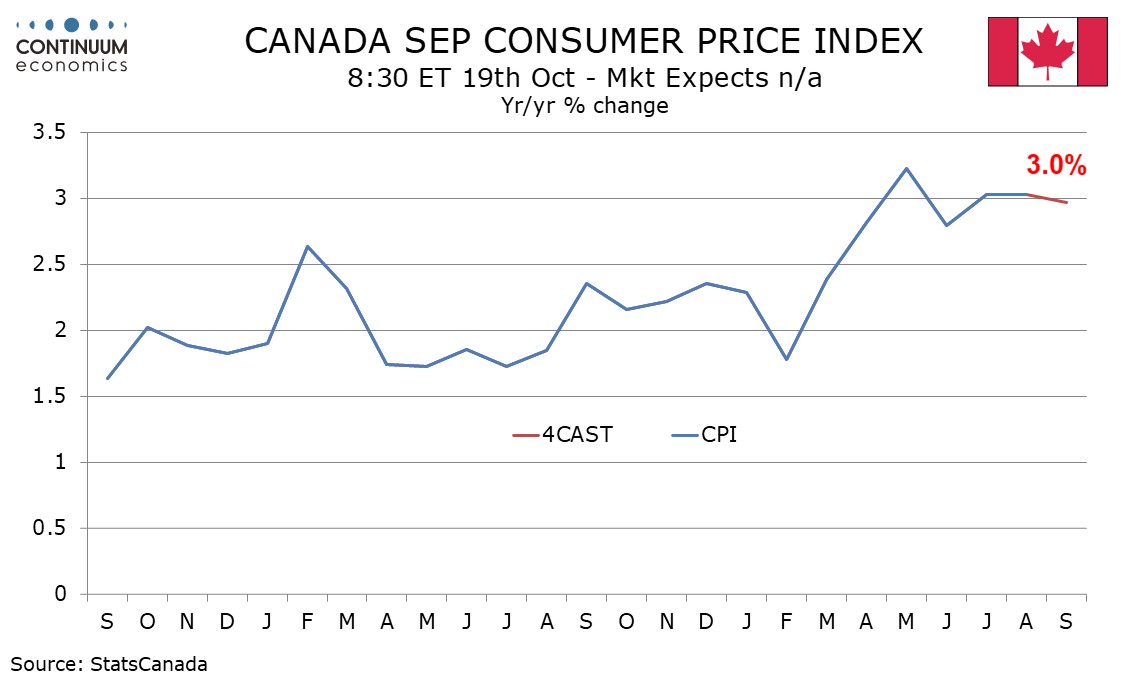
Canada’s key release will be October CPI on Monday. We expect the overall rate to remain at 3.0% yr/yr but with a slight slowing in the Bank of Canada’s core rates. Thursday sees October’s IPPI and RMPI. August retail sales are due on Friday. The preliminary estimate made with July’s data was for a 1.3% increase.
Eurozone
The service and manufacturing flash PMIs for October will be the key data points for next week. In the manufacturing sector, AI infrastructure and defence-related spending (mainly Germany) are likely to help order books stable, providing an offset to weakness in the auto sector. Services recovered strongly in September and some moderation might be in order given the recent deterioration in business confidence.
ECB President Lagarde participates at the IMF annual meeting in Thailand over the weekend.
UK
Inflation and labour market data are the main focus next week with both releases providing insights into whether the energy shock is filtering through to the broader economy.
Headline annual inflation rose to 3.1% in August and a further jump to around 3.4% is expected in September given the renewed increase in energy prices over the past two months. Core inflation has been steady at 2.6% since May. CPI will be the last piece of the puzzle before the MPC meets in November.
Tuesday sees the release of August labour market data with analysts looking for any signs of second round effects in the earnings data. Average earnings excluding bonus payments has slowed to 3.5% y/y in July from 4.7% last August as the labour market continues to shows signs of softening. HMRC payrolls data for September should show a further month on month decline.
BoE Governor Bailey and hawkish MPC member Mann speak at separate conferences on 22nd October.
JP
Japan sees Sep trade data Wednesday and nationwide CPI on Friday.
NZ
Q3 CPI Thursday the main event prior to the next ‘open’ policy meeting
AU
Quiet week with RBA speakers Hauser and Kent the main interest.