September FOMC Tightening Looks Likely After Warsh Speech
After the speech from Fed Chairman Kevin Warsh, it appears that failing to tighten in September would put Fed credibility at risk, unless we see some very soft data from the August non-farm payroll and CPI. The key sentence came near the end of his speech. “We must be confident that underlying inflation is moving to our objective, clearly and at sufficient speed. Otherwise, we have work to do.” We now look for a 25bps tightening in September, but are not convinced more than that will be needed.
Warsh’s credibility suffered after his unconvincing press conference after the July 29 meeting, though he did state accurately in the latest speech that at that meeting that a good majority at The FOMC felt it was the wiser course to await new information in the intermeeting period. He did however add that the FOMC unanimously agreed that labor markets were stable, output was solid but inflation remained too high. He goes on to say that he personally has been impressed with the performance of the economy, which appears to have strengthened.
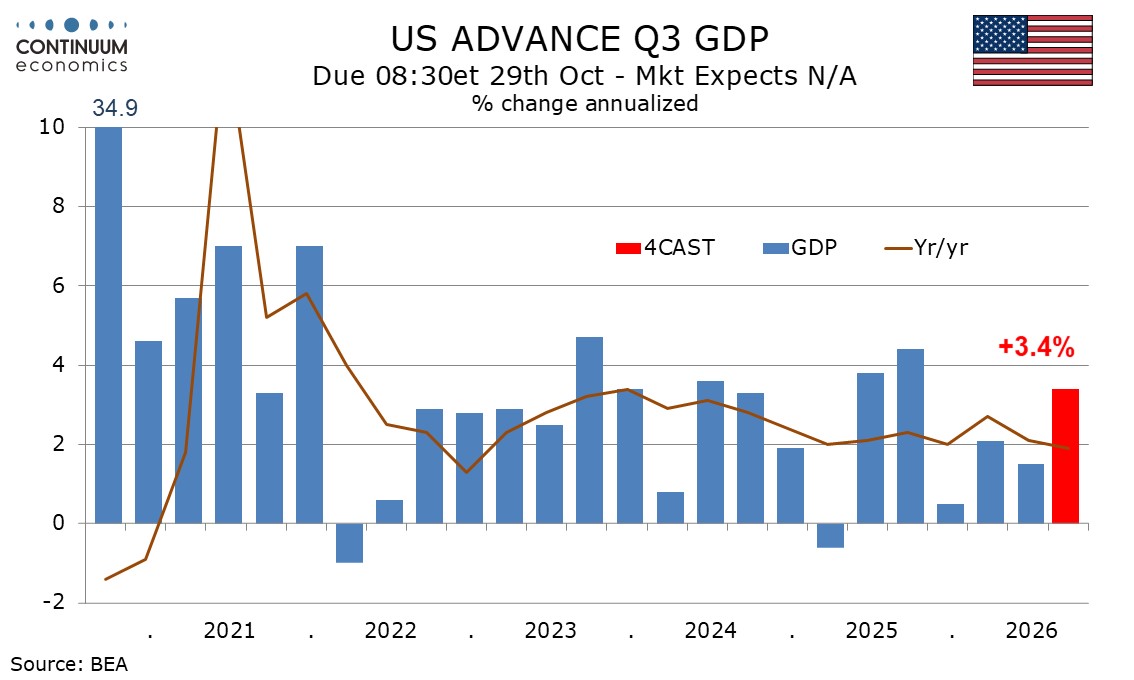
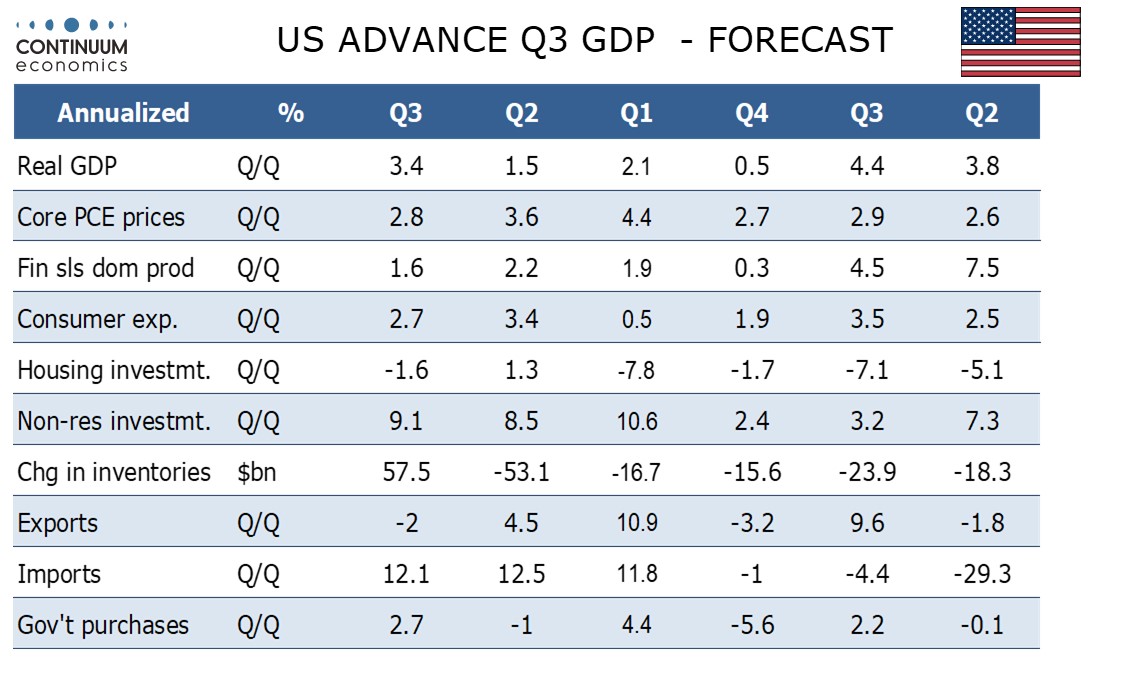
His positive assessment on the economy is detailed. He notes strength in business investment, corporate profits and healthy real consumer spending, driving growth of nearly 3% in private domestic final purchases in the current calendar year to date, which he sees as carrying more signal than GDP. Our early calculations for Q3 suggest this will continue, and in Q3 GDP may keep pace, with a likely negative from net exports likely to be offset by a rebound in inventories, while government gets a lift from defense. He finds it hard to see financial conditions as restrictive even when noting strains in housing and agriculture, after considering credit spreads and lending standards. He believes labor markets are consistent with full employment and that when the labor force is barely growing job gains will naturally run low.
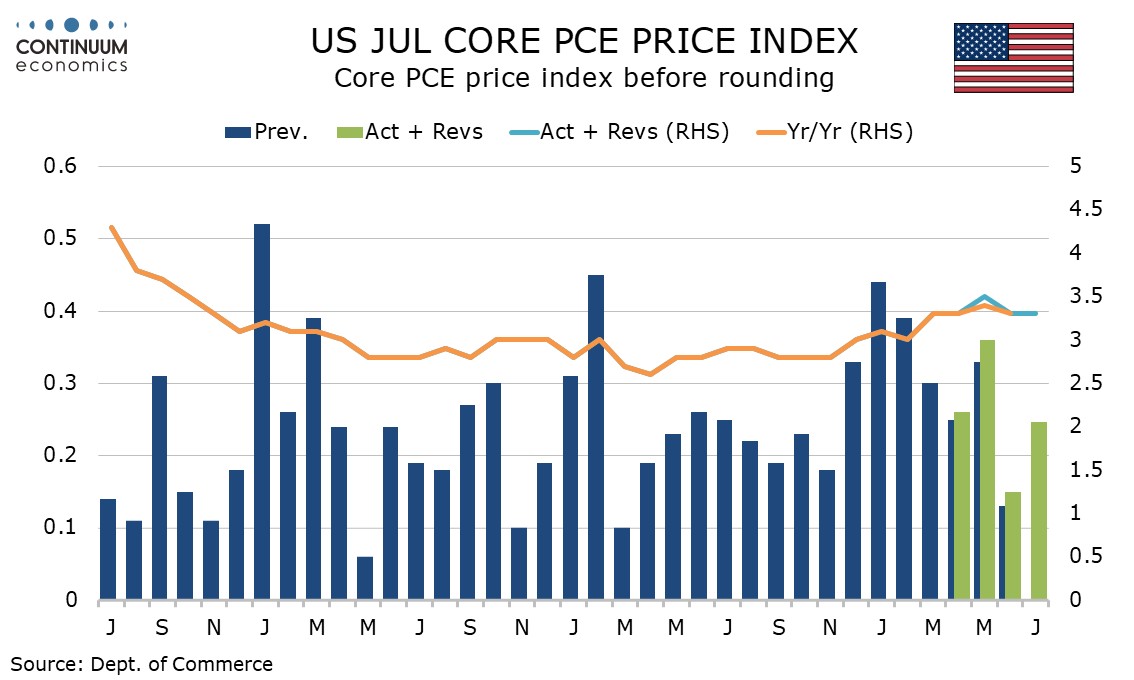
Then then goes on to see the numbers on the price stability side of the mandate as concerning. He looks into the 199 components of PCE prices seeing 54% above 3% over the last 12 months and 49% above 3% over the last 6, both below the 77% post-pandemic highs but above a 32% pre-pandemic trend. He downplays evidence of slowing wage growth, stating it has not proven a reliable leasing indicator for inflation, and relatively stable inflation expectations, stating they look strong and durable until they don’t. After saying all this, a September tightening may be hard to avoid. August payrolls and more so August CPI will be closely watched, but there are no more PCE price data due. Here July’s, close to 0.25% on the month, with upward revisions to Q2, was a minor disappointment. Warsh does note that the summer PCE and CPI readings were better than expected, but does not see this as signaling a meaningful improvement in underlying trend.
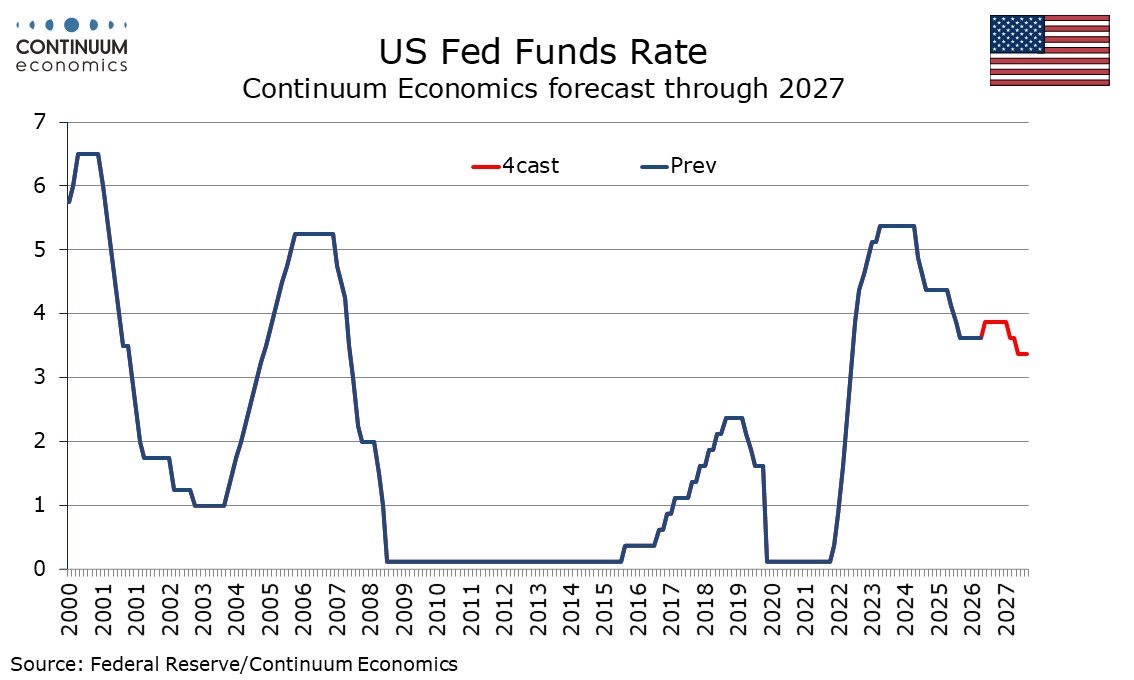
While Warsh in his key sentence was careful to leave his options open, the FOMC may feel that if September is a close call if would make sense to move then, rather than go into the October 28 meeting, shortly before the November Congressional elections, facing potentially heavy market pressure to move. We have therefore revised our forecast to project a September tightening. We are however unconvinced that Q3 GDP strength will persist in Q4, and do see the tariff impact on inflation as having peaked. We thus look for the Fed to hold policy steady in October and December. We continue to look for two easings in 2027, in Q2 and Q3, though that would take the end 2027 rate to 3.25%-3.0% rather than 3.0-3.25%. We suspect the neutral rate is a little higher than the 3.125% seen in the FOMC median dots for June.
Warsh’s speech contained four sections, the key parts outlined above all coming in the fourth (The Economy Today). The first section (Preparing for Future Policy Conjectures) focused on AI and saw the potential for substantially higher growth as on the rise. However he stated the recommendations of the productivity and jobs task force would come later and have no bearing on decisions made in the current policy conjuncture. The second (Forward Guidance and Its Stand-ins) reiterated his view that forward-guidance is ill-suited to normal times but also attempted to answer some of his critics in arguing that understanding of the economy is not sufficiently precise to rely on an explicit reaction function. The third section (Key Principles) outlined seven. Firstly, not setting forward-looking policy on stale or inaccurate data or relying on isolated data points. Second, while aiming to balance demand with supply, the Fed can never see, but can only infer, what is happening on supply. Third, the 2% core inflation target is firm and fixed. Fourth, the Fed nears responsibility for maximum employment, fifth shirt-term rates are the predominant tool, and sixth money matters. Finally, he wants a quieter Fed, more purposeful in its communications.