Preview: Due December 4 - U.S. November Employment (Non-Farm Payrolls) - Slower but far from weak
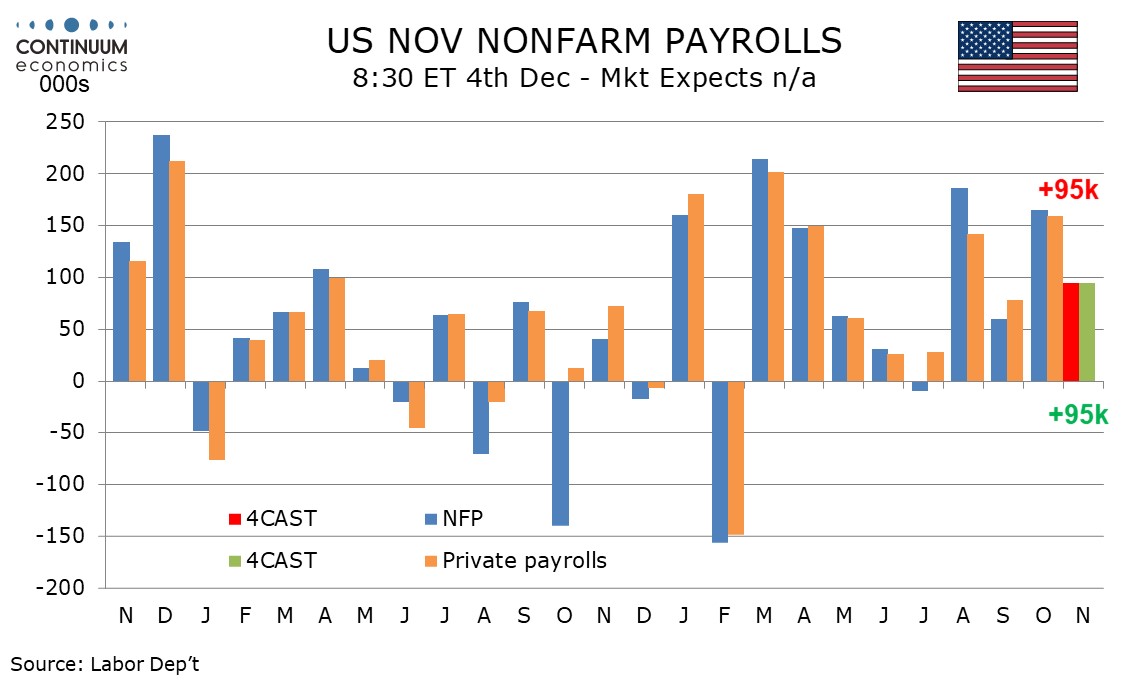
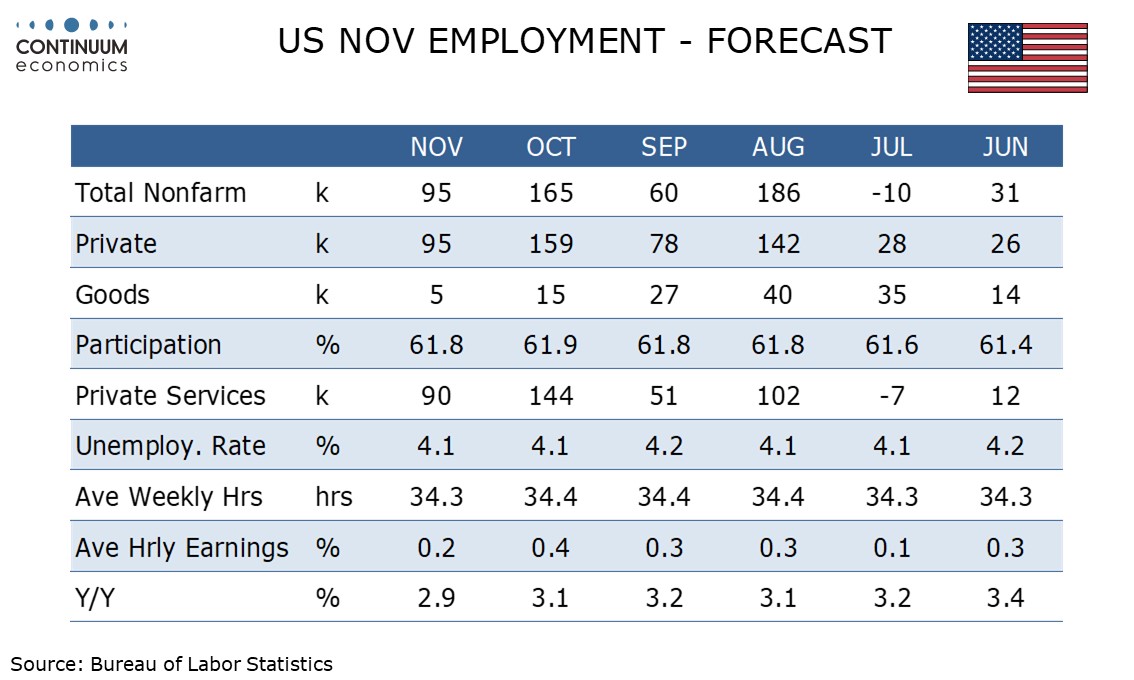
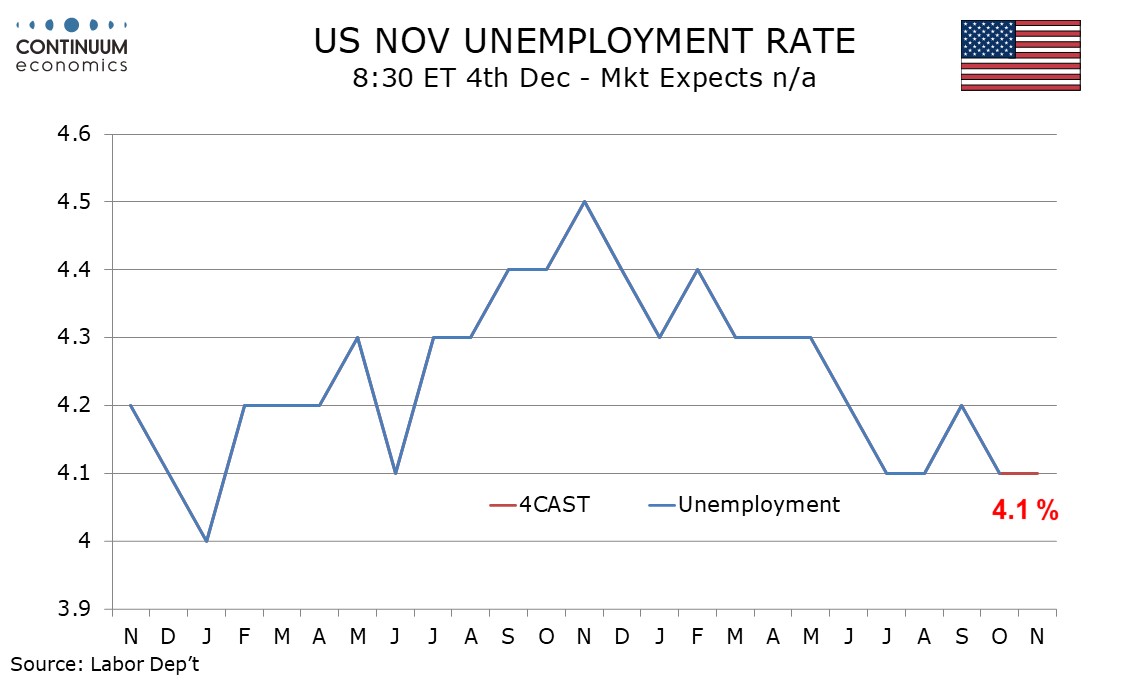
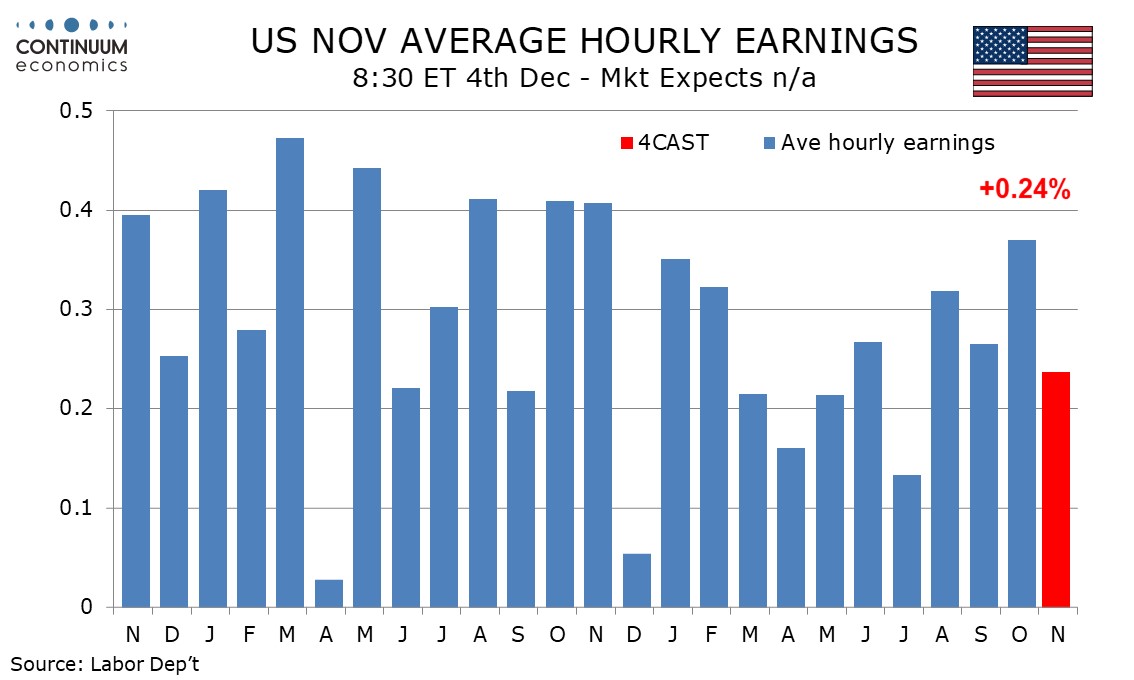
While there is no real reason to expect the labor market to break from trend, we expect October’s above trend 165k non-farm payroll increase to be followed by slower but still healthy 95k in November. We expect unemployment to remain at 4.1%, but with less impressive details than in October. Earnings and workweek data are also likely to be less strong than October’s.
We expect gains of 95k in both overall and private non-farm payrolls, with trend in government now close to neutral. Our forecast is still above the 6-month average of 82.5k which is almost identical to the 6-month average in the private sector, confirming a recent improvement in trend.
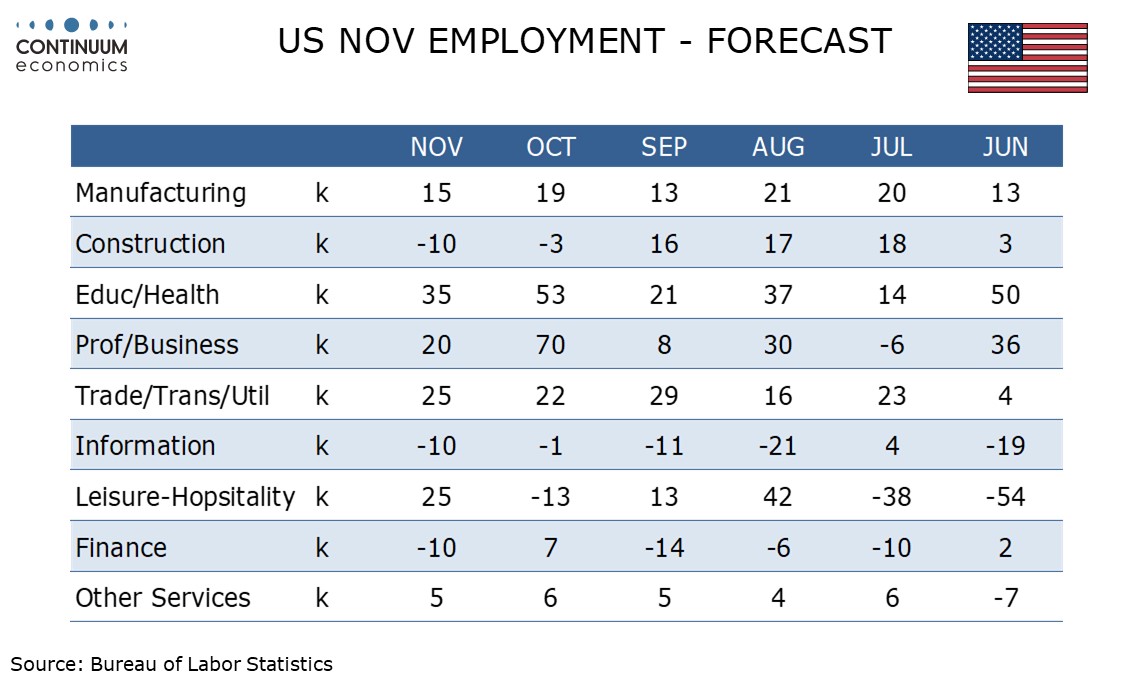
The sector to watch is business and professional employment, which with a 70k increase in October, the strongest since July 2022, broke well above trend that had been running around 15k in September. October’s gain was broad based in its subcomponents so cannot be dismissed as erratic, but we doubt another similarly strong month will be seen, forecasting a gain of 20k in November.
Construction is at risk of a second straight decline as housing weakens, though data centers remain supportive. We expect education and health to return to trend at 35k after an above trend 53k in October. However leisure and hospitality, recently volatile, is likely to more than fully reverse a 13k decline in October. Retail is of extra interest as seasonal hiring starts to appear. We expect a modest rise of 10k. Manufacturing is likely to remain healthy with a rise of 15k.
While we expect unemployment to remain at 4.1%, 4.2% is more likely than a second straight decline to 4.0%, given that October’s rate was 4.14% before rounding. The household survey, which calculates the unemployment rate, has seen three straight strong gains in both employment and the labor force. We expect corrections lower in both in November, but leaving the unemployment rate at 4.1%.
October’s 0.4% increase in average hourly earnings, with upward back month revisions, made trend look closer to 0.3% again after having appeared to slow to 0.2% per month. Rising prices may be starting to impact wage demands. Still, after an above trend October we expect a slower 0.2% rise in November, though at 0.24% before rounding. Yr/yr growth would then slow to 2.9% from 3.0%. This would be the slowest since May 2021.
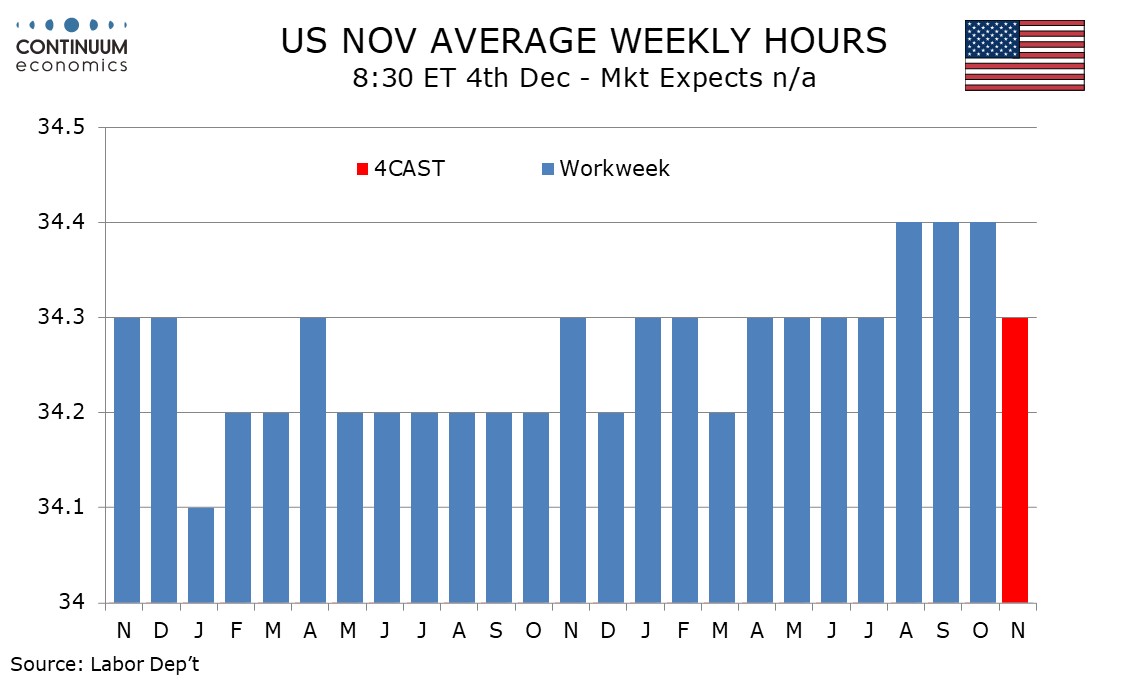
We expect a dip in the workweek to 34.3 hours after three straight months at 34.4, to hint at a modest loss of economic momentum after GDP growth accelerated in Q3. This would not however imply weakness. The three months at 34.4 were the strongest since early 2024.