Bank of Canada - Now expecting a December tightening
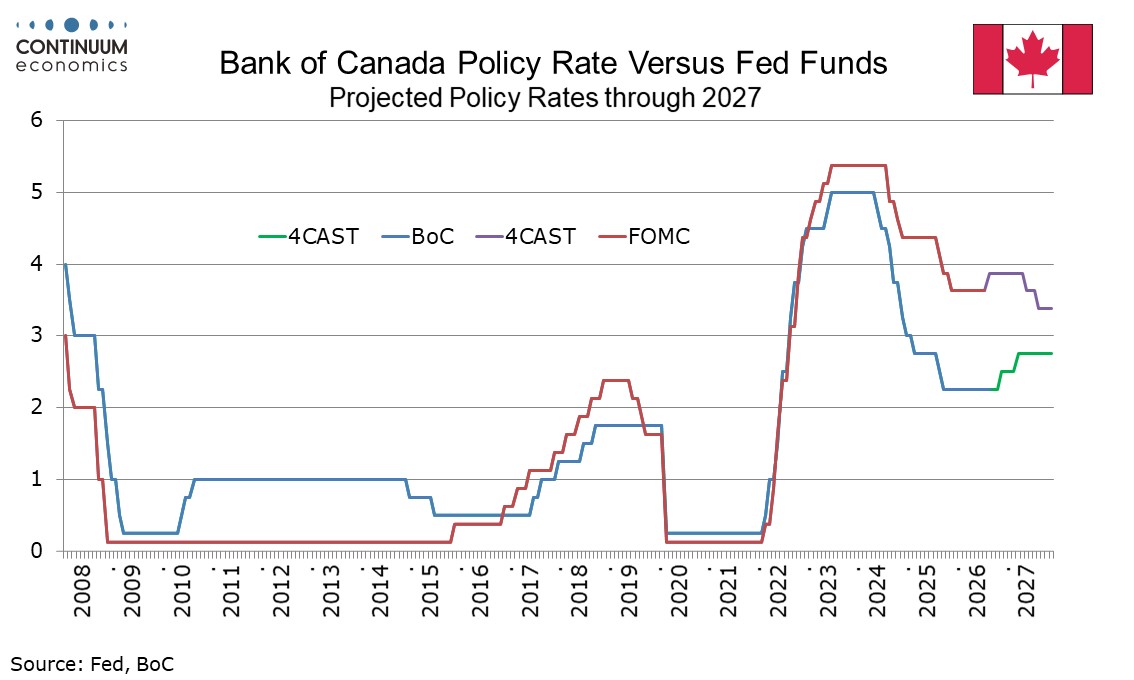
The Bank of Canada left rates unchanged at 2.25% as expected and noted risks on both sides, though the press conference made it clear that inflationary risks led by the Middle East are outweighing those on growth generated by recent US tariffs. We now expect the Bank of Canada to raise rates by 25bps in December, though after that we expect the BoC to be cautious, with just one 25bps move in 2027, In Q2. However, uncertainty is high, and the BoC is willing to deliver multiple hikes if necessary.
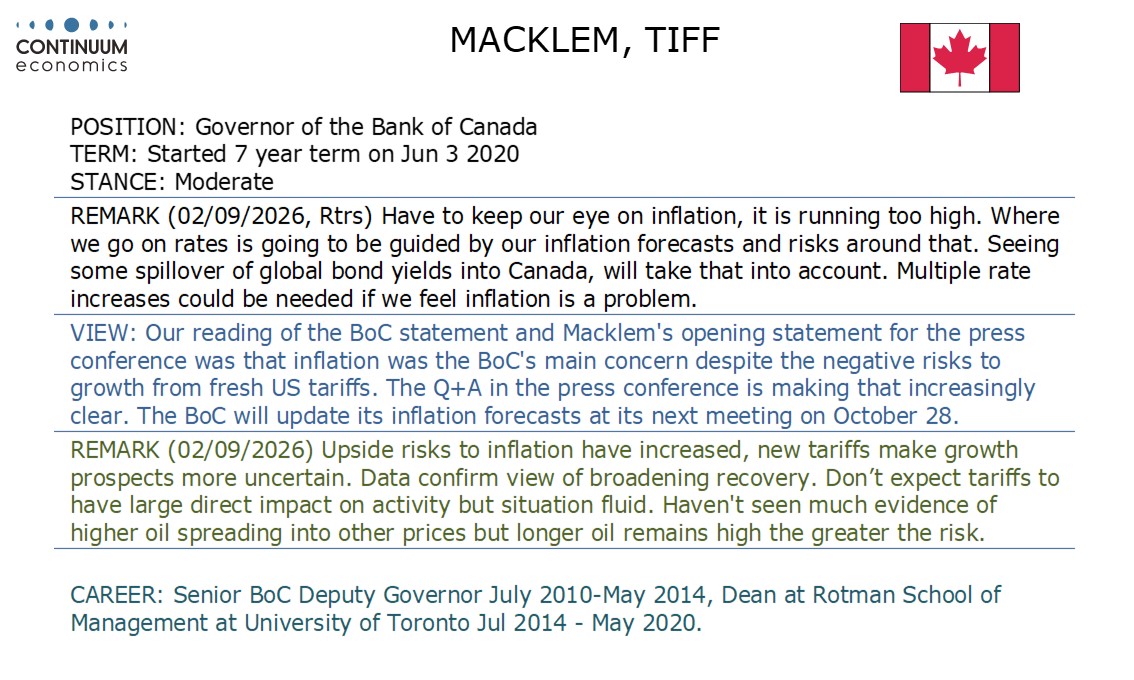
In his press conference opening statement, Governor Macklem noted that market expectations for oil prices have shifted up since July. So far, the BoC has not seen any sign of oil spreading into prices of other goods and services but the longer oil remains elevated the greater is the risk of this happening. Upside risks to the inflation forecasts are seen as having have increased. New US tariffs and Canadian retaliation are also seen as having potential to add to costs and over time prices.
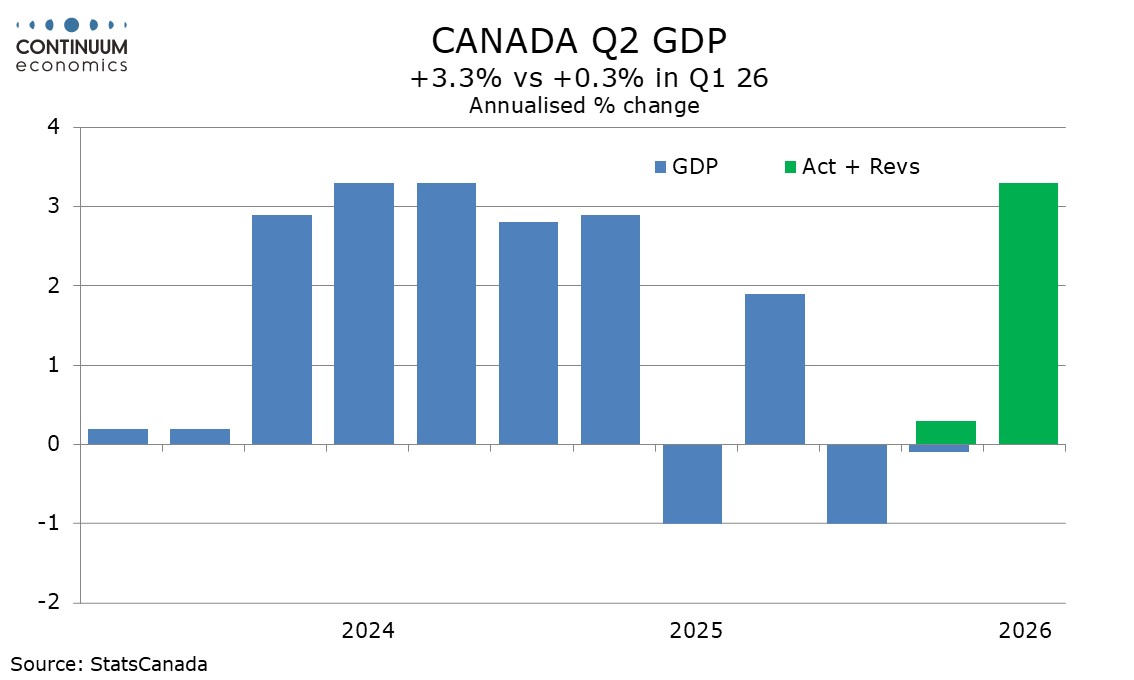
On the economy recent data, particularly Q3 GDP where the pick-up in activity was described as broad based, are seen as reaffirming a view of a broadening recovery. However, the new US tariffs are seen as posing risks to its sustainability. The risks are not overstated, with the tariffs expected to hit targeted sectors hard but not to have a large direct impact on overall activity. However the BoC notes that the situation remains fluid. If the trade dispute escalates, so will the risks.
Making firm conclusions on the implications of all this for monetary policy is difficult given high levels of uncertainty on both the Middle East and trade policy. However, a hawkish tone from Macklem in his press conference was sufficient to persuade us that a rate hike in December is now more likely than not. He stated that the BoC would be guided by its inflation forecasts. The next BoC meeting is on October 28 and inflation forecasts will be updated then. If they are updated higher, that would be a clear signal for December. A move in October is not out of the question.
Canadian retaliatory tariffs are due to be implemented until September 8 there is still time for some de-escalation to occur before then. If the US goes no further than the renaming of Lake Ontario to Lake America, the economic consequences of the dispute are likely to remain moderate. Still, should the Canadian retaliation bring fresh US economic retaliation, risks will rise.
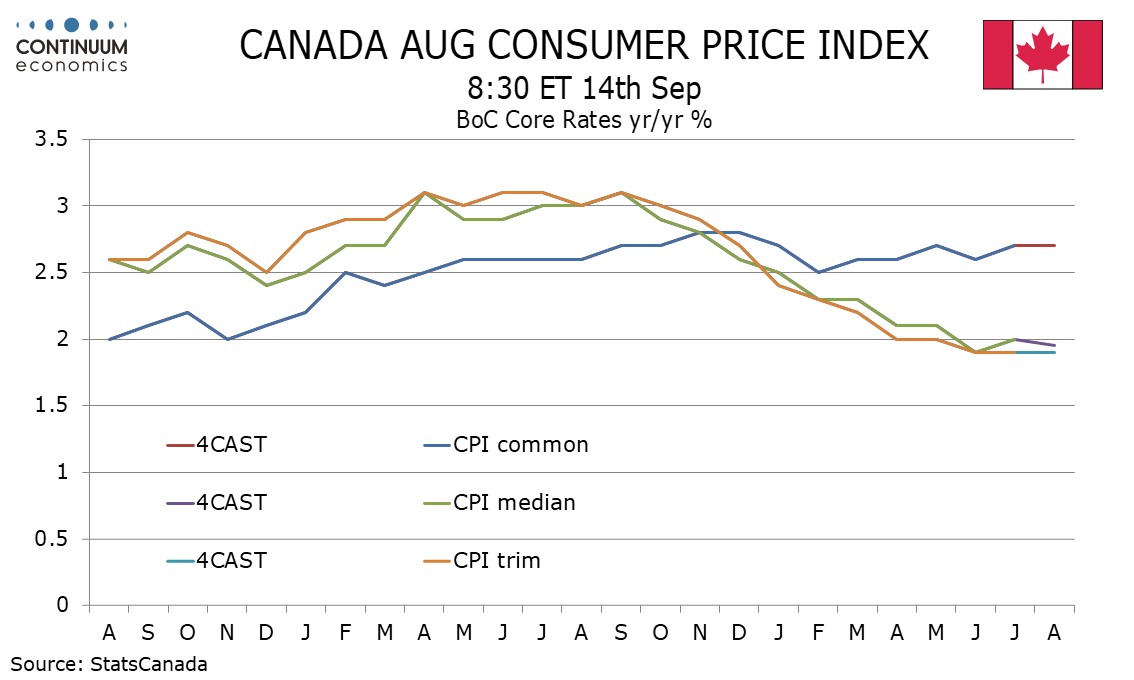
The risks from a trade escalation are on both sides, but the risks from the Middle East conflict are largely on prices. Inflationary risks thus outweigh those on activity, particularly with recent economic data providing a cushion. Canada has its own oil industry that would benefit from higher prices, though the benefits to Canada would not be evenly spread across the country. Core inflation (Median and Trim) remains close to target, but recent monthly data has picked up from earlier in the year, suggesting that should the economic recovery continue, core inflation may start to regain momentum.
We are assuming that worst case scenarios in both the Middle East and the US-Canada trade dispute will be avoided. While now seeing a 25bps December tightening as more likely than not, we are hopeful that the 2027 inflationary picture will not force the BoC into the multiple rate hikes Macklem said he was willing to do if he sees inflation as a problem. We expect one more 25bps move in 2027, in Q2, which would take the rate to the midpoint of the 2.25-3.25% range the BoC sees as neutral.